Delhi Police Disperse Thousands of ‘Cockroach’ Protesters Demanding Education Reform
Thousands of demonstrators associated with the Cockroach Janta Party (CJP) converged on central Delhi this week, defying official bans to march toward India’s parliament. The youth-led movement, which has gained significant traction over the past few months, is demanding the resignation of the Education Minister following widespread allegations of exam paper leaks and systemic failures within the nation’s education sector. Despite heavy rainfall and a massive security presence, protesters gathered at the historic Jantar Mantar observatory, transforming the site into a hub of dissent.
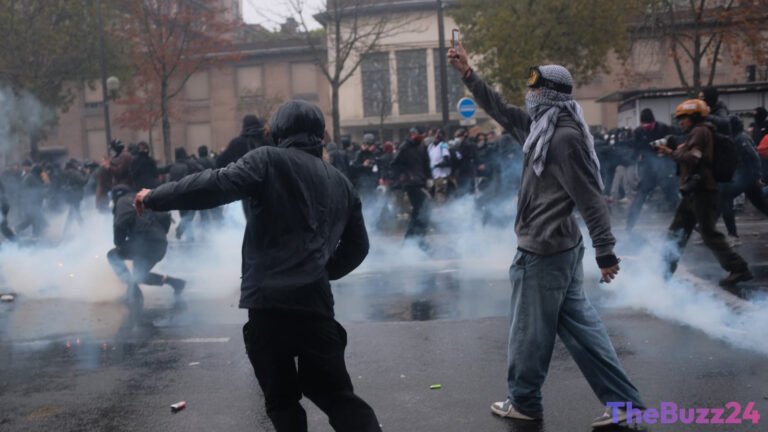
As the march attempted to move toward the parliamentary district, police utilized tear gas and baton charges to break up the crowds. Reports from the scene indicated that several demonstrators sustained injuries, with volunteer medical teams treating individuals for head wounds and fractures. Authorities also implemented temporary suspensions of mobile internet services in parts of the capital to curb the coordination of the protest. While some smaller groups attempted to bypass barricades through side streets, the majority of the demonstration was eventually cleared by police in riot gear by late evening.
The CJP movement, founded by activist Abhijeet Dipke, derives its name from a controversial remark by India’s chief justice, who previously compared unemployed youth to “cockroaches.” The group has since reclaimed the term as a symbol of resilience. The protest gained additional momentum following the hospitalization of activist Sonam Wangchuk, who has been on a prolonged hunger strike in support of the movement’s goals. Although CJP representatives were granted a brief meeting with Health Minister JP Nadda to submit their list of demands, the government has urged protesters to disperse and restore order in the capital.
What began as a localized campaign against exam irregularities has evolved into a broader expression of public frustration regarding unemployment, lack of transparency, and government accountability. The movement has successfully bridged the gap between students, professionals, and activists, signaling a growing challenge to the current administration. As the monsoon session of parliament continues, the government faces mounting pressure to address the underlying grievances that have fueled this widespread civil unrest.
Key Takeaways
- Thousands of protesters marched in Delhi to demand the resignation of the Education Minister over exam paper leaks and systemic issues.
- Police used tear gas and baton charges to disperse the crowd, resulting in multiple injuries and the eventual clearing of the protest site.
- The CJP movement has grown from a small online campaign into a significant national protest group representing broader frustrations over employment and government accountability.
Editor’s Analysis & Impact
The rise of the Cockroach Janta Party represents a critical inflection point in Indian civil society, highlighting a widening disconnect between the youth demographic and the current political establishment. By successfully rebranding a derogatory label into a badge of honor, the movement has demonstrated a sophisticated grasp of modern political optics and grassroots mobilization. The shift from specific grievances—such as exam leaks—to broader systemic demands for accountability suggests that this movement is unlikely to dissipate quickly. For the government, the challenge lies in balancing security concerns with the need to address the legitimate economic anxieties of a massive, underemployed youth population. If the administration fails to provide tangible policy reforms, this movement could serve as a catalyst for more sustained, nationwide political instability in the coming months.
Frequently Asked Questions
Q: Why is the movement called the 'Cockroach Janta Party'?
A: The name originated from a remark by India's chief justice, who compared unemployed youth to 'cockroaches' during a court hearing. The movement's founder, Abhijeet Dipke, reclaimed the term as a symbol of their struggle.
Q: What are the primary demands of the protesters?
A: The protesters are primarily calling for the resignation of the Education Minister, citing systemic failures, lack of transparency, and widespread exam paper leaks that have jeopardized their future employment opportunities.
AI Disclosure: This article is based on verified data and official reports. Our Team and AI have cross-referenced every financial detail with primary sources to ensure total accuracy.
More from this Category