Market Braces for Potential Fed Rate Hike Amid Soaring Oil Prices and Robust Employment
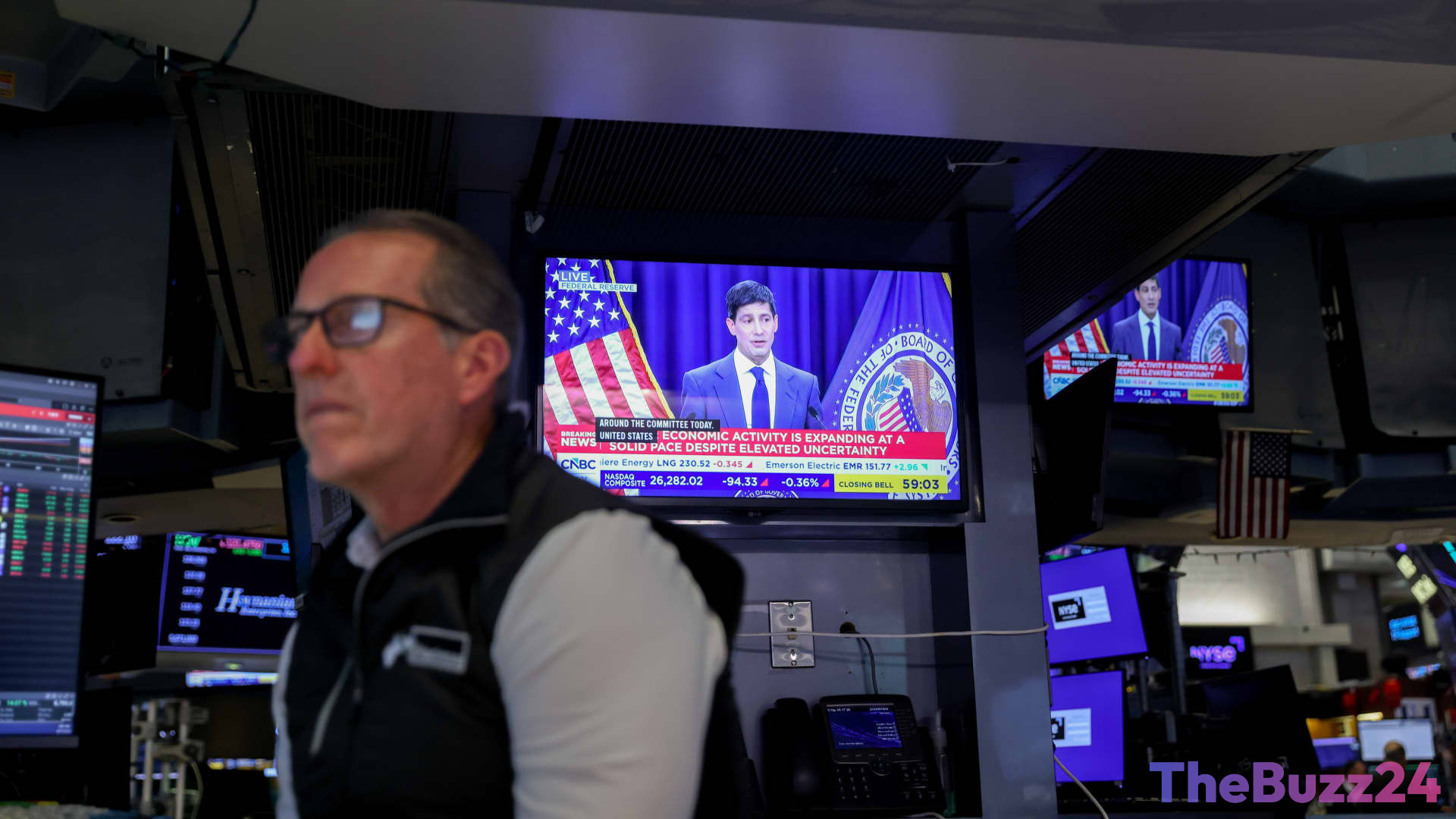
Investors are increasingly anticipating a potential interest rate hike from the Federal Reserve in September, a sentiment largely driven by a significant surge in oil prices and unexpectedly strong employment figures. Market indicators now suggest an 82% probability of the central bank increasing borrowing costs at its upcoming September policy meeting, a sharp rise from just under 53% a week prior. While the Fed is still widely expected to maintain current rates of 3.50% to 3.75% at its meeting next week, a growing minority of traders are even factoring in a quarter-percentage-point increase for that immediate gathering, with probabilities climbing to nearly 38% from less than 12% a week ago.
The upward pressure on inflation expectations stems primarily from a dramatic increase in energy costs. Brent crude, the international benchmark, recently breached $100 a barrel for the first time since late May, fueled by escalating tensions and retaliatory actions between the U.S. and Iran. This spike has translated directly to consumers, with the average price for a gallon of gasoline across the U.S. hitting $4 this week, marking its highest level in over a month. Concurrently, recent employment data further supports the view that the Fed may prioritize combating inflation over concerns about labor market health. Initial jobless claims plummeted to 187,000 in the week ending July 18, reaching levels not seen since 1969, signaling a remarkably tight labor market.
This confluence of factors has created a “perfect storm” of headwinds for financial markets. Major U.S. stock indices experienced significant declines, with the blue-chip Dow Jones Industrial Average tumbling over 600 points and the technology-heavy Nasdaq Composite shedding nearly 3% in midday trading, as higher borrowing costs typically impact growth-oriented tech companies more severely. Rising Treasury yields and post-earnings volatility from companies like Alphabet have compounded investor anxieties. Investment strategists are closely monitoring the 2-year U.S. Treasury yield, which offers a key insight into the Fed’s potential next moves, and many advise caution, suggesting investors may want to remain patient rather than rushing into new positions ahead of the upcoming Fed meetings.
Despite the immediate market reactions and heightened expectations for a September hike, the longer-term outlook from economists remains more tempered. Consensus forecasts do not anticipate further rate increases this year, and some projections even suggest the central bank could begin lowering borrowing costs by half a percentage point in 2027. This divergence highlights the current uncertainty and the market’s sensitivity to evolving economic data and geopolitical developments.
Key Takeaways
- Investor expectations for a Federal Reserve interest rate hike in September have significantly increased.
- This shift is primarily driven by a surge in global oil prices, exacerbated by U.S.-Iran tensions, and surprisingly strong U.S. employment data.
- The heightened rate hike anticipation, alongside rising energy costs, has led to a notable downturn in the U.S. stock market and increased Treasury yields.
Editor’s Analysis & Impact
The current confluence of soaring energy prices and a resilient labor market presents a significant challenge for the Federal Reserve. The surge in oil, directly impacting inflation, coupled with robust employment figures that suggest an “overheating” economy, pushes the Fed towards a more hawkish stance. This scenario increases the likelihood of a September rate hike, potentially extending the period of tighter monetary policy. For markets, this translates to continued volatility, particularly for growth stocks sensitive to higher borrowing costs. Businesses face increased operational costs due to energy prices, which could eventually dampen consumer spending. The broader implication is a potential trade-off between curbing inflation and risking economic slowdown, making the Fed’s upcoming decisions critical for both domestic and global economic stability.
Frequently Asked Questions
Q: Why are investors increasingly expecting a Federal Reserve rate hike?
A: Investors are anticipating a rate hike primarily due to a significant surge in oil prices, driven by geopolitical tensions between the U.S. and Iran, and robust U.S. employment data, which suggests the economy can withstand higher borrowing costs.
Q: How are rising oil prices impacting the economic outlook?
A: Rising oil prices directly contribute to inflation by increasing costs for transportation, manufacturing, and consumer goods, including gasoline. This puts pressure on the Federal Reserve to tighten monetary policy to control inflation, potentially leading to higher interest rates.
Q: What is the significance of the 2-year U.S. Treasury yield in this context?
A: The 2-year U.S. Treasury yield is closely watched by market participants as it often reflects expectations for the Federal Reserve's short-term interest rate policy. A rising 2-year yield typically signals that investors anticipate the Fed will raise rates or keep them higher for longer.
AI Disclosure: This article is based on verified data and official reports. Our Team and AI have cross-referenced every financial detail with primary sources to ensure total accuracy.
More from this Category