Finland Unveils World’s Largest Sand Battery to Revolutionize Renewable Heating
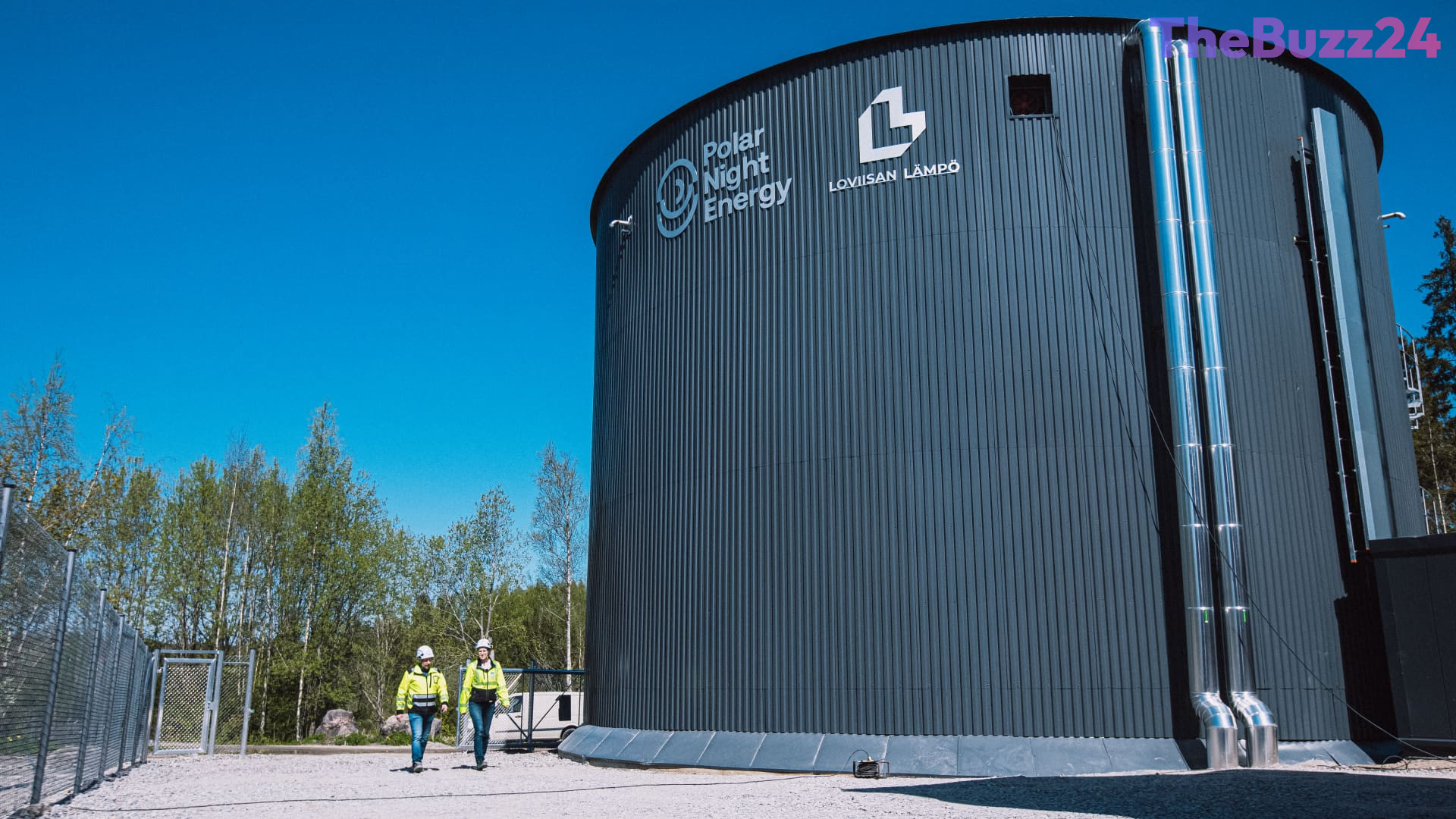
A small municipality in southern Finland has successfully deployed the world’s largest commercial sand battery, offering a groundbreaking solution to the persistent challenge of renewable energy intermittency. Standing impressively at 13 meters tall and 15 meters wide, this massive facility utilizes 2,000 metric tons of crushed soapstone to store surplus clean energy as thermal heat, boasting a capacity of 100 megawatt-hours.
Commissioned by Loviisan Lämpö and engineered by Polar Night Energy, the innovative installation provides enough thermal energy to cover the summer heat demands of Pornainen’s 5,000 residents for nearly a month, and roughly one week during the harsh winter months. By shifting away from traditional oil and wood-chip combustion, the project has successfully slashed local greenhouse gas emissions from the district heating network by nearly 70% while drastically cutting down on wood-chip consumption.
The mechanics behind the sand battery resemble an industrial-scale thermos. When surplus wind and solar electricity floods the grid—often driving prices down—the system harnesses that power to heat the sand to exceptionally high temperatures. Heavily insulated silos trap this thermal energy for days or even weeks until it is discharged via heat exchangers to warm water for the municipal heating grid. Company executives emphasize that this eliminates the reliance on scarce rare earth materials typically required for chemical storage solutions like lithium-ion batteries.
While scaling the technology comes with hurdles, such as lower energy density compared to chemical counterparts and the current inefficiency of converting heat back into electricity, experts remain optimistic. Academic and industry leaders note that electrothermal storage represents a viable, scalable path forward for communities seeking to decouple heating production from fossil fuels. With international interest pouring in from across the globe, this Finnish innovation could soon pave the way for sustainable district heating worldwide.
Key Takeaways
- The world's largest commercial sand battery in Pornainen, Finland, uses 2,000 metric tons of crushed soapstone to store 100 megawatt-hours of thermal energy.
- The facility has slashed local heating network greenhouse gas emissions by nearly 70% and reduced wood-chip usage by roughly 60%.
- Unlike lithium-ion batteries, sand batteries require no rare earth minerals and can store heat efficiently for weeks at a time.
Editor’s Analysis & Impact
The deployment of the Pornainen sand battery marks a pivotal milestone in the evolution of regional thermal storage. As the global energy transition accelerates, the intermittency of wind and solar power remains a primary roadblock for grid stability and district heating. While chemical batteries dominate short-term electrical storage, electrothermal solutions like sand batteries offer an economically viable and environmentally friendly alternative for long-duration thermal management. The absence of rare earth materials removes critical supply chain vulnerabilities, making this technology highly attractive for developing nations and fossil-fuel-dependent communities. However, widespread adoption will depend on overcoming engineering limitations regarding electricity-to-heat-to-electricity conversion efficiency. If developers can successfully scale these systems for electricity generation alongside heating, sand batteries could fundamentally transform the global energy landscape.
Frequently Asked Questions
Q: How does a sand battery work?
A: A sand battery uses excess electricity from renewable sources like wind and solar to heat sand to very high temperatures inside an insulated silo. The trapped heat is later discharged via heat exchangers to warm water for municipal district heating networks.
Q: What are the main advantages of sand batteries over lithium-ion batteries?
A: Sand batteries do not require rare earth materials or critical minerals like lithium, cobalt, or nickel. They are also capable of storing energy for much longer periods—weeks rather than hours—making them ideal for seasonal heating demands.
Q: Can sand batteries be used to generate electricity?
A: While primarily designed for thermal energy storage and district heating, researchers and developers are actively exploring ways to efficiently convert the stored heat back into electricity, though the technology is currently optimized for thermal applications.
AI Disclosure: This article is based on verified data and official reports. Our Team and AI have cross-referenced every financial detail with primary sources to ensure total accuracy.
More from this Category