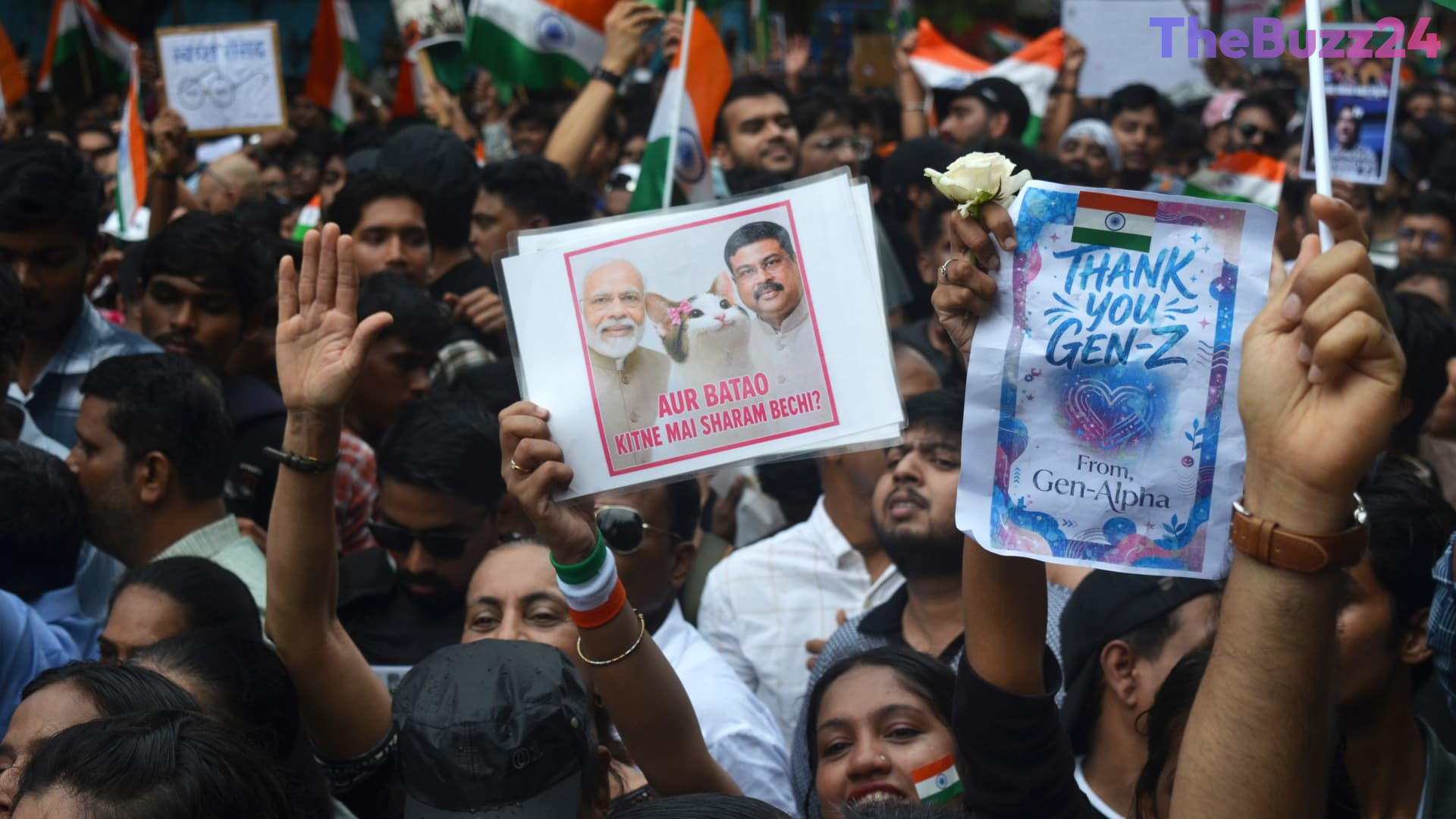
Gen Z Activism Forces Policy Shift in India as Government Bows to Student Demands
The Indian government has faced a rare and significant political setback as it conceded to the demands of a youth-led protest movement, signaling a potential shift in the country’s political landscape. The movement, spearheaded by the Cockroach Janta Party (CJP), successfully pressured the administration to address systemic failures in the national examination process. Following weeks of intense demonstrations, Education Minister Dharmendra Pradhan tendered his resignation, marking a major victory for the student activists.
Beyond the resignation, the government has committed to providing compensation for families affected by the tragic consequences of recent examination paper leaks. In an effort to regain trust, Prime Minister Narendra Modi announced the formation of a high-powered task force, led by tech entrepreneur Nandan Nilekani, to overhaul examination protocols. The Prime Minister also took to social media, marking his first foray into Instagram reels, in an apparent attempt to bridge the widening communication gap with younger voters.
The CJP movement, which gained massive traction on social media, emerged as a direct response to perceived institutional indifference toward the struggles of unemployed youth. Experts suggest that this successful mobilization highlights a growing disconnect between the current administration and India’s Gen Z demographic. As this generation prepares to become the most influential voting bloc by 2029, political analysts warn that the government’s traditional narrative of economic growth may no longer be sufficient to secure their support.
This development is expected to have a ripple effect across Indian civil society. With the government showing vulnerability to organized public pressure, other interest groups—including farmers and various advocacy organizations—are reportedly preparing to launch their own campaigns. The success of the student-led movement has effectively challenged the perception of the government’s political invincibility, setting the stage for a more contentious and active period of civic engagement in the lead-up to future state and general elections.
Key Takeaways
- Education Minister Dharmendra Pradhan resigned following intense pressure from student protesters regarding examination paper leaks.
- The government established a high-powered task force led by Nandan Nilekani to implement comprehensive examination reforms.
- The success of the youth-led Cockroach Janta Party is expected to inspire further civil society protests and challenge the government's political dominance.
Editor’s Analysis & Impact
The recent capitulation of the Indian government to student demands marks a pivotal moment in the nation’s political trajectory. For years, the administration has maintained a narrative of invincibility, largely driven by economic promises and strong leadership branding. However, the rise of the CJP demonstrates that Gen Z voters are increasingly prioritizing institutional accountability and transparency over traditional political rhetoric. The market and industry implications are significant; as the government pivots to address youth grievances, we may see increased scrutiny on public-sector efficiency and administrative reforms. Looking ahead, the administration must navigate a delicate balance: maintaining its core base while preventing further alienation of a demographic that will dictate the electoral outcomes of 2029. This event serves as a bellwether for future civil society movements, suggesting that the era of unchallenged policy implementation may be coming to an end.
Frequently Asked Questions
Q: What triggered the student protests in India?
A: The protests were primarily triggered by widespread examination paper leaks, which led to significant academic and personal distress for students, including instances of suicide.
Q: Who is the Cockroach Janta Party (CJP)?
A: The CJP is a youth-led movement founded by student activist Abhijeet Dipke. The name was adopted in response to a courtroom comment by the Chief Justice of India, who had referred to some activists and unemployed youth as 'cockroaches'.
AI Disclosure: This article is based on verified data and official reports. Our Team and AI have cross-referenced every financial detail with primary sources to ensure total accuracy.
More from this Category