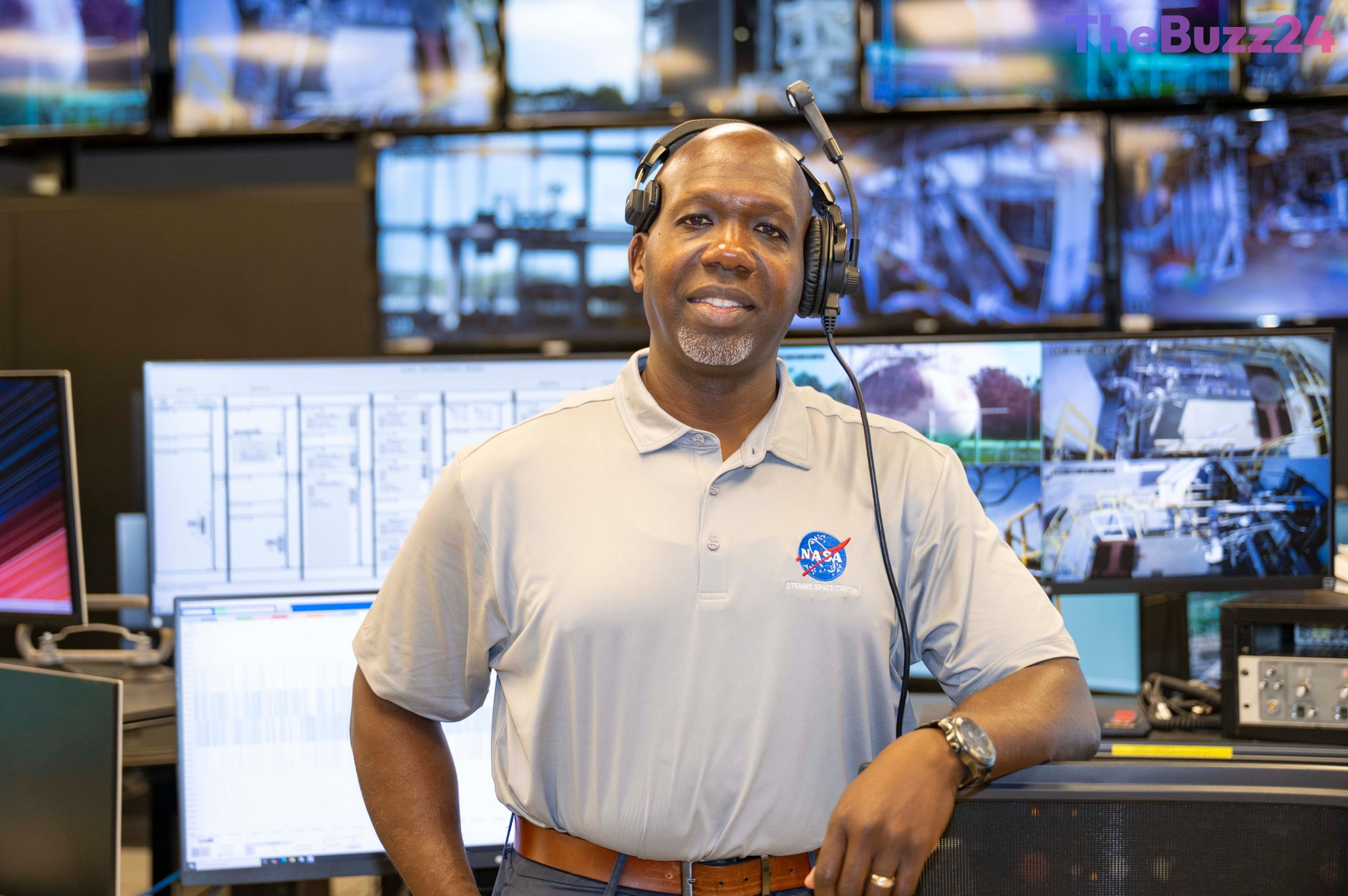
NASA Fortifies Technical Core by Transitioning Veteran Contractors to Civil Servants
In a strategic push to reinforce its internal technical expertise, the space agency has officially sworn in seasoned contractor Ray Williams as a full-time civil servant at the Stennis Space Center in Mississippi. Williams, who brings nearly three decades of hands-on experience to his new position, now oversees test operations support at the facility’s vital E-Complex. This transition forms part of a broader administrative directive aimed at embedding deep institutional knowledge and technical competencies directly within the federal workforce.
Having started his journey at the E-Complex back in 1998 as an electrical technician during its initial construction phase, Williams has witnessed the facility’s evolution firsthand. Over the years, he transitioned from a contractor role into an instrumentation and electrical engineer, building an extensive understanding of the complex’s high-pressure propellant systems and cryogenic handling capabilities. Today, his leadership is instrumental in managing customized testing environments that serve both government initiatives and the rapidly expanding commercial aerospace sector.
The E-Complex stands out for its unique adaptability, allowing engineering teams to reconfigure test stands to mirror the extreme environments components will face during actual flight missions. By securing Williams’ decades of specialized knowledge as a permanent civil servant, the agency significantly mitigates long-term operational risks and ensures seamless continuity for ongoing propulsion tests. For Williams, stepping into this public service role fulfills a lifelong ambition that began with an elementary school field trip, positioning him at the heart of humanity’s modern return to the Moon through the Artemis campaign.
Key Takeaways
- NASA is actively converting experienced contractors into permanent civil servants to bolster its core technical capabilities.
- Ray Williams, with 28 years of experience at the Stennis Space Center, was among the first wave of engineers sworn in under the new directive.
- The E-Complex plays a critical role in testing propulsion components for both government space missions and commercial aerospace partners.
Editor’s Analysis & Impact
The strategic transition of veteran contractors into permanent civil service roles represents a pivotal shift in how major space agencies manage institutional knowledge and mitigate technical risks. As the commercial aerospace sector expands and deep-space exploration demands higher reliability, retaining specialized expertise in-house is critical. By converting long-tenured professionals like Ray Williams, the agency reduces its reliance on external outsourcing for mission-critical operations, ensuring that vital engineering insights remain within the federal workforce. This policy not only enhances operational resilience for complex propulsion testing facilities but also sets a precedent for workforce management across federal science and defense sectors, highlighting the growing value of human capital in high-stakes technological enterprises.
Frequently Asked Questions
Q: Why is NASA converting contractors into civil servants?
A: The initiative aims to strengthen technical core competencies, retain vital institutional knowledge in-house, and reduce long-term operational risks within the agency's workforce.
Q: What is the function of the E-Complex at Stennis Space Center?
A: The E-Complex is a versatile propulsion testing facility that uses high- and low-pressure propellant systems to conduct development testing on rocket components for both NASA and commercial aerospace partners.
AI Disclosure: This article is based on verified data and official reports. Our Team and AI have cross-referenced every financial detail with primary sources to ensure total accuracy.
More from this Category