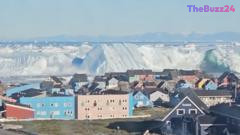
Dramatic Footage Captures Massive Iceberg Flipping Near Greenland Coast
Spectacular video footage has emerged capturing a colossal iceberg as it violently capsized just off the coast of Greenland, near the picturesque settlement of Ilulissat. The breathtaking event sent powerful waves surging toward the shoreline, providing a stark reminder of the dynamic and volatile nature of the region’s rapidly changing glacial landscapes.
The dramatic incident took place near Ilulissat, a location renowned globally on the western coast of the island and celebrated for housing the prestigious UNESCO-listed Ilulissat Icefjord. Eyewitnesses on the scene managed to record the rare spectacle as the massive structure of ice broke its equilibrium and violently rolled over in the frigid waters, generating significant disturbance in the nearby coastal area.
Scientists and environmental researchers closely monitor the Ilulissat region due to its rapid ice loss and frequent calving events, which serve as crucial indicators of broader global climate shifts. While such dramatic flips are a natural part of the glacier lifecycle, the frequency and scale of these occurrences continue to draw significant scientific interest and underline the ongoing transformations taking place within the Arctic ecosystem.
Key Takeaways
- A massive iceberg was caught on camera capsizing off the coast of Ilulissat, Greenland.
- The dramatic event generated significant waves that pushed close to the local coastal city.
- Ilulissat is famous for its UNESCO-listed icefjord and serves as a major focal point for observing Arctic ice dynamics.
Editor’s Analysis & Impact
The dramatic capsizing of the massive iceberg near Ilulissat offers more than just a striking visual spectacle; it highlights the relentless and accelerating transformations occurring within Arctic cryosphere environments. As global temperatures continue to rise, glacial retreat and calving events are becoming increasingly frequent and severe, with profound implications for global sea-level rise and ocean circulation patterns. For industries ranging from maritime navigation and coastal infrastructure planning to climate modeling, monitoring these high-latitude shifts is paramount. The economic and ecological ramifications of sustained ice loss in Greenland will likely spur increased international research funding, tighter environmental policies, and a greater demand for advanced satellite and on-ground monitoring technologies in the polar regions over the coming decade.
Frequently Asked Questions
Q: Where did the iceberg capsizing take place?
A: The event occurred off the coast of Greenland, specifically near the coastal city of Ilulissat on the western side of the island.
Q: What is Ilulissat famous for?
A: Ilulissat is widely known for housing the UNESCO-listed Ilulissat Icefjord and being a primary location for observing massive glaciers and icebergs.
Q: Why do icebergs turn over?
A: Icebergs typically capsize when melting, calving, or erosion alters their center of gravity, causing them to shift and find a new balance in the water.
AI Disclosure: This article is based on verified data and official reports. Our Team and AI have cross-referenced every financial detail with primary sources to ensure total accuracy.
More from this Category