Proposed Disarmament Agreement for Gaza Sparks Diplomatic Uncertainty
A significant development has emerged regarding the conflict in Gaza, with reports indicating that a newly formed Board of Peace has reached a framework agreement aimed at the complete disarmament of Hamas and other armed factions within the territory. The proposal, which is being framed as a critical component of a broader peace initiative, suggests a phased withdrawal of Israeli forces from Gaza, contingent upon the successful completion of disarmament milestones.
Under the proposed plan, an International Stabilization Force would collaborate with a newly established Palestinian police force to maintain security and order. The initiative is intended to pave the way for a transition in governance, potentially allowing for the reconstruction of the region. Mediators from Egypt, Qatar, and Turkey have been credited with facilitating the discussions, and Cairo is expected to host further meetings to address the implementation phases of the ceasefire plan.
Despite the announcement, the path to implementation remains fraught with ambiguity. Official responses from both Israeli authorities and Hamas leadership have been inconsistent, with some reports suggesting that the current terms do not align with the security requirements demanded by Jerusalem. Furthermore, the role of the Board of Peace itself has been a subject of scrutiny, as its mandate appears to overlap with existing international frameworks, raising questions about its long-term authority and acceptance by regional stakeholders.
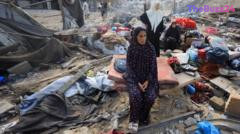
The conflict, which escalated significantly following the October 7, 2023, attacks, has resulted in a devastating humanitarian toll. As negotiations continue, the international community remains focused on whether these high-level diplomatic efforts can translate into a tangible, lasting cessation of hostilities on the ground, or if the deep-seated disagreements between the primary parties will continue to stall progress.
Key Takeaways
- A newly formed Board of Peace has proposed a phased disarmament plan for Hamas and other armed groups in Gaza.
- The plan involves a transition to a new Palestinian police force supported by an International Stabilization Force, contingent on Israeli military withdrawal.
- Significant skepticism remains, as Israeli officials have indicated the current proposal does not meet their security demands, and the status of the agreement remains unconfirmed by all parties.
Editor’s Analysis & Impact
The announcement of a disarmament agreement represents a high-stakes diplomatic maneuver that attempts to bypass the traditional deadlock in the Israel-Gaza conflict. By introducing a ‘Board of Peace’ and an international security framework, the initiative seeks to create a third-party mechanism to manage the power vacuum that would follow a Hamas disarmament. However, the market and geopolitical implications are volatile. Without explicit, public buy-in from both the Israeli government and Hamas leadership, the agreement risks being viewed as a symbolic gesture rather than a functional roadmap. The future outlook depends heavily on whether the proposed ‘International Stabilization Force’ can secure a mandate that is acceptable to all regional powers. If this framework fails to gain traction, it could lead to a further hardening of positions, complicating future humanitarian and reconstruction efforts in the region.
Frequently Asked Questions
Q: What is the primary goal of the proposed Board of Peace agreement?
A: The primary goal is the complete disarmament of Hamas and other armed groups in Gaza, followed by a phased withdrawal of Israeli forces and the establishment of a new Palestinian police force.
Q: Has the agreement been officially accepted by all parties involved?
A: No. While the agreement has been announced, Israeli officials have stated that the current terms do not meet their security demands, and there has been no official confirmation of acceptance from Hamas leadership.
AI Disclosure: This article is based on verified data and official reports. Our Team and AI have cross-referenced every financial detail with primary sources to ensure total accuracy.
More from this Category