Guatemala on High Alert as Fuego Volcano Spews Lava and Ash
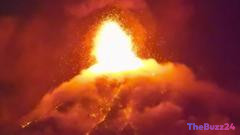
Guatemala’s Fuego volcano has entered a new phase of intense activity, sending incandescent lava spewing into the air and generating dangerous pyroclastic currents down its slopes. These fast-moving rivers of hot gas, volcanic ash, and rock fragments were observed flowing down the volcano’s south-eastern flank early Tuesday, prompting immediate concern from authorities.
In response to the escalating activity, Guatemala’s disaster management agency, Conred, has declared a nationwide orange alert, signifying the second-highest level of preparedness. The agency has urged local communities to remain vigilant, warning that the ongoing eruptions could lead to further pyroclastic flows and extensive ash clouds. Residents in affected areas have been advised to keep windows and doors closed, and schools in close proximity to the volcano have suspended classes as a precautionary measure.
Fuego, an active stratovolcano, is situated merely 16 kilometers (10 miles) west of Antigua, a renowned Unesco World Heritage Site celebrated for its colonial architecture and a popular destination for international tourists. The volcano itself also attracts hikers. However, Conred has issued stern warnings to both visitors and residents, advising them to avoid approaching or lingering in high-risk zones, particularly on the volcano’s treacherous slopes, to ensure their safety.
The current eruption evokes memories of a devastating event in 2018, when Fuego’s powerful eruption claimed the lives of over 200 people. Many victims were tragically caught in the rapid descent of pyroclastic flows that surged through ravines like Las Lajas, underscoring the extreme hazards associated with the volcano’s explosive activity.
Key Takeaways
- Guatemala's Fuego volcano is actively erupting, generating dangerous pyroclastic flows and spewing lava.
- The national disaster management agency, Conred, has issued a nationwide orange alert, advising residents to take precautions and closing schools in affected areas.
- The eruption poses a significant risk to nearby communities and the popular tourist city of Antigua, with warnings issued against approaching the volcano's slopes.
Editor’s Analysis & Impact
The renewed intense activity of Fuego volcano presents immediate challenges for Guatemala, particularly concerning public safety and local infrastructure. The orange alert underscores the potential for widespread disruption, impacting daily life, local commerce, and potentially the tourism sector in Antigua, a key economic driver. While the immediate focus is on emergency response and mitigation, the long-term outlook involves continuous monitoring and robust disaster preparedness strategies. This event highlights the inherent geological risks in volcanic regions and the critical importance of effective communication and evacuation plans to protect both residents and visitors. The memory of the 2018 tragedy will undoubtedly influence the cautious approach taken by authorities.
Frequently Asked Questions
Q: What are pyroclastic currents?
A: Pyroclastic currents are fast-moving mixtures of hot gas, volcanic ash, and rock fragments that flow down the sides of a volcano during an eruption. They are extremely dangerous due to their high speed and temperature.
Q: Where is Fuego volcano located?
A: Fuego volcano is an active stratovolcano situated approximately 16 kilometers (10 miles) west of Antigua, a popular tourist city and Unesco World Heritage Site in Guatemala.
Q: What is the current alert level in Guatemala due to the eruption?
A: Guatemala's disaster management agency, Conred, has issued a nationwide orange alert, which is the second-highest level of preparedness, urging vigilance and precautionary measures.
AI Disclosure: This article is based on verified data and official reports. Our Team and AI have cross-referenced every financial detail with primary sources to ensure total accuracy.
More from this Category