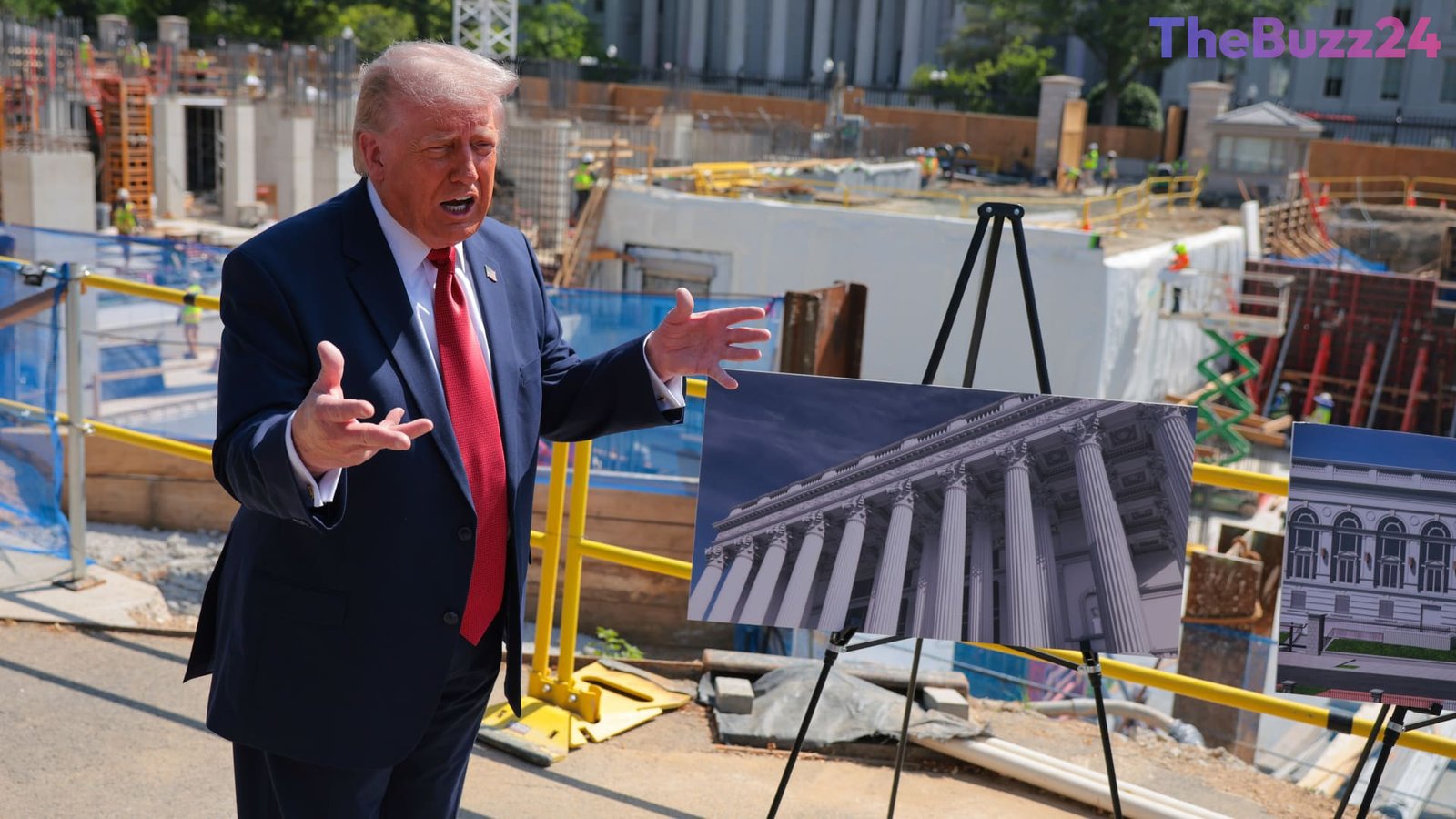
Federal Appeals Court Halts White House Ballroom Construction, Citing Congressional Oversight
A federal appeals court has issued a significant ruling against the administration’s plan to construct a $400 million ballroom on the grounds of the White House. The U.S. Court of Appeals for the District of Columbia Circuit ruled in a 2-1 decision that the executive branch cannot unilaterally reshape the historic property without explicit authorization from Congress. The court emphasized that a president serves as a temporary tenant of the White House rather than an owner, and therefore lacks the authority to bypass legislative approval for such a massive architectural undertaking.
The legal challenge was initiated by the National Trust for Historic Preservation, which argued that the demolition of the East Wing and the subsequent construction of a 90,000-square-foot ballroom violated established preservation and oversight protocols. While the administration has defended the project as a vital security upgrade—citing the inclusion of bomb shelters, medical facilities, and drone shielding—the court rejected the notion that national security claims grant the executive branch immunity from legal and legislative constraints.
Following the ruling, the administration has been granted a 14-day stay to prepare an appeal to the U.S. Supreme Court. The project, which has seen its costs double since its inception, remains a point of intense contention. While the administration maintains that the facility is essential for modern security and formal functions, the appellate court’s majority opinion underscored that the executive branch cannot operate with “utter lawlessness” when modifying national landmarks, asserting that the constitutional order requires congressional involvement in such significant structural changes.
Key Takeaways
- A federal appeals court blocked the construction of a $400 million White House ballroom, ruling that congressional approval is required for such major modifications.
- The court rejected the administration's argument that national security concerns override the need for legislative oversight and historic preservation laws.
- The administration plans to appeal the decision to the Supreme Court, while the current ruling halts all above-ground construction on the site.
Editor’s Analysis & Impact
This ruling serves as a critical check on executive power, reinforcing the principle that even the highest office in the land is subject to the checks and balances of the legislative and judicial branches. By framing the White House as a national landmark rather than a private estate, the court has set a precedent that limits the ability of future administrations to unilaterally alter federal property under the guise of security. The market impact of this decision is largely symbolic but carries weight for federal contractors and architectural firms involved in government projects, as it signals that large-scale infrastructure plans on federal land face significant legal hurdles if they bypass standard legislative channels. The upcoming Supreme Court appeal will be a landmark case regarding the scope of presidential authority versus congressional oversight.
Frequently Asked Questions
Q: Why was the construction of the White House ballroom halted?
A: The court ruled that the administration did not have the authority to fundamentally alter the White House without congressional approval, violating the constitutional balance of power.
Q: What is the next step for the administration regarding this project?
A: The appeals court granted a 14-day stay, allowing the administration to file an appeal with the U.S. Supreme Court to challenge the injunction.
AI Disclosure: This article is based on verified data and official reports. Our Team and AI have cross-referenced every financial detail with primary sources to ensure total accuracy.
More from this Category