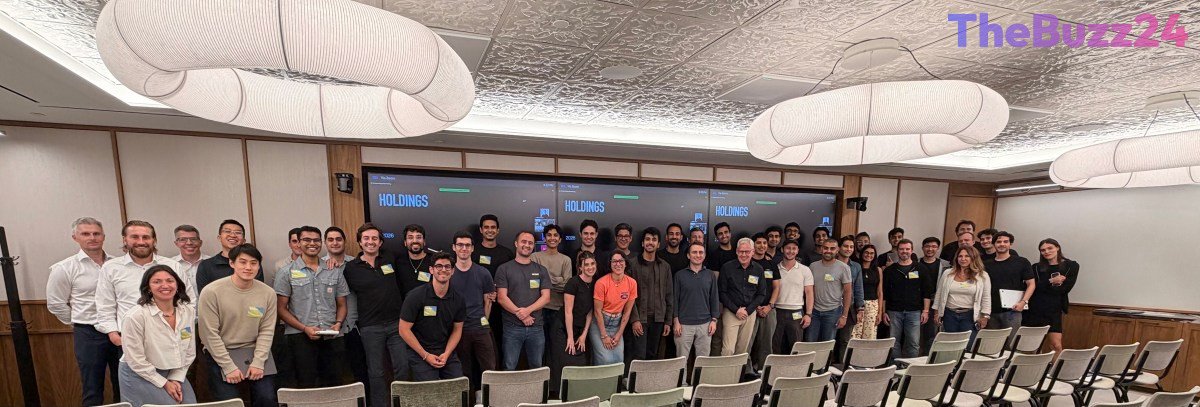
Thrive Holdings Secures $2 Billion to Accelerate AI Integration Across Traditional Industries
Thrive Holdings has successfully raised $2 billion in its latest funding round, propelling the company’s valuation to an impressive $12 billion. Backed by prominent investment giants including SoftBank, D1 Capital Partners, and Altimeter Capital, the firm operates with a unique business model akin to a private equity firm focused on artificial intelligence. Instead of merely developing software, Thrive acquires traditional, operationally complex businesses and directly integrates advanced AI technologies into their daily workflows.
A key driver of Thrive’s rapid growth is its deep strategic relationship with OpenAI, which acquired an ownership stake in the firm in late 2025. This partnership allows OpenAI engineers to work directly alongside Thrive’s portfolio companies to fast-track AI adoption. Currently, Thrive manages over 70 businesses across two primary divisions: “Current,” its accounting arm, and “Shield,” its information technology sector. Current’s proprietary “TaxAI” has already demonstrated significant efficiency gains, processing thousands of tax returns with 98% accuracy and reducing preparation times by nearly a third. Meanwhile, Shield has dramatically accelerated IT help desk resolution times.
With the newly secured capital, Thrive plans to expand beyond digital services into physical assets and infrastructure. The firm is launching a third vertical dedicated to navigating the complex regulatory and compliance landscapes of the “built environment,” which includes data centers, manufacturing plants, healthcare facilities, and power grids. While AI will not replace essential field work or professional oversight, it is designed to streamline administrative bottlenecks such as permit preparation, inspection documentation, and compliance tracking, ultimately lowering costs and accelerating project timelines.
Key Takeaways
- Thrive Holdings raised $2 billion at a $12 billion valuation to acquire traditional businesses and upgrade them with AI.
- The firm benefits from a close partnership with OpenAI, which includes direct hands-on engineering support for portfolio companies.
- The new funding will support an expansion into physical infrastructure and regulatory compliance services.
Editor’s Analysis & Impact
The massive $2 billion funding round for Thrive Holdings highlights a significant shift in the artificial intelligence sector: the transition from theoretical AI capabilities to practical, hands-on enterprise deployment. While the initial wave of AI investment focused heavily on foundational model developers, investors are now recognizing that the real value lies in implementation. By acquiring traditional, fragmented businesses in sectors like accounting, IT, and now physical infrastructure, Thrive bypasses the slow adoption cycles typical of legacy industries. This “private equity for AI” model, also being explored by competitors partnering with Anthropic, represents a highly lucrative bridge between cutting-edge technology and real-world operations. As regulatory hurdles and infrastructure demands grow, particularly around data centers and energy, Thrive’s expansion into the built environment positions it to solve critical bottlenecks that have historically slowed down major industrial projects.
Frequently Asked Questions
Q: What is Thrive Holdings' business model?
A: Thrive Holdings operates similarly to a private equity firm, acquiring traditional, service-oriented businesses in sectors like accounting and IT, and then directly integrating advanced AI tools into their workflows to boost efficiency.
Q: How is OpenAI involved with Thrive Holdings?
A: OpenAI holds an ownership stake in Thrive Holdings and actively collaborates by sending its own engineers to work directly with Thrive's portfolio companies to accelerate AI implementation.
Q: What is Thrive's new 'built environment' initiative?
A: It is a new vertical focused on using AI to streamline the regulatory, permitting, and compliance processes required to build and maintain physical infrastructure, such as data centers and manufacturing facilities.
AI Disclosure: This article is based on verified data and official reports. Our Team and AI have cross-referenced every financial detail with primary sources to ensure total accuracy.
More from this Category