Spectacular Total Solar Eclipse Darkens Skies Across Europe in Historic Celestial Event
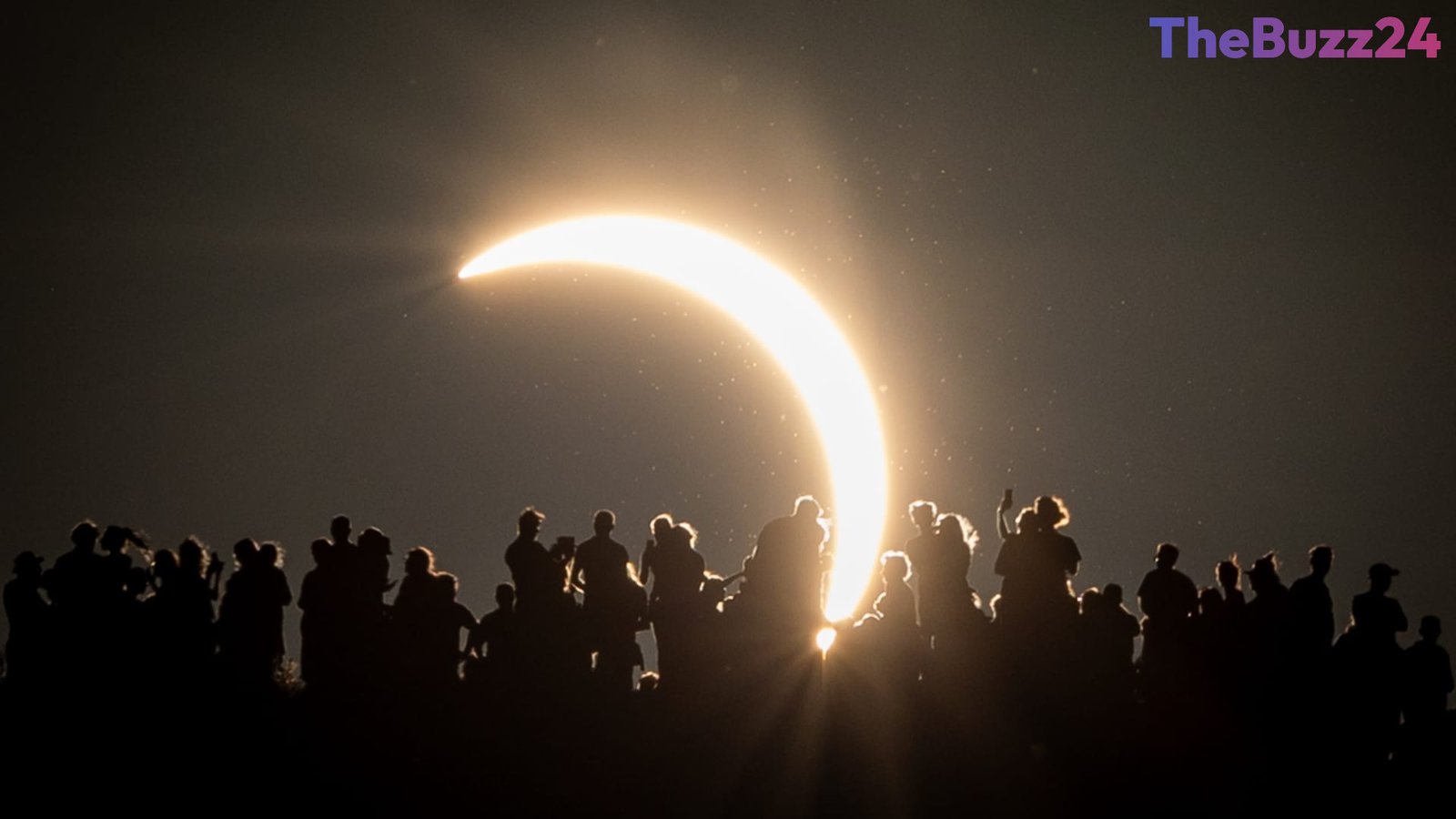
Millions of onlookers across Europe gathered outdoors on Wednesday to witness a breathtaking total solar eclipse, marking the continent’s most significant celestial event of its kind since 1999. The path of totality plunged key regions—including parts of Greenland, Iceland, northern Spain, and Portugal—into temporary daylight darkness as the Moon positioned itself directly between the Earth and the Sun.
While the full shadow created a complete blockage of sunlight along a specific northern trajectory, neighboring nations experienced an extraordinary partial eclipse. In countries like the United Kingdom and France, millions turned their eyes upward to observe the moon obscuring a large portion of the solar disk, turning bright afternoon sunlight into a faint twilight glow.
The rare astronomical phenomenon provided a major commercial windfall for retail and tourism operators situated along the prime viewing corridor. Hotels across Iceland and northern Spain reported fully booked accommodations, with premium suites fetching upwards of $1,000 per night. Simultaneously, retailers experienced a surge in consumer activity as shoppers lined up around block corners to purchase certified eclipse-viewing glasses ahead of the event.
Key Takeaways
- Europe witnessed its first major total solar eclipse since 1999, plunging regions across Greenland, Iceland, Spain, and Portugal into daytime darkness.
- Millions of spectators across surrounding countries, including the UK and France, experienced a dramatic partial solar eclipse.
- The rare event sparked a significant economic boom in tourism and retail, driving hotel rates above $1,000 per night in prime viewing zones.
Editor’s Analysis & Impact
Major astronomical events like total solar eclipses serve as powerful drivers for localized economic surges, particularly within the tourism, hospitality, and specialty retail sectors. The massive demand recorded across Iceland and northern Spain underscores the rapidly growing phenomenon of astro-tourism. With hotel accommodations commanding premium rates exceeding $1,000 per night, hospitality operators demonstrated how acute regional supply shortages can yield exceptional short-term margins during milestone events. Moving forward, local governments and commercial sectors located in future paths of totality can draw valuable lessons from this occurrence, leveraging target marketing and dynamic infrastructure planning to capture international traveler spending.
Frequently Asked Questions
Q: When was the last total solar eclipse visible in Europe prior to this event?
A: The last total solar eclipse visible across major parts of the European continent occurred in 1999.
Q: Which regions were able to see the full total solar eclipse?
A: The path of complete totality passed through regions of Greenland, Iceland, northern Spain, and Portugal.
Q: How did the eclipse impact the local economy in prime viewing areas?
A: Hospitality and retail businesses saw significant revenue increases, with high demand driving hotel room rates past $1,000 per night and causing rapid sell-outs of solar viewing glasses.
AI Disclosure: This article is based on verified data and official reports. Our Team and AI have cross-referenced every financial detail with primary sources to ensure total accuracy.
More from this Category