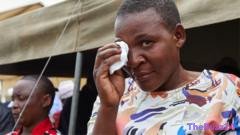
Zimbabwe’s Deadliest Transport Disaster: Lake Kariba Ferry Claims 93 Lives Amid Overcrowding Concerns
A tragic ferry disaster on Zimbabwe’s Lake Kariba has claimed at least 93 lives, marking it as the nation’s deadliest transport accident. The vessel, designed to carry 90 passengers, was reportedly carrying an estimated 168 individuals when it was struck by a powerful wave and capsized approximately a week ago. President Emmerson Mnangagwa has declared a state of disaster as search and recovery operations continue on the vast man-made lake.
The death toll has steadily climbed from 44 immediately after the incident to 84 over the weekend, with divers subsequently recovering nine additional bodies, bringing the total to 93. Provincial Affairs Minister Marian Chombo confirmed that 67 people were rescued. However, the identification of recovered bodies is proving challenging, with families often relying on clothing and personal items. Authorities indicate that DNA analysis may become necessary, as 83 victims have been identified so far, including 39 children.
The ferry served as a crucial, affordable transport link for rural communities, carrying parents taking their children home for school holidays and local traders. Accounts from survivors paint a grim picture of the moments leading up to the tragedy. Itayi Marumisa, a trader from Mola village, described the ferry as heavily overloaded with goods, noting that passengers had voiced concerns about the rough conditions. Marumisa stated that life jackets were inaccessible, buried under luggage, with only about 30 people managing to retrieve them amidst the chaos of screaming children and widespread vomiting, while the captain reportedly appeared unresponsive.
The disaster has left communities reeling. Tight Bhusumani, a local councillor representing Mola, highlighted the profound impact on his community, particularly the children. He recounted distressing instances where children lost both parents and siblings, becoming the sole surviving members of their families. Bhusumani, who also lost a child in the accident, noted that many families are still anxiously awaiting news of their missing loved ones. Lake Kariba, a significant reservoir shared with Zambia, is vital for transport, fishing, and hydroelectric power for both nations, underscoring the profound loss for the region.
Key Takeaways
- A ferry disaster on Zimbabwe's Lake Kariba has resulted in 93 confirmed deaths, making it the country's most severe transport accident.
- The vessel, designed for 90 passengers, was reportedly carrying 168 people and was heavily overloaded with goods when it capsized due to a strong wave.
- Survivors reported inaccessible life jackets and a lack of response from the captain, while identification of victims, including 39 children, remains a significant challenge.
Editor’s Analysis & Impact
This tragic incident on Lake Kariba highlights critical issues within regional transport infrastructure and safety regulations. The reported severe overcrowding, coupled with inaccessible safety equipment, points to systemic failures in oversight and enforcement. The disaster will likely prompt increased scrutiny of maritime safety standards, particularly for vital transport links serving rural communities in Zimbabwe and potentially across similar regions in Africa. The long-term implications could include stricter capacity controls, mandatory safety equipment checks, and enhanced emergency response protocols. Furthermore, the human cost, particularly the loss of many children, will undoubtedly place immense pressure on authorities to prevent future occurrences and provide better support for affected communities. This event underscores the urgent need for robust regulatory frameworks and their diligent implementation to safeguard public safety on essential transport routes.
Frequently Asked Questions
Q: What caused the Lake Kariba ferry disaster?
A: The ferry reportedly capsized after being hit by a strong wave. Survivor accounts also indicate the vessel was severely overloaded with both passengers and goods, and safety equipment like life jackets was inaccessible.
Q: How many people were on board the ferry, and what was its capacity?
A: The ferry had a capacity for 90 passengers but was estimated to be carrying at least 168 people at the time of the accident.
Q: What challenges are authorities facing in the aftermath of the disaster?
A: Authorities are continuing search and recovery efforts, with bodies being found far from the accident site. A major challenge is identifying the victims, with many families relying on personal items, and DNA analysis may be required due to the condition of some recovered bodies.
AI Disclosure: This article is based on verified data and official reports. Our Team and AI have cross-referenced every financial detail with primary sources to ensure total accuracy.
More from this Category