Cosmic Resurrection: Astronomers Discover Potential ‘Second-Generation’ Planet Orbiting a Dead Star
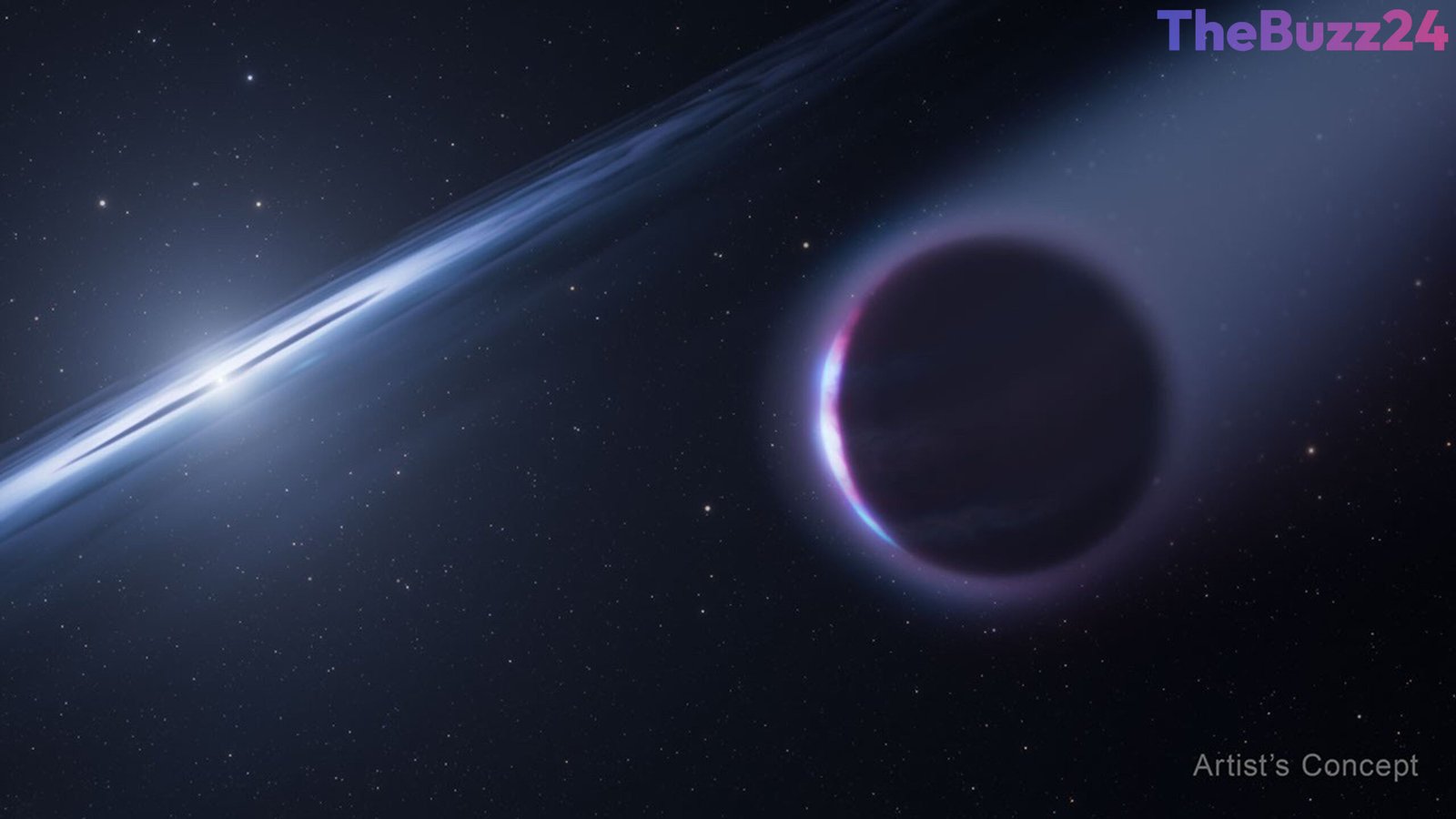
In a breakthrough discovery that challenges our understanding of stellar evolution, researchers have identified evidence of a ‘second-generation’ planet orbiting a white dwarf star known as HS 0209+0832. By re-examining archival data from the Hubble Space Telescope, scientists identified a unique chemical signature—specifically high levels of the element niobium—that had remained a mystery since the star was first observed in 1999. This discovery suggests that planetary systems may not always end when a star dies, but can instead reform from the debris left behind.
A white dwarf represents the final stage of a low-mass star, formed after it exhausts its nuclear fuel and sheds its outer layers. While traditional planets form from the primordial material left over during a star’s birth, this newly identified world appears to have coalesced from the material ejected during the star’s death throes. The presence of niobium is particularly significant, as this heavy element is synthesized only under the extreme conditions found within dying stars, serving as a chemical fingerprint for this rare formation process.
Further analysis using data from the retired FUSE mission and the Transiting Exoplanet Survey Satellite (TESS) has provided additional support for this theory. Observations indicate a gas giant, roughly the size of Jupiter, orbiting the white dwarf at a distance of approximately 3.7 million miles. While the intense heat of the young white dwarf is currently stripping the planet’s atmosphere, researchers believe the planet is likely to remain stable as the star cools, potentially creating a long-term environment for this unusual celestial body.
Key Takeaways
- Researchers identified a potential 'second-generation' planet forming from the debris of a dead white dwarf star.
- The discovery was made by re-analyzing 1999 Hubble archival data, which revealed previously unidentified signatures of the element niobium.
- The planet is estimated to be a gas giant the size of Jupiter, currently orbiting very close to its host star.
Editor’s Analysis & Impact
This discovery marks a significant paradigm shift in astrophysics, suggesting that the death of a star is not necessarily the end of its planetary system. By proving that planets can form from the ‘recycled’ material of a stellar remnant, this research expands the search parameters for exoplanets to include white dwarf systems, which were previously considered less likely candidates for hosting planets. The ability to extract new, groundbreaking insights from decades-old archival data underscores the immense value of long-term space observation missions. Moving forward, this finding will likely prompt a surge in interest regarding the frequency of second-generation planetary formation, potentially altering our models of galactic evolution and the lifecycle of solar systems throughout the universe.
Frequently Asked Questions
Q: What is a second-generation planet?
A: A second-generation planet is a world that forms from the material ejected by a star as it dies and transitions into a white dwarf, rather than from the original gas and dust present at the star's birth.
Q: Why is the presence of niobium significant in this discovery?
A: Niobium is a heavy element that cannot be created through standard stellar fusion. Its presence indicates that the material forming the planet originated from the extreme, exotic conditions found inside a dying star.
AI Disclosure: This article is based on verified data and official reports. Our Team and AI have cross-referenced every financial detail with primary sources to ensure total accuracy.
More from this Category