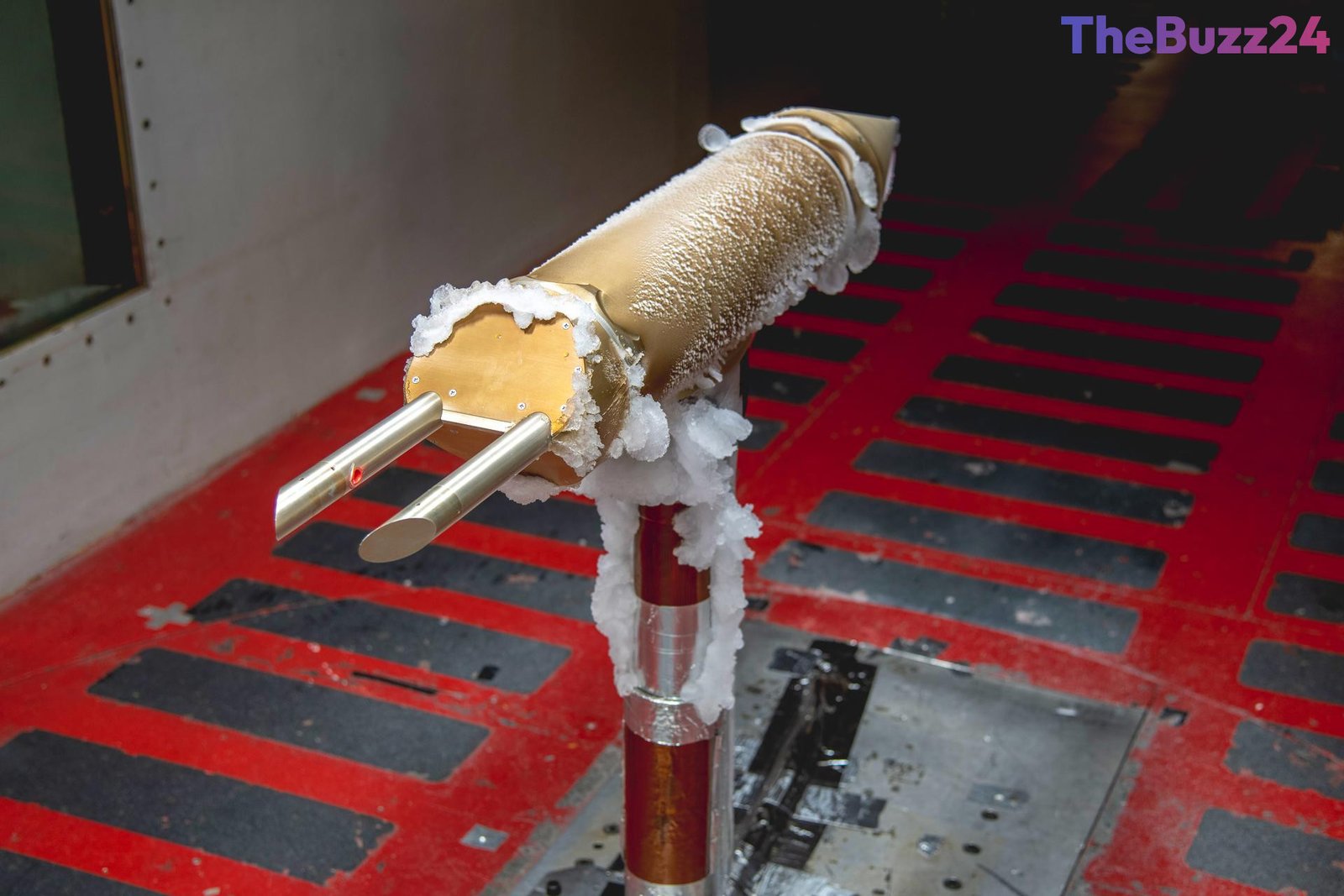
NASA Intensifies Testing to Combat Rare Aircraft Icing Hazards
NASA is actively upgrading its testing infrastructure and research methodologies to tackle a rare yet severe aviation hazard known as supercooled large droplet icing. This dangerous phenomenon occurs when commercial and experimental aircraft traverse clouds containing unusually large, extremely cold water droplets that remain in a liquid state until they violently impact unheated aircraft surfaces and rapidly freeze, potentially compromising flight safety and structural integrity.
Utilizing the specialized Icing Research Tunnel located at the Glenn Research Center in Cleveland, researchers are collaborating closely with the domestic aerospace industry to evaluate how effectively current engineering designs handle these massive droplets. While standard aircraft de-icing systems are optimized for typical cloud conditions where water droplets generally measure between 2 and 100 microns, supercooled large droplets can expand up to a staggering 2,000 microns in diameter. These oversized droplets frequently bypass standard protective boundaries, splashing onto unprotected aft sections of the aircraft.
To improve simulation accuracy, the research team has integrated advanced drop-sizing probes capable of detecting and analyzing particles larger than 45 microns in real time. By merging this cutting-edge data with measurements collected for smaller particles, scientists can map the complete droplet size spectrum within artificial clouds. This comprehensive testing campaign represents a major achievement for the Subsonic Flight Demonstrator initiative, with findings poised to shape the future of safer, highly efficient commercial aircraft design.
Key Takeaways
- NASA is utilizing its Icing Research Tunnel at Glenn Research Center to study supercooled large droplet icing.
- Supercooled large drops can exceed 2,000 microns, bypassing conventional aircraft ice protection systems.
- Advanced real-time testing probes are being used to map the complete droplet size spectrum inside artificial clouds.
Editor’s Analysis & Impact
The ongoing research by NASA into supercooled large droplet icing marks a critical turning point for modern aerospace engineering and flight safety. As commercial aviation constantly strives toward higher fuel efficiency and novel aircraft configurations—such as those explored under the Subsonic Flight Demonstrator project—understanding complex atmospheric interactions becomes paramount. Current predictive models often fall short when accounting for the chaotic physics of oversized, sub-zero water droplets. By refining simulation tunnels and deploying real-time diagnostic probes, this initiative will ultimately empower aircraft manufacturers to build safer, more resilient wings and control surfaces. The broader industry implications include updated regulatory certification standards, reduced weather-related flight hazards, and enhanced safety protocols for future generations of commercial and experimental aircraft.
Frequently Asked Questions
Q: What is supercooled large droplet icing?
A: It is a rare aviation hazard where aircraft encounter unusually large, very cold water droplets that remain liquid until they impact a plane and rapidly freeze on unprotected surfaces.
Q: How large can supercooled droplets get compared to standard droplets?
A: While typical cloud droplets range from 2 to 100 microns in diameter, supercooled large drops can reach up to 2,000 microns in diameter.
Q: Where is NASA conducting these specialized icing tests?
A: The testing is being conducted inside the Icing Research Tunnel at NASA's Glenn Research Center in Cleveland, Ohio.
AI Disclosure: This article is based on verified data and official reports. Our Team and AI have cross-referenced every financial detail with primary sources to ensure total accuracy.
More from this Category