Relativity Networks Secures $22 Million to Revolutionize Data Center Connectivity with Faster Fiber
The burgeoning demand for data center infrastructure, projected to reach $4 trillion by the end of the decade, faces significant hurdles, including political constraints and power grid limitations. Amidst these challenges, Relativity Networks is poised to disrupt the industry by introducing a novel approach to fiber optic technology. The company has successfully raised $22 million in SAFE note funding, led by Rhapsody Venture Partners, Bell Ventures Inc., and Faster Than Glass LLC. This funding round, a common vehicle for early-stage companies, will fuel Relativity Networks’ mission to enhance data transfer speeds within data centers.
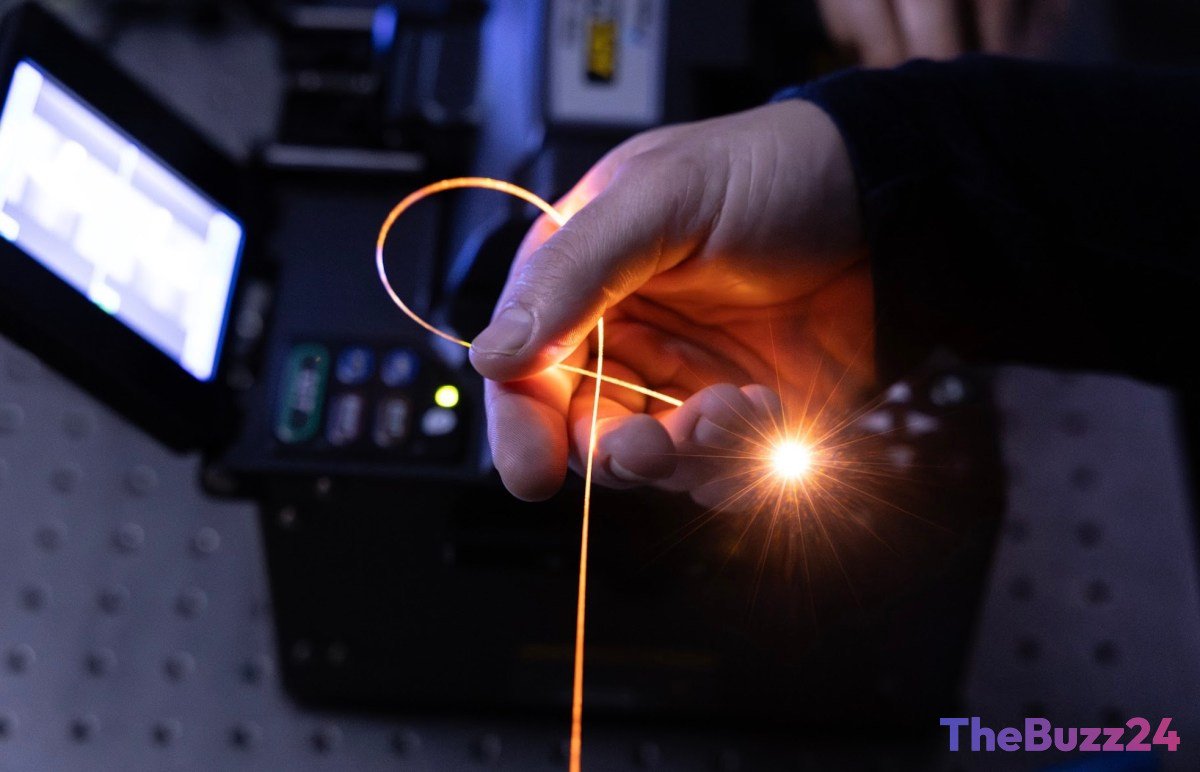
Relativity Networks specializes in hollow-core fiber technology, a cutting-edge solution that enables data transmission 50% faster than traditional fiber optics. Unlike conventional fiber that channels light through glass, hollow-core fiber utilizes a vacuum chamber at its center, allowing light to travel closer to its theoretical maximum speed. This translates to a tangible reduction in signal latency; CEO Jason Eichenholz notes that a signal traveling one kilometer can be reduced from five microseconds in standard fiber to just three and a half microseconds with hollow-core technology.
This advancement holds particular significance as artificial intelligence (AI) workloads become increasingly distributed. While earlier AI applications were confined to single racks, modern AI compute often spans vast data center campuses covering hundreds of acres and multiple buildings. Eichenholz highlights the potential for hollow-core fiber to enable multi-campus deployments, allowing geographically dispersed data centers to function as a single, synchronized unit. This capability is crucial for large-scale AI projects that require access to substantial power resources, often necessitating the use of existing infrastructure across different locations.
The ability to reduce latency by half offers data center developers greater flexibility in site selection and expansion. By mitigating the impact of distance on signal speed, Relativity Networks’ technology could alleviate the spatial constraints that have hampered data center buildouts. Eichenholz envisions this as a pivotal shift, moving beyond the initial optimization of compute and networking to a new era focused on optimizing the very geography of data center operations.
Key Takeaways
- Relativity Networks has raised $22 million to deploy faster hollow-core fiber technology in data centers.
- Hollow-core fiber transmits data 50% faster than traditional fiber by using a vacuum chamber, reducing latency.
- This technology could enable larger, more distributed AI compute across multiple data center campuses, optimizing geographical placement.
Editor’s Analysis & Impact
The substantial funding secured by Relativity Networks underscores the critical need for advanced networking solutions in the rapidly expanding data center market, particularly driven by AI. By offering a significant leap in fiber optic speed and reducing latency, the company addresses key bottlenecks in scaling compute-intensive applications. This innovation could redefine data center architecture, allowing for greater geographical flexibility in site selection and enabling the seamless integration of distributed computing resources. As AI continues its exponential growth, technologies that optimize not just processing power but also the physical infrastructure and connectivity will be paramount for future development and efficiency.
Frequently Asked Questions
Q: What is hollow-core fiber?
A: Hollow-core fiber is a type of optical fiber that transmits light through a hollow tube at its center, rather than through a solid glass core. This design allows light to travel closer to the speed of light in a vacuum, resulting in significantly lower latency compared to traditional fiber optics.
Q: How does Relativity Networks' technology help with AI?
A: Relativity Networks' faster hollow-core fiber reduces the time it takes for data to travel between components, which is crucial for large-scale AI computations that often involve distributing processing across many machines or even multiple data centers. This reduced latency allows for more synchronized and efficient operation of these distributed systems, enabling AI to scale more effectively.
Q: What is a SAFE note?
A: A SAFE (Simple Agreement for Future Equity) note is a type of agreement used by startups to raise capital. Instead of issuing equity immediately, investors provide funds in exchange for the right to receive equity in a future priced funding round, typically at a discount or with a valuation cap.
AI Disclosure: This article is based on verified data and official reports. Our Team and AI have cross-referenced every financial detail with primary sources to ensure total accuracy.
More from this Category