Rethinking AI in Medicine: How Vivodyne’s Robotic Labs Aim to Bridge the Drug Discovery Gap
Despite grand declarations from tech leaders that artificial intelligence will rapidly eradicate complex diseases like cancer, the biotech sector continues to hit fundamental scientific bottlenecks. Industry visionaries—including OpenAI’s Sam Altman and Google DeepMind’s Demis Hassabis—have frequently cited disease eradication as a key goal for advanced AI. Yet, practical breakthroughs remain scarce because generative algorithms are largely trained on static snapshots of cells or animal data that fail to replicate the nuanced mechanics of living human systems. With roughly 90% of experimental drugs that succeed in animal trials ultimately failing in human clinical stages, the industry is increasingly acknowledging a severe data deficit.
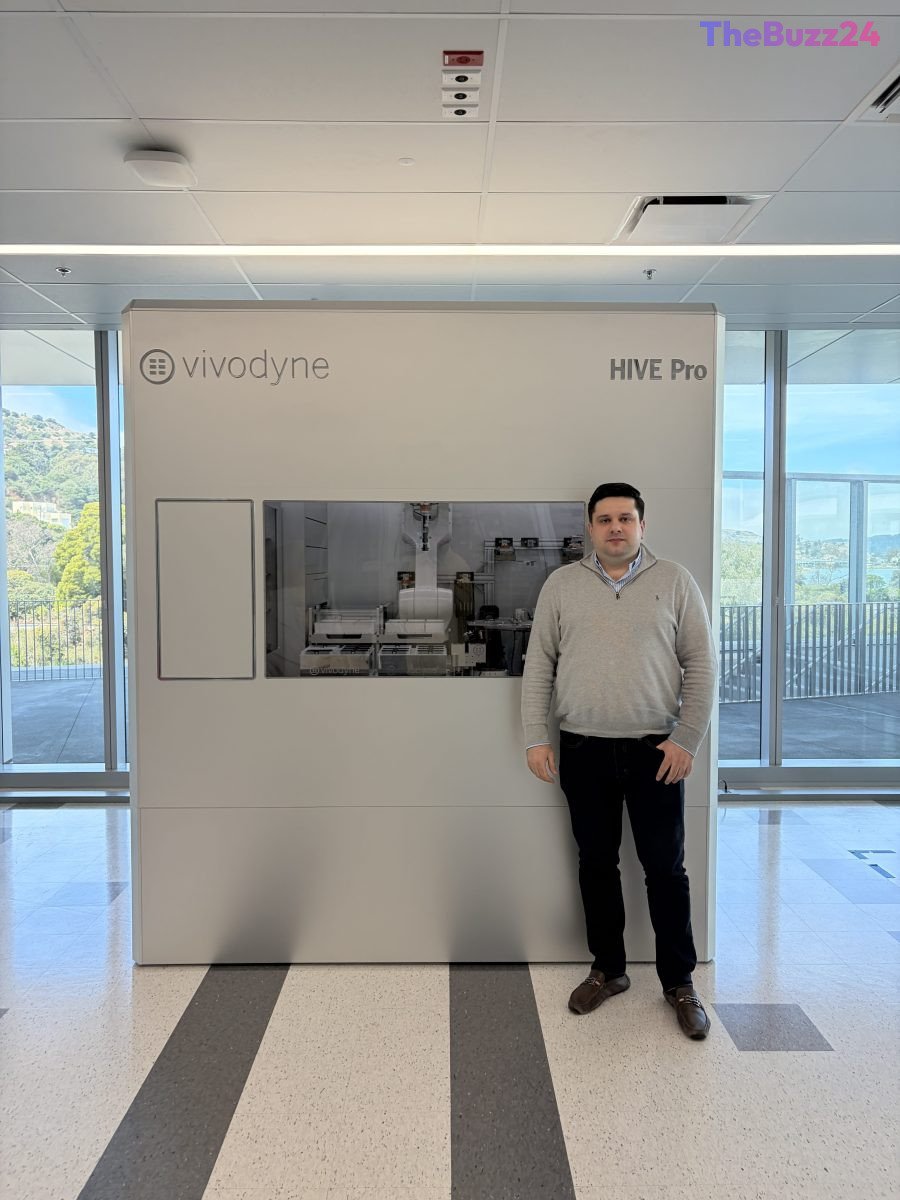
To bridge this divide, biotechnology startup Vivodyne is introducing a high-throughput, automated approach designed to generate true human biological data at scale. Spun out of the University of Pennsylvania by bioengineer Andrei Georgescu, the company has developed modular robotic laboratories known as HIVE. These robotic systems cultivate over 20 varieties of living human tissues, autonomously delivering drug dosages and continuously monitoring the biological reactions. By testing dynamic, multicellular structures rather than isolated proteins or animal surrogates, the platform achieves predictive accuracy rates above 90% across liver, airway, and bone marrow tissue models.
Vivodyne has recently expanded its footprint by opening a large-scale data facility near San Francisco, supported by nearly $80 million in venture funding led by Khosla Ventures. The platform is designed to act as an advanced proving ground for major pharmaceutical partners, mimicking the rigorous pre-testing protocols standard in automotive crash simulations before entering expensive human clinical trials. By observing hundreds of thousands of live tissue experiments in real time, the platform systematically tracks how diseased cells transition when exposed to specific therapies.
Ultimately, the goal extends beyond accelerating individual drug pipelines. Georgescu envisions using this continuous stream of causal biological data to train next-generation AI models on the fundamental cause-and-effect relationships of human physiology. As medical treatments increasingly shift toward multi-pathway combination therapies, establishing verifiable causality in living human tissue could unlock the true potential of artificial intelligence in healthcare.
Key Takeaways
- Current AI drug discovery models struggle because they rely heavily on animal trials and static cell data rather than living human biology.
- Vivodyne's automated HIVE robotics cultivate over 20 types of human tissue, generating dynamic cause-and-effect data with over 90% predictive accuracy.
- Backed by roughly $80 million in funding, the startup has launched a major testing facility to de-risk clinical trials and train advanced biological AI systems.
Editor’s Analysis & Impact
The intersection of artificial intelligence and biotechnology has spent years navigating high expectations and computational bottlenecks. While machine learning tools like AlphaFold have revolutionized our understanding of static protein structures, translation into actual approved drugs has been impeded by the lack of dynamic, human-specific experimental data. Vivodyne’s robotic approach represents a pivotal industry transition toward ‘lab-in-the-loop’ drug discovery. By shifting from mouse models to automated, high-throughput human tissue testing, biopharma can dramatically reduce the exorbitant failure rates of clinical trials. Over the next decade, the startups that successfully integrate real-world biological feedback loops into foundation models will likely capture the highest value in digital therapeutics and pharmaceutical R&D.
Frequently Asked Questions
Q: Why do traditional AI models struggle to discover effective drugs for humans?
A: Most existing AI models are trained on animal testing results or static images of isolated cells. Because human biology is far more complex and dynamic, 90% of drugs that perform well in animal testing fail during human clinical trials.
Q: What is Vivodyne's HIVE technology?
A: HIVE is an automated, modular robotic lab system that grows, doses, and monitors more than 20 types of living human tissues, capturing dynamic causal data on how human cells react to various therapeutic compounds.
Q: How does dynamic tissue data improve artificial intelligence?
A: Unlike static data that merely shows cell states before and after an event, continuous monitoring reveals the step-by-step causal mechanisms behind cellular changes, allowing AI models to understand how and why interventions succeed or fail.
AI Disclosure: This article is based on verified data and official reports. Our Team and AI have cross-referenced every financial detail with primary sources to ensure total accuracy.
More from this Category