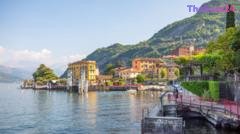
Como Mayor Enacts Sweeping Bike Ban in Historic City After Personal E-Bike Collision
The mayor of Como, Alessandro Rapinese, has announced a comprehensive ban on cycling in specific areas of the historic Italian city, a decision he attributes to the need for improved public safety following a personal incident involving an electric bicycle. Effective from September, cyclists will be required to dismount and walk their bikes through a zone encompassing approximately 30 streets.
This measure is part of a broader package of new traffic regulations designed to establish a Limited Traffic Zone (ZTL) aimed at managing tourist growth and imposing stricter rules on cars and vans within the city center. The ban applies universally to both electric and traditional bicycles, as Italian highway code does not differentiate between models. Many of the affected roads are among the widest in the old town and are frequently used by delivery drivers, who will also be impacted.
Mayor Rapinese publicly explained his decision in a video, part of his self-produced online series “RapiNews24.” He recounted a July incident where he collided with an e-bike shortly after his administration had discussed traffic restrictions. “People act based on their own experiences and I know what it’s like to be hit by one of these beasts,” Rapinese stated. This move aligns with a growing trend across Europe, where several local authorities, including those in the UK and cities like Paris and Palermo, have implemented restrictions on e-bikes and other single-person vehicles.
Despite the mayor’s rationale, the ban has ignited significant local opposition. An online petition has been launched to challenge the resolution, and local citizens’ groups have voiced strong disapproval. Civitas Como has described the ban as “questionable and erroneous,” while the Nova Como association has organized a protest bike ride for September 12. The city’s Roman-walled center already operates under a limited-traffic zone, where bicycles have become a popular mode of transport for residents, further fueling the local backlash.
Key Takeaways
- Como's mayor, Alessandro Rapinese, has enacted a ban on cycling in 30 historic city streets starting September, citing public safety concerns after he was personally involved in an e-bike collision.
- The ban applies to both electric and traditional bicycles and is part of a wider package of traffic regulations aimed at managing tourist growth and imposing stricter rules on vehicles in the city center.
- The new measure has sparked significant local opposition, including an online petition and planned protests, with citizen groups questioning its legitimacy and impact on local transport.
Editor’s Analysis & Impact
This cycling ban in Como highlights the increasing tension between modern urban mobility and the preservation of historic city centers. While driven by a personal incident, Mayor Rapinese’s policy could set a precedent for other European cities grappling with similar challenges posed by the proliferation of e-bikes and scooters. The immediate impact will be felt by local residents and delivery services, potentially altering daily commutes and business operations. For the broader e-bike industry, such restrictions could signal a need for greater collaboration with urban planners to develop safer infrastructure or alternative usage models. The strong public backlash also underscores the importance of balancing safety concerns with community needs and the potential for policy decisions to be perceived as arbitrary or overly restrictive.
Frequently Asked Questions
Q: Why did Como's mayor implement the cycling ban?
A: Mayor Alessandro Rapinese stated the ban was necessary for public safety, particularly after he was personally involved in a collision with an electric bike in July.
Q: Which areas of Como are affected by the new cycling ban?
A: The ban applies to an area encompassing approximately 30 streets within Como's historic city center, requiring cyclists to dismount and walk their bikes.
Q: What is the local reaction to the ban?
A: The ban has faced significant backlash from locals, leading to an online petition to block the resolution and planned protests organized by local citizen groups like Nova Como.
AI Disclosure: This article is based on verified data and official reports. Our Team and AI have cross-referenced every financial detail with primary sources to ensure total accuracy.
More from this Category