Flipkart Rapidly Gains Ground in India’s Competitive Quick-Commerce Market
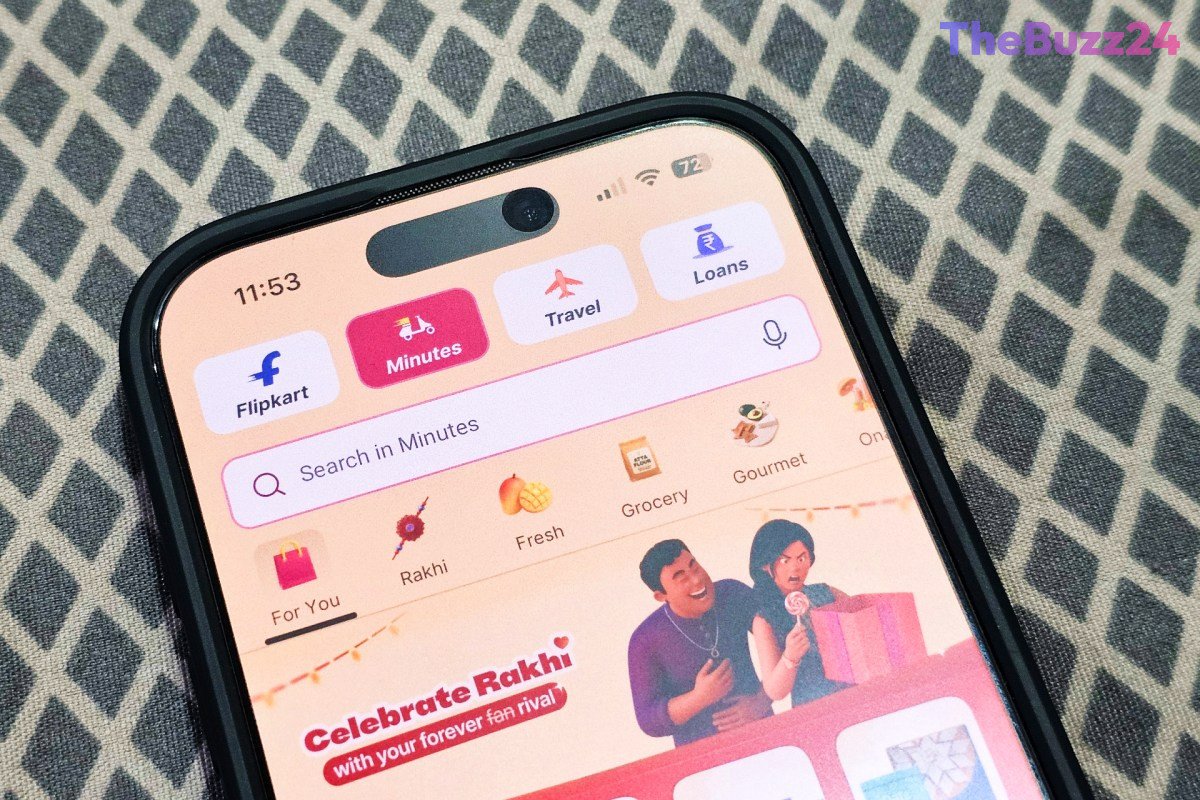
Flipkart is aggressively expanding its footprint in India’s fast-paced quick-commerce sector, rapidly closing the gap with established market leaders. Since the launch of its instant delivery service, Flipkart Minutes, the company has seen a surge in daily order volumes, now processing between 1.1 million and 1.2 million orders daily. This growth trajectory positions the retail giant to challenge long-standing incumbents like Swiggy’s Instamart, which currently handles approximately 1.4 million daily orders.
The rapid scaling of Flipkart Minutes is supported by a massive infrastructure build-out. The company has expanded its network of micro-fulfillment centers—often referred to as dark stores—to over 1,000 locations, with plans to reach 1,500 facilities by the end of 2026. This logistical expansion has allowed the service to reduce its average delivery time to approximately 11 minutes, significantly enhancing the customer experience and driving repeat purchase rates, which currently sit between 65% and 70%.
While Blinkit and Zepto continue to lead the market in total volume, the entry of major e-commerce players like Flipkart and Amazon has fundamentally altered the competitive landscape. By leveraging their existing, massive customer bases and deep capital reserves, these giants are transforming consumer expectations. As shoppers increasingly prioritize the convenience of instant delivery for groceries and household staples, the shift toward quick commerce appears to be a permanent change in Indian retail behavior, forcing all major players to prioritize speed and efficiency to remain relevant.
Key Takeaways
- Flipkart Minutes has reached a milestone of over 1.1 million daily orders, positioning it as a direct competitor to established quick-commerce leaders.
- The company is aggressively scaling its infrastructure, aiming to operate 1,500 micro-fulfillment centers by the end of 2026 to maintain delivery speeds.
- Consumer behavior in India is shifting permanently toward instant delivery, prompting both Flipkart and Amazon to prioritize quick-commerce to protect their market share.
Editor’s Analysis & Impact
The rapid ascent of Flipkart in the quick-commerce space signals a critical turning point for the Indian retail market. By successfully pivoting from traditional e-commerce to instant delivery, major players are effectively commoditizing speed. The industry is moving toward a ‘winner-take-most’ scenario where logistical density—the number of dark stores per square kilometer—becomes the primary competitive moat. As Flipkart and Amazon leverage their vast existing user bases, the pressure on pure-play quick-commerce startups like Zepto and Blinkit will intensify, likely leading to further consolidation or aggressive pricing wars. The long-term implication is that ‘scheduled delivery’ for groceries is becoming obsolete, forcing retailers to integrate hyper-local supply chains into their core business models to survive the evolving consumer demand for instant gratification.
Frequently Asked Questions
Q: What is the average delivery time for Flipkart Minutes?
A: Flipkart Minutes has successfully reduced its average delivery time to approximately 11 minutes.
Q: Why are major e-commerce companies investing so heavily in quick commerce?
A: Companies are investing in quick commerce to meet changing consumer expectations for instant delivery and to prevent losing market share to specialized instant-delivery platforms.
AI Disclosure: This article is based on verified data and official reports. Our Team and AI have cross-referenced every financial detail with primary sources to ensure total accuracy.
More from this Category