NASA’s Next-Gen Roman Telescope Set for August 30 Launch Aboard SpaceX Falcon Heavy
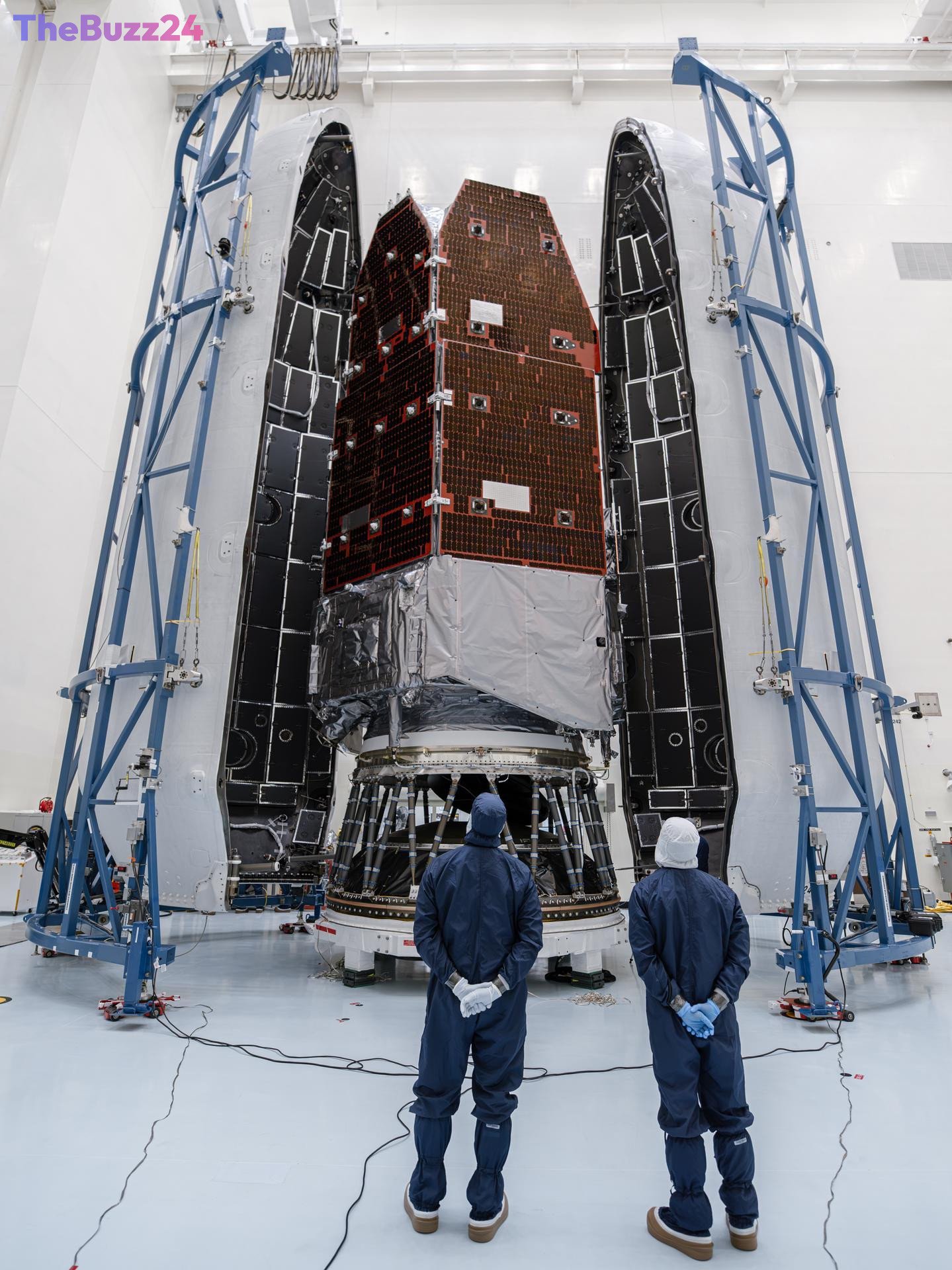
NASA is gearing up for the highly anticipated launch of its Nancy Grace Roman Space Telescope, a groundbreaking observatory poised to delve into the universe’s most profound mysteries. The telescope has been encapsulated and is awaiting its integration with a SpaceX Falcon Heavy rocket at the Kennedy Space Center in Florida. The launch is currently targeted for Sunday, August 30, with liftoff scheduled for no earlier than 7:26 a.m. Eastern Daylight Time.
Live coverage of the prelaunch activities and the launch itself will commence at 6:20 a.m. EDT on the designated launch day. NASA will provide comprehensive coverage across multiple platforms, allowing the public to witness this significant event in space exploration. The Roman Space Telescope, named in honor of NASA’s first chief astronomer, is designed to offer unparalleled infrared vision, boasting a field of view significantly larger than that of the Hubble Space Telescope. This advanced capability will enable scientists to conduct sweeping surveys, investigate the nature of dark energy and dark matter, discover exoplanets, map vast numbers of galaxies, and study celestial objects ranging from our solar system to the farthest reaches of the observable universe.
Following its separation from the Falcon Heavy rocket, the Roman telescope will embark on a journey to the second Sun-Earth Lagrange point (L2), situated approximately one million miles from Earth. The mission is planned for an initial five-year operational period, with aspirations to extend its scientific endeavors for a decade. All scientific data gathered by Roman will be made publicly accessible after processing, fostering further research and discovery within the global scientific community. The mission involves collaboration with international partners, including the European Space Agency (ESA), the Japan Aerospace Exploration Agency (JAXA), the French space agency CNES, and the Max Planck Institute for Astronomy in Germany, underscoring a global commitment to advancing astronomical knowledge.
Key Takeaways
- NASA's Nancy Grace Roman Space Telescope is scheduled to launch on August 30 aboard a SpaceX Falcon Heavy rocket.
- The telescope will utilize advanced infrared vision and a wide field of view to study dark energy, dark matter, exoplanets, and galaxies.
- The mission aims for a 10-year operational lifespan and will make its scientific data publicly available.
Editor’s Analysis & Impact
The upcoming launch of the Nancy Grace Roman Space Telescope represents a pivotal moment for astrophysics and space exploration. Its advanced capabilities promise to revolutionize our understanding of fundamental cosmic mysteries like dark energy and dark matter, potentially reshaping cosmological models. The collaboration with SpaceX for launch services highlights the growing trend of public-private partnerships in space missions, driving efficiency and innovation. The telescope’s planned decade-long mission and commitment to open data access will foster a new era of astronomical research, democratizing scientific discovery and inspiring future generations of scientists. The success of Roman could also influence future investment and development in space-based observatories.
Frequently Asked Questions
Q: What are the primary scientific goals of the Nancy Grace Roman Space Telescope?
A: The Roman Space Telescope aims to investigate dark energy and dark matter, discover and characterize exoplanets, map billions of galaxies, study black holes, and explore objects within our solar system and beyond.
Q: Where will the Roman Space Telescope be located after launch?
A: Following its launch and separation from the rocket, the Roman telescope will travel to the second Sun-Earth Lagrange point (L2), which is approximately one million miles from Earth.
Q: What is the expected operational lifetime of the Roman Space Telescope?
A: The mission has a primary lifetime of five years, with a goal of operating for ten years. All scientific data collected will be made publicly available after processing.
AI Disclosure: This article is based on verified data and official reports. Our Team and AI have cross-referenced every financial detail with primary sources to ensure total accuracy.
More from this Category