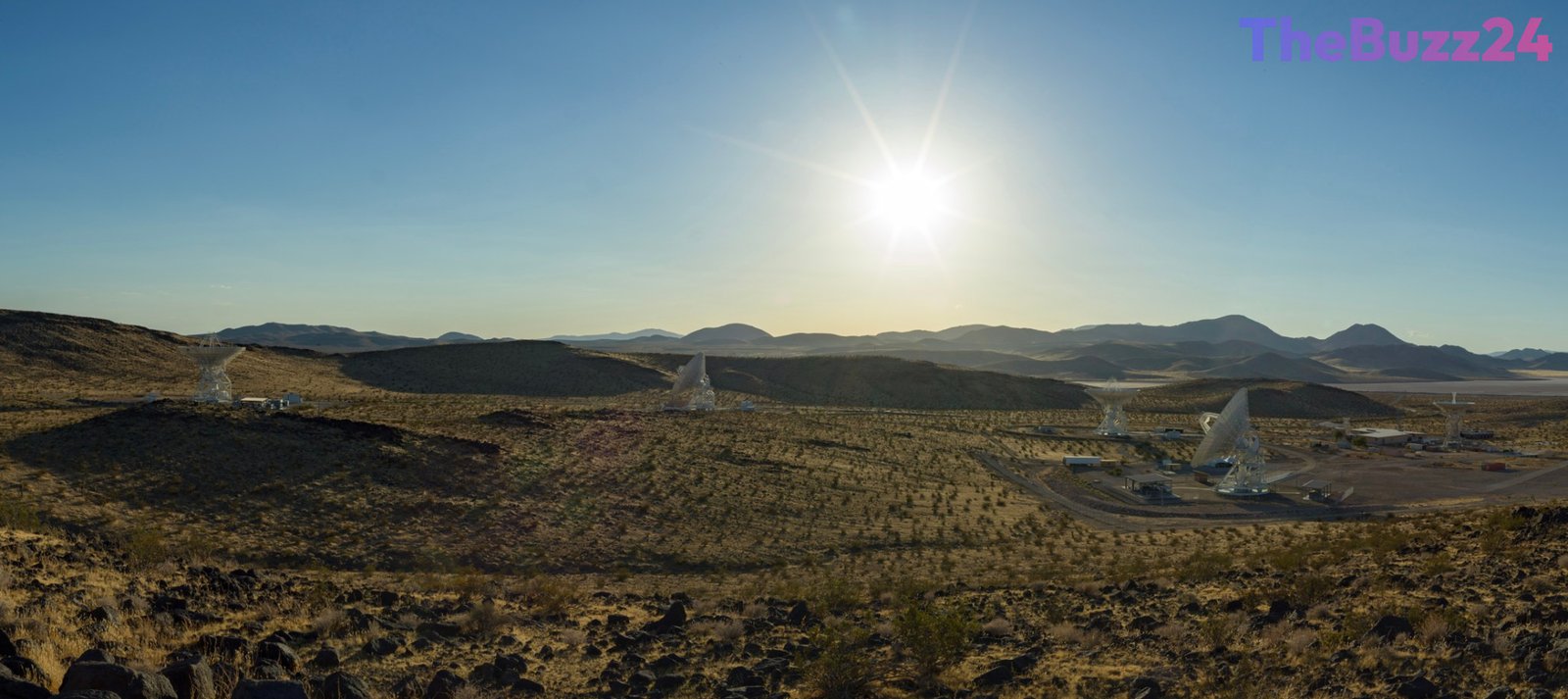
NASA Bolsters Deep Space Communications with New High-Tech Antenna
NASA has officially expanded its Deep Space Network (DSN) with the activation of a sophisticated 34-meter radio frequency antenna at the Goldstone Deep Space Communications Complex near Barstow, California. Known as Deep Space Station 23 (DSS-23), this new asset is a critical component of the agency’s long-term Aperture Enhancement Project, which aims to modernize the global infrastructure responsible for maintaining contact with over 40 spacecraft currently exploring the solar system and beyond.
The newly commissioned antenna utilizes a multifrequency beam-waveguide design, which directs radio signals to a climate-controlled underground facility. This engineering choice protects sensitive electronics from the elements and simplifies maintenance, ensuring the system remains reliable for decades. Following a rigorous testing phase that concluded in July, DSS-23 became operational in early August, immediately beginning its role in tracking high-profile missions such as the Chandra X-ray Observatory, the Psyche spacecraft, and the Voyager 1 probe.
This installation marks the fifth of six planned antennas under the Aperture Enhancement Project, an initiative launched in 2009 to upgrade the network’s capacity. By the time the final antenna, DSS-33, comes online in Canberra, Australia, in 2029, the network will feature 13 of these versatile 34-meter dishes. These units are designed to work in tandem, providing a robust communications backup for the network’s aging 70-meter antennas, which have served as the backbone of deep space exploration for over half a century.
Managed by the Jet Propulsion Laboratory, the DSN remains the primary lifeline for both robotic explorers and future human-crewed missions, including the Artemis program. As NASA pushes further into the lunar surface and deep space, the integration of these high-precision antennas ensures that the agency maintains the necessary bandwidth and reliability to support increasingly complex scientific and exploratory objectives.
Key Takeaways
- NASA has activated DSS-23, a new 34-meter multifrequency antenna at the Goldstone complex, to enhance deep space communications.
- The antenna is part of a larger Aperture Enhancement Project designed to modernize the DSN and provide backups for aging 70-meter dishes.
- The new infrastructure supports over 40 active missions, including the Artemis program and various robotic deep space explorers.
Editor’s Analysis & Impact
The activation of DSS-23 represents a strategic shift toward a more modular and maintainable communications architecture for deep space exploration. As the number of active missions increases—ranging from commercial lunar landers to deep-space scientific probes—the demand for reliable, high-bandwidth data transmission has reached a critical inflection point. By moving away from the reliance on singular, aging 70-meter antennas toward an array of smaller, more versatile 34-meter units, NASA is effectively reducing the risk of single-point failures in its global network. This transition not only lowers long-term maintenance costs but also provides the scalability required for the next era of space exploration, where real-time data transmission will be essential for both autonomous robotic systems and future human-crewed missions to the Moon and Mars.
Frequently Asked Questions
Q: What is the primary purpose of the new DSS-23 antenna?
A: The DSS-23 antenna is designed to enhance the capacity and reliability of NASA's Deep Space Network, allowing for better communication with robotic and human-crewed missions across the solar system.
Q: Why is NASA replacing or supplementing the 70-meter antennas?
A: The 70-meter antennas have been in operation for over 50 years and are becoming increasingly expensive and difficult to maintain. The new 34-meter antennas can be arrayed together to provide equivalent or superior performance with modern, more easily serviced technology.
AI Disclosure: This article is based on verified data and official reports. Our Team and AI have cross-referenced every financial detail with primary sources to ensure total accuracy.
More from this Category