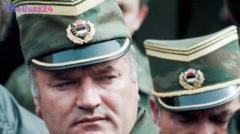
Remembering Ratko Mladić: A Journalist’s Harrowing Encounter with the ‘Butcher of Bosnia’
Ratko Mladić, the former Bosnian Serb commander infamously known as the “Butcher of Bosnia” for his role in the brutal Balkan wars of the 1990s, has died in prison. His passing marks the end of a figure synonymous with some of the worst atrocities committed in Europe since World War II.
During the early, chaotic months of the Bosnian War, BBC special correspondent Allan Little found himself on the ground, witnessing firsthand the devastating consequences of the conflict. Little recounts an early encounter with Mladić at Lukavica barracks near Sarajevo, a place teeming with weapons and paramilitary forces. He describes Mladić as exuding a dangerous fanaticism, even as the commander spoke of peace and unity. “He struck me then as fanatical, dangerously so,” Little recalled, a chilling premonition of the horrors to come.
The war’s grim reality was starkly visible. Little describes the chilling sight of “fires of ethnic cleansing” illuminating the night sky and the silent movement of villagers armed with “ancient weapons.” He recounts the harrowing experience of witnessing a procession of approximately 40,000 displaced people, driven from their homes by a sudden Serb advance. Among them was an elderly man, separated from his wife, whose profound distress underscored the human cost of the conflict, a cost often reduced to simplistic ethnic labels.
Little’s personal connection to the war’s brutality deepened tragically when his cameraman, Tihomir Tunukovic, was killed by a Serb gunner. The loss of his young colleague, a talented filmmaker, brought the abstract horrors of war into devastatingly personal focus, fueling the cycle of grief and vengeance that characterized the era. While Mladić may not have personally pulled every trigger, his leadership fostered an environment where such atrocities could occur, leading to mass murder, ethnic cleansing, and ultimately, genocide at Srebrenica.
Key Takeaways
- Ratko Mladić, the "Butcher of Bosnia" responsible for war crimes during the Balkan wars, has died in prison.
- A journalist's early encounter with Mladić revealed a dangerously fanatical demeanor.
- The conflict resulted in widespread ethnic cleansing, mass murder, and genocide, with profound personal tragedies for those involved.
Editor’s Analysis & Impact
The death of Ratko Mladić closes a somber chapter in modern European history. His legacy is inextricably linked to the horrific war crimes committed during the Bosnian War, including ethnic cleansing and genocide. The journalist’s firsthand account highlights the chilling atmosphere of fanaticism and the devastating human cost of the conflict. Mladić’s conviction and subsequent death serve as a stark reminder of the international community’s efforts to hold perpetrators of mass atrocities accountable, though the scars of these events continue to impact the region. The case underscores the importance of documenting such events and the enduring struggle for justice and reconciliation.
Frequently Asked Questions
Q: Who was Ratko Mladić?
A: Ratko Mladić was a Bosnian Serb military commander who led the Army of Republika Srpska during the Bosnian War (1992-1995). He was convicted of war crimes, crimes against humanity, and genocide by the International Criminal Tribunal for the former Yugoslavia (ICTY).
Q: What were the major atrocities associated with Ratko Mladić?
A: Mladić is most infamously associated with the Srebrenica massacre, where over 8,000 Bosniak men and boys were systematically killed, and the prolonged siege of Sarajevo. His forces were also responsible for widespread ethnic cleansing, mass killings, and systematic rape across Bosnia and Herzegovina.
Q: What is 'ethnic cleansing'?
A: Ethnic cleansing is a euphemism for the forced removal of a population from a territory, often through violence, intimidation, and murder, with the aim of creating an ethnically homogeneous region. It was a widely used tactic during the Balkan wars.
AI Disclosure: This article is based on verified data and official reports. Our Team and AI have cross-referenced every financial detail with primary sources to ensure total accuracy.
More from this Category