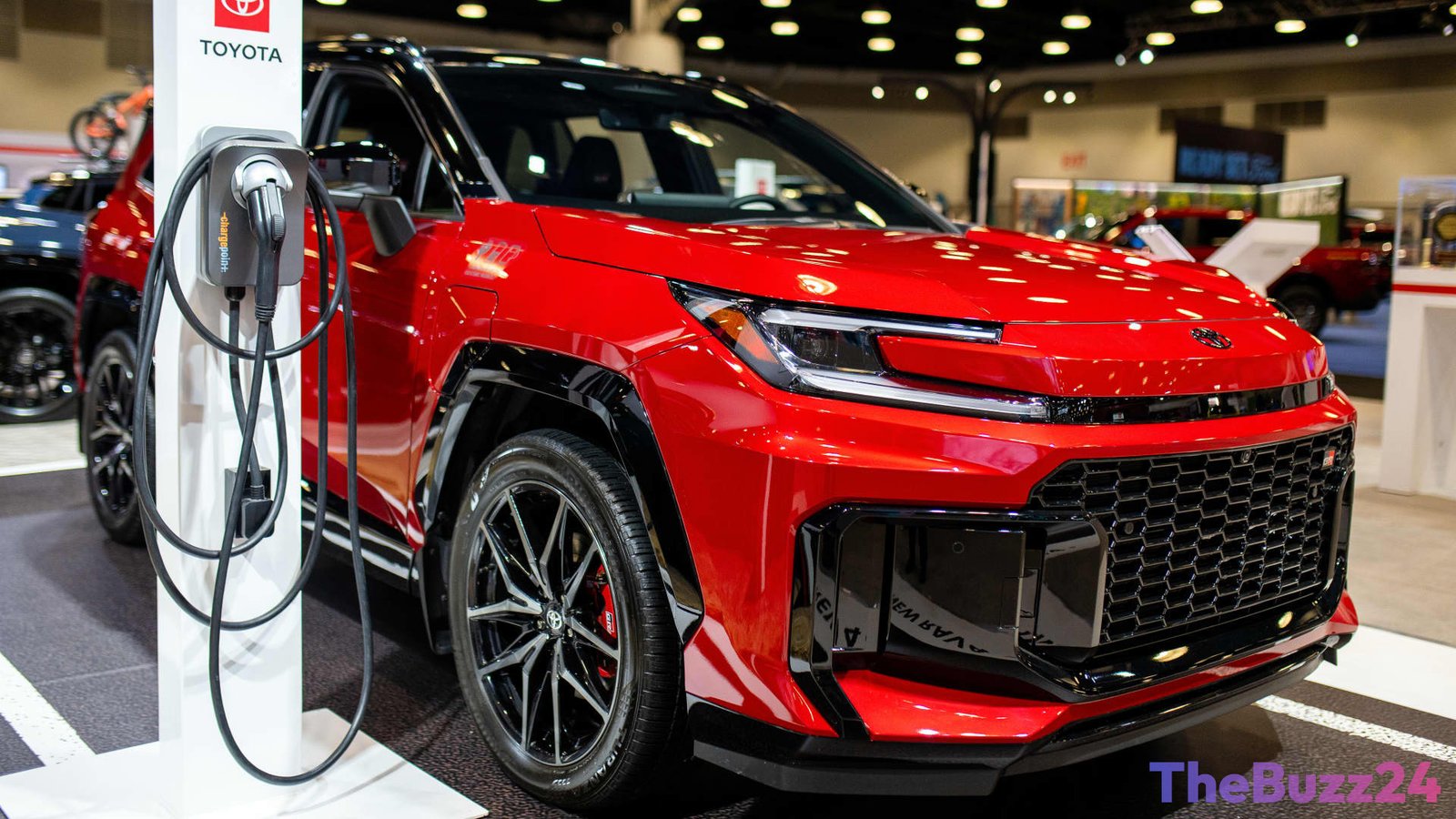
Hybrid Hype: Toyota’s RAV4 Sells Out as Demand Outstrips Supply
Toyota is experiencing an unusual challenge for an automotive giant: overwhelming demand for its redesigned RAV4, particularly the hybrid model, is far exceeding available supply. This situation has left dealerships with critically low inventory, creating significant wait times for eager customers. The company’s strategic decision to offer the popular SUV exclusively as a hybrid, coupled with a planned gradual increase in production, has converged with a market increasingly favoring fuel-efficient vehicles.
Across the nation, Toyota dealerships are struggling to keep the new RAV4 in stock. Bobby Crabtree, owner of Colonial Toyota in Milford, Connecticut, noted that his lot, capable of holding hundreds of vehicles, is significantly under capacity, with many spots awaiting new RAV4s. This scarcity is a stark contrast to the typical availability in the practical small-to-midsize crossover segment. Despite the extended wait, customers like Nancy and Ira Berman of Danbury, Connecticut, who ordered their RAV4 in March, demonstrate a strong willingness to wait several months for their desired vehicle, highlighting the model’s appeal.
The pivot to an all-hybrid RAV4 lineup by Toyota aligns with a broader market trend driven by persistently elevated gas prices. Data indicates a growing consumer shift towards hybrid vehicles, which accounted for over 18% of U.S. vehicle sales in 2026, significantly outpacing pure electric vehicles at 7%. The RAV4 itself has been a consistent top-seller, ranking as the third best-selling model in the U.S. in 2025, trailing only the Ford F-150 and Chevrolet Silverado pickups. This strong historical performance, combined with current market dynamics, underscores the intensity of the current demand.
While the limited supply raises questions about potential lost sales, industry analysts suggest the impact on Toyota’s overall performance may be contained. The automaker’s U.S. sales remained slightly up through July 2026, and its robust brand loyalty means many customers, if unable to secure a RAV4 immediately, may opt for another model within the Toyota lineup rather than switching brands entirely. This enduring customer allegiance provides a buffer against the immediate challenges posed by the supply constraints.
Key Takeaways
- Toyota's redesigned, hybrid-only RAV4 is experiencing exceptionally high consumer demand, leading to significant supply shortages at dealerships.
- The strong demand for the hybrid RAV4 reflects a broader market shift towards fuel-efficient vehicles, driven by elevated gas prices.
- Despite the limited availability, Toyota's strong brand loyalty and diverse product offerings are expected to mitigate substantial sales losses, with many customers willing to wait or choose alternative Toyota models.
Editor’s Analysis & Impact
This situation underscores a significant shift in the automotive market, where consumer preference for hybrid vehicles is rapidly accelerating, particularly in response to fluctuating fuel costs. Toyota’s foresight in committing to an all-hybrid RAV4 lineup is proving prescient, positioning them strongly in a growing segment. However, the supply constraints highlight ongoing challenges in global manufacturing and logistics, potentially limiting immediate revenue capture. For the broader industry, this signals a need to re-evaluate production strategies and accelerate hybrid offerings, as demand for these transitional technologies appears robust. Automakers that can quickly adapt to this demand while managing supply chain complexities will likely gain a competitive edge, further solidifying brand loyalty in a dynamic market.
Frequently Asked Questions
Q: Why is there a shortage of the new Toyota RAV4?
A: The shortage is primarily due to exceptionally high consumer demand for the redesigned, hybrid-only RAV4, coupled with Toyota's initial strategy of limited production for the new model.
Q: Are consumers still buying hybrid vehicles?
A: Yes, demand for hybrid vehicles is strong and growing. Data indicates that hybrids accounted for over 18% of U.S. vehicle sales in 2026, driven by factors like elevated gas prices and a desire for better fuel efficiency.
Q: Will Toyota lose sales due to the limited RAV4 supply?
A: While the limited supply could potentially impact immediate sales, analysts suggest the overall effect on Toyota may be contained. The company benefits from strong brand loyalty, with many customers willing to wait for their desired RAV4 or choose another vehicle from Toyota's diverse lineup.
AI Disclosure: This article is based on verified data and official reports. Our Team and AI have cross-referenced every financial detail with primary sources to ensure total accuracy.
More from this Category