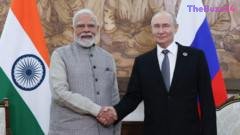
India’s Modi Urges Putin to End Ukraine War, Kremlin Offers Vague Response
Indian Prime Minister Narendra Modi has once again called upon Russian President Vladimir Putin to bring an end to the ongoing conflict in Ukraine. Speaking on Monday, Modi underscored the profound impact of war on humanity, stating, “Every day spent in war pushes humanity back, and every step taken towards peace fills humanity with new hope and enthusiasm.” This appeal is not new; Modi has consistently urged Putin to de-escalate since the full-scale invasion began in 2022, famously telling the Russian leader that “now is not the time for war” during a regional summit in 2022.
India’s position in the conflict has been characterized by strategic autonomy, balancing its crucial economic and defense ties with Russia against growing relationships with Western nations. Delhi’s economy relies heavily on discounted Russian oil and Moscow remains a primary supplier of defense imports. Despite significant pressure from Western countries to take a more definitive stance, India has largely maintained neutrality, consistently advocating for dialogue and a peaceful resolution. Modi’s public statements are seen as consistent with this long-standing foreign policy, rather than a tactical shift or an attempt to appease any third country. The enduring Russia-India relationship, cemented through forums like BRICS and the Shanghai Cooperation Organisation, allows both nations to navigate geopolitical differences.
President Putin’s response to Modi’s latest plea was polite but notably non-committal. He replied, “Thank you very much, prime minister. We are moving forward along this path.” This vague statement mirrors previous instances where international leaders, including Kazakhstan’s President Kassym-Jomart Tokayev, have urged a cessation of hostilities without eliciting a tangible change in the Kremlin’s approach. Analysts suggest that Russia’s leadership remains convinced it is on a path to military victory in Ukraine, defining “peace” on its own terms, dictated by battlefield success. Consequently, the fighting continues, with Russia intensifying its attacks and believing that time is working against Kyiv, despite significant losses and Ukraine’s successful counter-strikes on Russian territory.
Key Takeaways
- Indian Prime Minister Narendra Modi publicly urged Russian President Vladimir Putin to end the war in Ukraine, emphasizing the global need for peace.
- India maintains a policy of strategic autonomy, balancing its crucial economic and defense ties with Russia against growing relationships with Western nations, without directly condemning Moscow.
- Putin's response to Modi's plea was vague and non-committal, indicating no immediate shift in Russia's conviction that it is on a path to military victory in Ukraine.
Editor’s Analysis & Impact
Modi’s renewed call for peace underscores the persistent global desire for an end to the Ukraine conflict, even from nations maintaining close ties with Russia. This event highlights the complex geopolitical tightrope India walks, balancing its energy and defense needs with its broader international standing. For the global market, the continued conflict implies sustained volatility in energy prices and supply chains, particularly impacting nations reliant on Russian resources. The non-committal response from the Kremlin signals that diplomatic pressure, even from key allies, is unlikely to alter Russia’s immediate military objectives. The future outlook suggests a prolonged conflict, with India continuing its strategic balancing act, while Russia remains largely isolated from the West but maintains crucial partnerships in the East. This dynamic further solidifies a multipolar world order where major powers pursue independent foreign policies, reshaping global alliances and trade routes.
Frequently Asked Questions
Q: Why is India's stance on the Ukraine war significant?
A: India is a major global economy and a key strategic partner for both Russia and Western nations. Its neutral stance, while advocating for peace, reflects its strategic autonomy and complex geopolitical interests, including reliance on Russian oil and defense supplies, making its diplomatic appeals closely watched.
Q: How did President Putin respond to Prime Minister Modi's call for peace?
A: President Putin offered a polite but vague and non-committal response, stating, "We are moving forward along this path." This suggests no immediate change in Russia's military objectives or its approach to the conflict, indicating a lack of willingness to halt operations based on such appeals.
Q: Does Modi's statement signal a shift in India's foreign policy towards Russia?
A: Analysts suggest Modi's statement is consistent with India's long-standing policy of strategic autonomy and its previous calls for dialogue to end the conflict. It is not seen as a tactical shift or a rebuff to Russia, but rather a reiteration of India's desire for peace while maintaining its crucial bilateral ties.
AI Disclosure: This article is based on verified data and official reports. Our Team and AI have cross-referenced every financial detail with primary sources to ensure total accuracy.
More from this Category