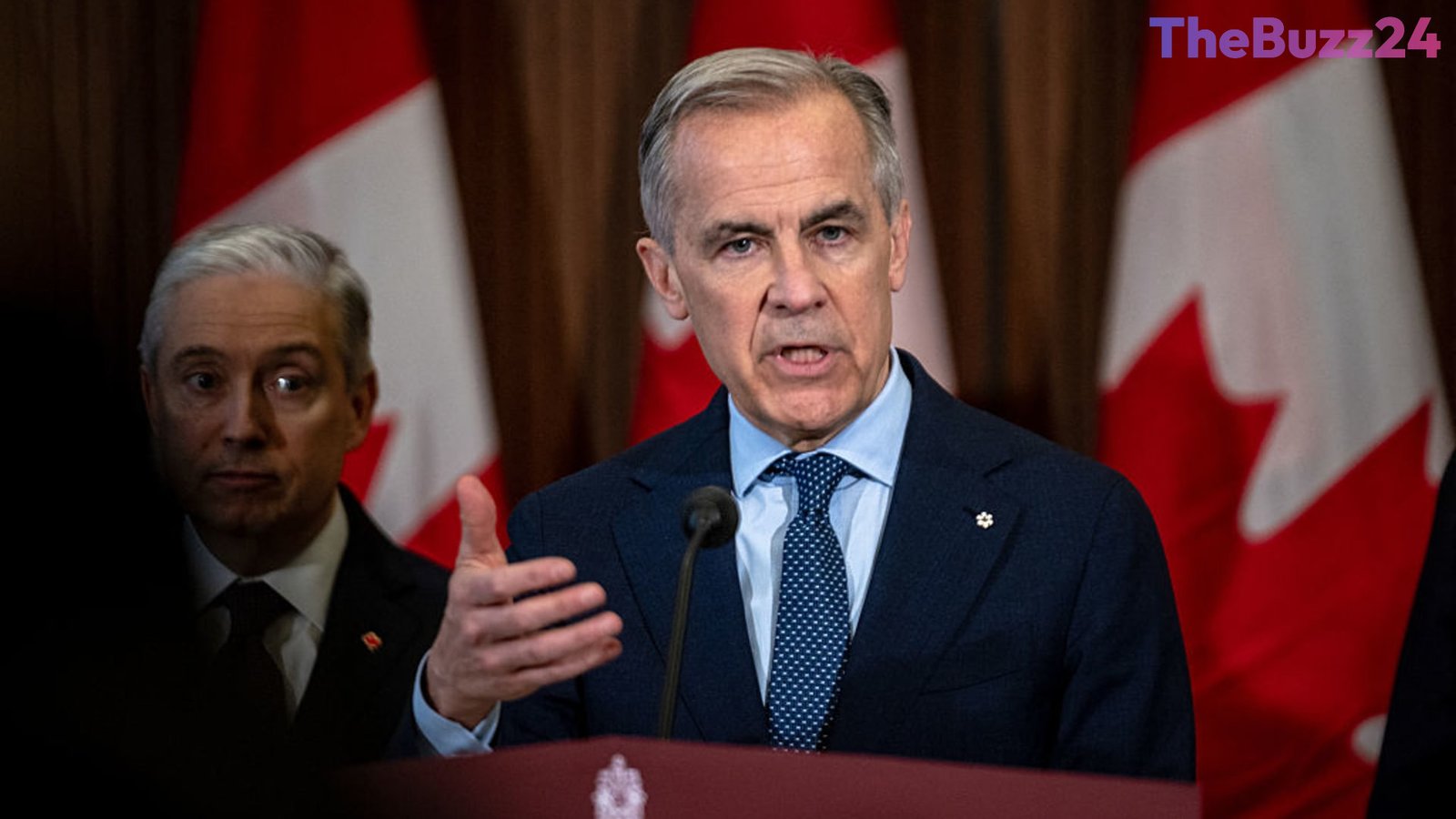
Prime Minister Mark Carney Defends Canada’s Stance Amid Escalating Trade Tensions with U.S.
Canadian Prime Minister Mark Carney has publicly challenged assertions made by U.S. Commerce Secretary Howard Lutnick regarding the collapse of recent bilateral trade negotiations. During a press conference in Thunder Bay, Ontario, Carney dismissed claims that Ottawa intentionally sabotaged the deal for political gain, suggesting instead that U.S. officials lack a nuanced understanding of Canadian domestic priorities. He emphasized that Canada remains committed to securing a mutually beneficial agreement, provided the U.S. administration is prepared to engage in good-faith discussions.
The diplomatic friction intensified following comments from the Trump administration, which accused Canadian leadership of prioritizing political optics over economic stability. President Donald Trump further escalated the rhetoric via social media, warning that Canadian officials would eventually face severe economic consequences for their current posture. These remarks underscore a deepening divide between the two nations, as both sides continue to trade accusations regarding the breakdown of talks that failed to meet an August deadline.
At the heart of the dispute are conflicting accounts of the final hours of negotiation. While U.S. officials have pointed to last-minute Canadian demands regarding truck tariffs as a primary obstacle, Carney maintains that the U.S. side frequently shifted its own ‘red lines’ throughout the process. With retaliatory tariffs on U.S. goods set to take effect in Canada next week, the window for a diplomatic resolution appears to be narrowing, leaving both economies in a state of heightened uncertainty.
Key Takeaways
- Prime Minister Mark Carney rejected claims that Canada intentionally derailed trade talks, citing shifting U.S. demands as the primary cause of the impasse.
- The U.S. administration, led by President Donald Trump and Commerce Secretary Howard Lutnick, maintains that Canada acted out of political motivation and will eventually be forced to concede.
- Retaliatory tariffs on U.S. goods are scheduled to be implemented by Canada next week, signaling a potential escalation in the ongoing trade dispute.
Editor’s Analysis & Impact
The breakdown in U.S.-Canada trade relations represents a significant shift toward protectionist policies that could have long-term repercussions for North American supply chains. By moving toward a ‘take it or leave it’ negotiation style, the U.S. is signaling a departure from traditional diplomatic norms, which creates a volatile environment for cross-border businesses. The immediate impact will likely be felt in the automotive and manufacturing sectors, where integrated production lines are most vulnerable to tariff-induced cost spikes. Looking ahead, the reliance on retaliatory measures suggests that both nations are bracing for a prolonged period of economic friction. If a resolution is not reached quickly, the resulting uncertainty may force multinational corporations to re-evaluate their regional investment strategies, potentially leading to a permanent restructuring of trade dependencies between the two neighbors.
Frequently Asked Questions
Q: Why did the U.S.-Canada trade talks collapse?
A: The talks failed after both sides accused the other of making unreasonable last-minute demands and shifting their negotiating positions, ultimately missing the August 22 deadline.
Q: What is the current status of tariffs between the two countries?
A: The U.S. had threatened tariffs on Canadian imports, and in response, Canada has prepared 'dollar for dollar' retaliatory tariffs on U.S. goods that are scheduled to take effect next week.
AI Disclosure: This article is based on verified data and official reports. Our Team and AI have cross-referenced every financial detail with primary sources to ensure total accuracy.
More from this Category