Barbed Wire and Fear: West Bank School Fortified Against Rising Settler Violence
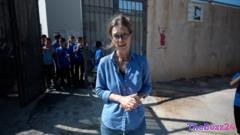
Students returning to school in the West Bank village of al-Mughayyir are facing a stark and troubling new reality. The local school has been fortified with barbed-wire fencing, a desperate measure implemented by concerned Palestinian parents to shield their children from escalating violence. Located northeast of Ramallah, the isolated village has found itself increasingly encircled by Israeli settler outposts, leaving the community in a state of constant vulnerability.
The security measures come in the wake of a devastating surge in violence this year. Six residents of al-Mughayyir, including three students, have lost their lives in incidents linked to settler attacks. Among the victims was 14-year-old Aws al-Naasan, who was tragically shot and killed by an Israeli settler just outside the school gates in April. This tragedy, combined with frequent military checkpoints set up by Israeli forces at the village entrance, has severely disrupted daily life and heightened anxiety for families.
The geopolitical landscape surrounding the village further complicates the crisis. Under international law, all Israeli settlements in the occupied West Bank are considered illegal. Furthermore, many of the smaller, unauthorized settler outposts that have rapidly expanded around al-Mughayyir are also deemed illegal under Israeli domestic law. Despite these legal designations, the lack of enforcement has left local Palestinian communities to fend for themselves, using physical barriers like barbed wire to secure basic educational environments.
Key Takeaways
- A school in the West Bank village of al-Mughayyir has been enclosed in barbed wire to protect students from escalating settler violence.
- Six local residents, including three students, have been killed this year, highlighting the deadly nature of the ongoing conflict in the area.
- While international law deems all West Bank settlements illegal, and Israeli law outlaws many local outposts, enforcement remains virtually non-existent.
Editor’s Analysis & Impact
The fortification of a school in al-Mughayyir underscores the deteriorating security situation in the West Bank, where civilian infrastructure, including educational institutions, is increasingly caught in the crossfire of territorial disputes. The rise of unauthorized settler outposts, coupled with a lack of decisive legal enforcement by Israeli authorities, has created a security vacuum. This environment not only threatens the lives of Palestinian youth but also severely disrupts their right to education. Globally, this situation is likely to intensify diplomatic pressure on Israel from international bodies and human rights organizations, who argue that the expansion of settlements undermines any viable path toward a two-state solution. Moving forward, without systemic policy changes and active peacekeeping efforts, localized violence is expected to escalate, further destabilizing the region.
Frequently Asked Questions
Q: Why was barbed wire installed around the school in al-Mughayyir?
A: The barbed wire was installed by concerned parents to protect students from a rising tide of violence and attacks by Israeli settlers in the surrounding area.
Q: What is the legal status of the settlements surrounding the village?
A: Under international law, all Israeli settlements in the occupied West Bank are considered illegal. Additionally, many of the smaller, ad-hoc outposts surrounding al-Mughayyir are also illegal under Israeli domestic law.
Q: How has the violence affected the local student population?
A: The violence has had a devastating impact, resulting in the deaths of three students this year, including 14-year-old Aws al-Naasan, who was shot outside the school gates. It has also created an atmosphere of fear that severely hinders the children's ability to learn safely.
AI Disclosure: This article is based on verified data and official reports. Our Team and AI have cross-referenced every financial detail with primary sources to ensure total accuracy.
More from this Category