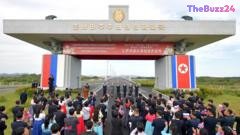
Moscow and Pyongyang Solidify Alliance with Historic First Road Bridge Opening
Russia and North Korea have officially opened their first-ever road bridge across the Tumen River, marking a major milestone in the rapidly deepening relationship between the two nations. The newly constructed kilometer-long crossing establishes a direct vehicular link, replacing a rudimentary system where wooden planks were laid over existing railway tracks to allow cars to pass. According to official statements, the bridge will initially handle cargo transport before expanding to passenger traffic and tourism later this year.
The new infrastructure is designed to accommodate up to 300 vehicles and over 2,300 people daily. Satellite data reveals that the project, which took 495 days to complete following agreements made during Vladimir Putin’s landmark 2024 visit to Pyongyang, includes modern access roads, border checkpoints, and dedicated parking facilities. While officials from both nations hailed the bridge as a historic symbol of friendship and economic cooperation, international observers view the development with intense scrutiny.
Beyond civilian trade and tourism, analysts warn that the bridge’s primary function may be to serve as a secure, covert logistics corridor. The opening comes amid a significant escalation in military cooperation, solidified by a mutual defense treaty signed by Putin and Kim Jong Un. There are widespread concerns that the route will streamline the transfer of military hardware, ammunition, and personnel. Reports indicate North Korea has already supplied billions of dollars in military aid to support Russia’s campaign in Ukraine, alongside thousands of troops and laborers who bypass international sanctions to work in Russian construction and logging sectors.
Key Takeaways
- Russia and North Korea have opened their first direct road bridge across the Tumen River, replacing a makeshift wooden plank system.
- The new crossing can support up to 300 vehicles and over 2,300 people daily, initially focusing on cargo before expanding to passenger transit.
- International observers warn the bridge will likely serve as a covert military logistics corridor to facilitate the transfer of weapons, troops, and laborers.
Editor’s Analysis & Impact
The opening of the Tumen River road bridge represents a physical manifestation of the growing geopolitical axis between Moscow and Pyongyang. By establishing a permanent, high-capacity vehicular link, both nations are effectively bypassing Western-led sanctions and creating a highly resilient supply chain. For North Korea, this connection offers a vital economic lifeline, allowing the regime to export labor and military hardware in exchange for Russian technology, energy, and financial resources. For Russia, the bridge secures a reliable pipeline of conventional munitions and manpower to sustain its protracted conflict in Ukraine. In the long term, this infrastructure solidifies a bilateral partnership that challenges the established security architecture in Northeast Asia, signaling that the strategic alignment between these two nuclear-armed states is built to last far beyond the current geopolitical crisis.
Frequently Asked Questions
Q: What was the previous road connection between Russia and North Korea?
A: Prior to the construction of this new bridge, the only road connection was a temporary, makeshift solution where wooden planks were laid over an existing railway bridge to allow vehicles to cross.
Q: Why is the international community concerned about this new bridge?
A: Observers fear the bridge will be used as a covert military corridor to transport weapons, ammunition, and North Korean troops to assist Russia's war efforts, as well as to illegally transport North Korean laborers in violation of UN sanctions.
Q: How long did it take to build the bridge?
A: Construction of the kilometer-long bridge began in 2025 and took 495 days to complete, following a bilateral agreement signed during Vladimir Putin's visit to North Korea in 2024.
AI Disclosure: This article is based on verified data and official reports. Our Team and AI have cross-referenced every financial detail with primary sources to ensure total accuracy.
More from this Category