Innovative Exhibits Bring NASA Sea Level Science to Life for Over 1,000 Visitors
Coastal communities and science enthusiasts converged at the University of Georgia Aquarium on Skidaway Island on June 6, 2026, where more than 1,000 visitors immersed themselves in cutting-edge sea level science. The free World Ocean Day event, supported by a national initiative, provided a unique opportunity for attendees to explore the complexities of sea level rise through interactive exhibits and real-world data. This effort is part of a broader program designed to connect vital scientific information with educators and coastal populations, particularly those most vulnerable to environmental changes.
At the heart of the engagement was the Sea Level Education, Awareness, and Literacy (SEAL) project, a collaborative endeavor between NASA and four NOAA Sea Grant programs. This partnership aims to expand public understanding of sea level rise across U.S. coastal regions. By co-developing lesson plans, hands-on activities, and localized learning experiences, SEAL empowers educators to utilize authentic NASA observations, models, and projections, thereby strengthening community resilience against the impacts of climate change.
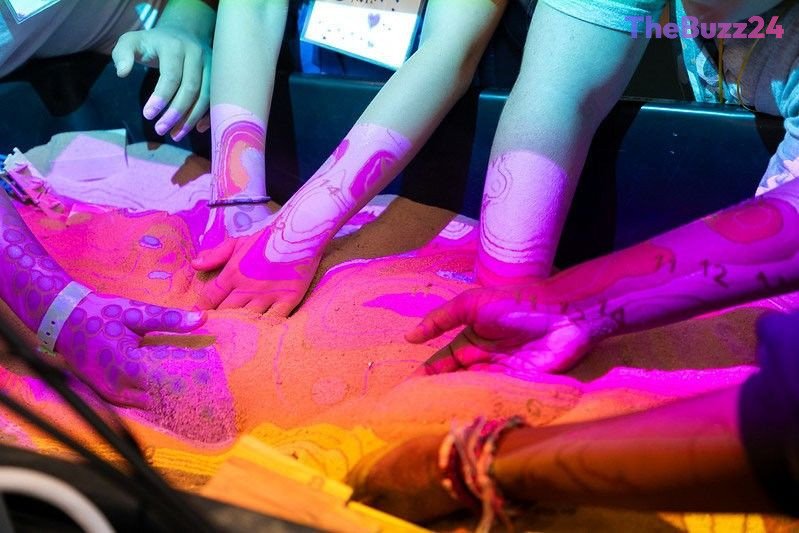
The World Ocean Day event showcased several engaging activities that transformed complex scientific concepts into accessible experiences. Participants enjoyed the “Tumbling Tower” game, which visually represented the various community impacts of rising seas, and crafted “sea level friendship bracelets” using colored beads to illustrate observed sea level changes along local coastlines. A highlight was the debut of an augmented reality sandbox, developed through the SEAL project. Guests could sculpt coastal landscapes in sand and witness real-time NASA-informed sea level rise projections altering their creations, even experimenting with resilience strategies like adding dunes or relocating structures to observe potential adaptations.
Beyond the immediate engagement, the event also served as a valuable resource for educators. Formal, informal, and home-based educators were provided with four distinct SEAL lesson plans, suitable for both classroom and informal learning environments. These materials facilitate student exploration of sea level rise processes, modeling, variation, and impacts using NASA data and interactive STEM activities. The accessibility of the event, made possible by the support, allowed it to reach a broader and more diverse audience than typical, significantly impacting visitors, many of whom reside in coastal areas already experiencing the effects of rising sea levels.
Key Takeaways
- Over 1,000 visitors engaged with NASA sea level science at the University of Georgia Aquarium on World Ocean Day 2026.
- The NASA-supported SEAL project utilizes interactive activities and educational resources to enhance understanding of sea level rise and foster community resilience.
- The event featured innovative tools like an augmented reality sandbox, allowing participants to visualize and experiment with climate adaptation strategies.
Editor’s Analysis & Impact
This initiative highlights a crucial trend in science communication: making complex data accessible and actionable for the public. By engaging over a thousand visitors with interactive exhibits and real-time projections, the SEAL project demonstrates an effective model for fostering climate literacy and community resilience. The partnership between NASA and NOAA Sea Grant programs underscores the importance of inter-agency collaboration in addressing global challenges. This approach not only educates but also empowers communities to visualize and plan for future environmental changes, potentially influencing local policy-making and infrastructure development. The success of such programs could lead to wider adoption of similar educational frameworks, strengthening public engagement with climate science and promoting proactive adaptation strategies in vulnerable coastal regions.
Frequently Asked Questions
Q: What is the SEAL project?
A: The Sea Level Education, Awareness, and Literacy (SEAL) project is a national initiative by NASA, in partnership with NOAA Sea Grant programs, designed to connect NASA sea level rise data with educators and coastal communities. Its goal is to expand understanding of sea level rise and strengthen community resilience to climate change through interactive learning experiences.
Q: What kind of activities were offered at the World Ocean Day event?
A: Visitors participated in various hands-on activities, including the “Tumbling Tower” game illustrating community impacts, making “sea level friendship bracelets” to represent local sea level rise, and experiencing an augmented reality sandbox where they could sculpt landscapes and see real-time NASA-informed sea level rise projections.
Q: How does the SEAL project help communities prepare for sea level rise?
A: The SEAL project helps communities by providing educators with lesson plans and interactive tools that use real NASA data to explain sea level rise. It allows participants to visualize potential impacts and experiment with resilience strategies, fostering a deeper understanding and empowering them to make informed decisions for climate adaptation.
AI Disclosure: This article is based on verified data and official reports. Our Team and AI have cross-referenced every financial detail with primary sources to ensure total accuracy.
More from this Category