Germany’s Political Storm: Merz Slams AfD’s ‘Ethnic Cleansing’ Policy Amid Far-Right Surge
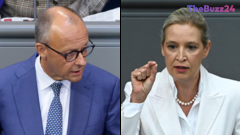
German Chancellor Friedrich Merz engaged in a heated parliamentary debate with Alternative for Germany (AfD) leader Alice Weidel, following the far-right party’s significant electoral success in Saxony-Anhalt. Merz sharply criticized the AfD, labeling it a “destructive force” and condemning its migration policies as akin to “ethnic cleansing” for skilled workers. This confrontation in the Bundestag occurred after the anti-immigration party secured nearly 44% of the vote in the eastern state, a result that saw Merz’s own conservative party’s support halved.
During the session, Weidel asserted that the election results demonstrated the failure of Merz’s coalition government and signaled the end of his political influence. Merz retorted by accusing the AfD of undermining German interests through its support for Russia and warned that its proposed “remigration” policies would negatively impact millions. He emphasized that approximately one in six skilled workers in Germany has a migration background, arguing that the AfD’s proposals would cripple essential services like care homes, hospitals, and restaurants, equating such policies to “ethnic cleansing based on skin color and origin.” The debate was marked by frequent heckling from AfD members, prompting Bundestag President Julia Klöckner to threaten expulsions from the chamber.
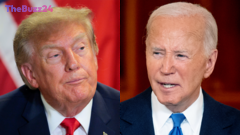
Despite its strong showing, the AfD fell three seats short of an outright majority in Saxony-Anhalt, making government formation uncertain. Historically, no far-right party has governed a German state since World War Two. The AfD’s success has drawn international attention, with former US President Donald Trump commending the “Populist Party” victory and linking it to “absolutely horrible immigration rules.” German domestic intelligence has classified the AfD in Saxony-Anhalt as “right-wing extremist,” particularly in light of its stated goal of a “deportation and remigration” offensive against irregular migrants. The party has indicated a willingness to collaborate with other political groups, such as the left-wing populist BSW, to form a state government, even suggesting that Merz’s Christian Democratic Union (CDU) might abandon its “firewall” policy of non-cooperation with the far-right.
Key Takeaways
- Chancellor Merz strongly condemned the AfD's migration policies as "ethnic cleansing" and a threat to Germany's skilled workforce and essential services.
- The AfD achieved a significant electoral victory in Saxony-Anhalt, securing nearly 44% of the vote, though it fell short of an outright majority.
- The election outcome has intensified the debate over Germany's political "firewall" against the far-right and highlighted the growing challenge posed by populist movements.
Editor’s Analysis & Impact
The recent parliamentary clash and the AfD’s electoral surge in Saxony-Anhalt signal a significant shift in Germany’s political landscape. This development could lead to increased political instability, particularly in coalition negotiations at both state and federal levels. For businesses, the AfD’s proposed “remigration” policies, if implemented, could exacerbate skilled labor shortages, impacting economic growth and investor confidence. The broader implications extend beyond Germany, reflecting a growing trend of populist and far-right movements gaining traction across Europe. This challenges traditional political parties and could influence future EU policies on migration and integration, potentially leading to more fragmented political environments and a re-evaluation of democratic norms.
Frequently Asked Questions
Q: What was the primary accusation made by Chancellor Merz against the AfD?
A: Chancellor Merz accused the AfD of being a "destructive force" and specifically condemned its migration policy as amounting to "ethnic cleansing" for skilled workers, warning of severe consequences for Germany's economy and essential services.
Q: How did the AfD perform in the Saxony-Anhalt election?
A: The AfD achieved a substantial victory in Saxony-Anhalt, winning nearly 44% of the vote. However, the party fell three seats short of an outright majority, making it challenging to form a government independently.
Q: What is the "firewall" in German politics that was mentioned?
A: The "firewall" refers to the long-standing policy among Germany's mainstream political parties, including Merz's CDU, to refuse any form of cooperation or coalition with the far-right Alternative for Germany (AfD). The recent election results have put this policy under renewed pressure.
AI Disclosure: This article is based on verified data and official reports. Our Team and AI have cross-referenced every financial detail with primary sources to ensure total accuracy.
More from this Category