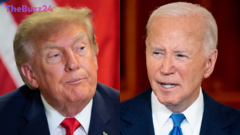
Echoes of Biden’s Struggle: Trump Faces Voter Disconnect on Economy Despite Growth
Donald Trump is encountering an economic challenge eerily similar to the one that plagued Joe Biden’s administration: a significant disconnect between positive economic indicators and public perception of financial well-being. Despite a robust economy characterized by steady growth, low unemployment, and a buoyant stock market, voters remain unconvinced, primarily due to persistently high prices.
During his campaign, Trump pledged to rapidly reduce costs for consumers, stating, “When I win, I will immediately bring prices down.” However, fulfilling this promise has proven more complex than anticipated. While the economic fundamentals appear strong, with GDP growth rates respectable compared to other developed nations and unemployment holding steady, the everyday reality for many Americans is one of continued high costs at the supermarket and gas pump. This sentiment is reflected in voter dissatisfaction, with polls indicating poor marks for Trump’s economic stewardship.
The underlying causes of current price pressures differ from those faced by the Biden administration. While Biden contended with the economic disruptions of the COVID-19 pandemic, Trump’s challenges are linked to factors such as elevated energy prices stemming from geopolitical conflicts, and the lingering effects of his own trade and immigration policies. For instance, tariffs implemented under Trump have been cited by economists as contributing to increased consumer goods prices.
This situation highlights a critical political reality: voters often judge economic performance not by abstract metrics like GDP or stock market indices, but by their personal financial experiences. As one economic commentator noted, “You can’t argue with people about their own lived reality.” The gap between economists’ definition of falling inflation—a slowing rate of price increases—and voters’ expectation of falling prices returning to previous levels underscores this disconnect. The question remains whether Trump can effectively bridge this perception gap, a challenge that ultimately proved insurmountable for his predecessor.
Key Takeaways
- Donald Trump faces a voter perception challenge where positive economic indicators like low unemployment and growth are overshadowed by persistently high prices.
- Unlike Biden's challenges rooted in the pandemic, Trump's economic headwinds are partly attributed to geopolitical conflicts affecting energy prices and his own trade policies.
- Voters' personal financial experiences, such as grocery and gas costs, are driving their economic sentiment more than official economic data, mirroring a challenge faced by the previous administration.
Editor’s Analysis & Impact
The current economic landscape presents a significant political hurdle for the Trump administration, echoing the difficulties faced by Joe Biden. The persistent gap between strong macroeconomic data and the lived financial reality of voters suggests that traditional economic messaging may be insufficient. The administration’s focus on growth and employment figures is being undermined by concerns over the cost of living, exacerbated by external factors like energy price volatility and internal policies such as tariffs. This disconnect highlights the critical importance of consumer sentiment in political outcomes. Moving forward, the administration must find ways to directly address these cost-of-living anxieties, potentially through targeted relief measures or more effective communication strategies, to align public perception with economic performance.
Frequently Asked Questions
Q: Why do voters seem unconvinced about the economy despite positive indicators?
A: Voters often judge the economy based on their personal experiences, such as the prices they pay for everyday goods like groceries and gasoline, rather than abstract economic data like GDP growth or stock market performance. When these personal costs remain high, it can lead to dissatisfaction even if broader economic indicators are positive.
Q: What are the main reasons for current high prices under the Trump administration?
A: Current high prices are attributed to a combination of factors, including increased energy costs linked to geopolitical conflicts (such as the US-Israel conflict with Iran) and the lingering effects of trade policies like tariffs implemented by the Trump administration. These tariffs have been shown to increase the cost of consumer goods.
Q: How does the current economic challenge for Trump differ from Biden's?
A: While both faced a disconnect between economic data and voter sentiment, the root causes differed. Biden's administration grappled with the economic aftermath of the COVID-19 pandemic and its supply chain disruptions. Trump's challenges are more directly linked to current geopolitical events impacting energy prices and the consequences of his own trade and immigration policies.
AI Disclosure: This article is based on verified data and official reports. Our Team and AI have cross-referenced every financial detail with primary sources to ensure total accuracy.
More from this Category