Border Peace and Economic Balance: Modi and Xi Chart a New Path for India-China Relations
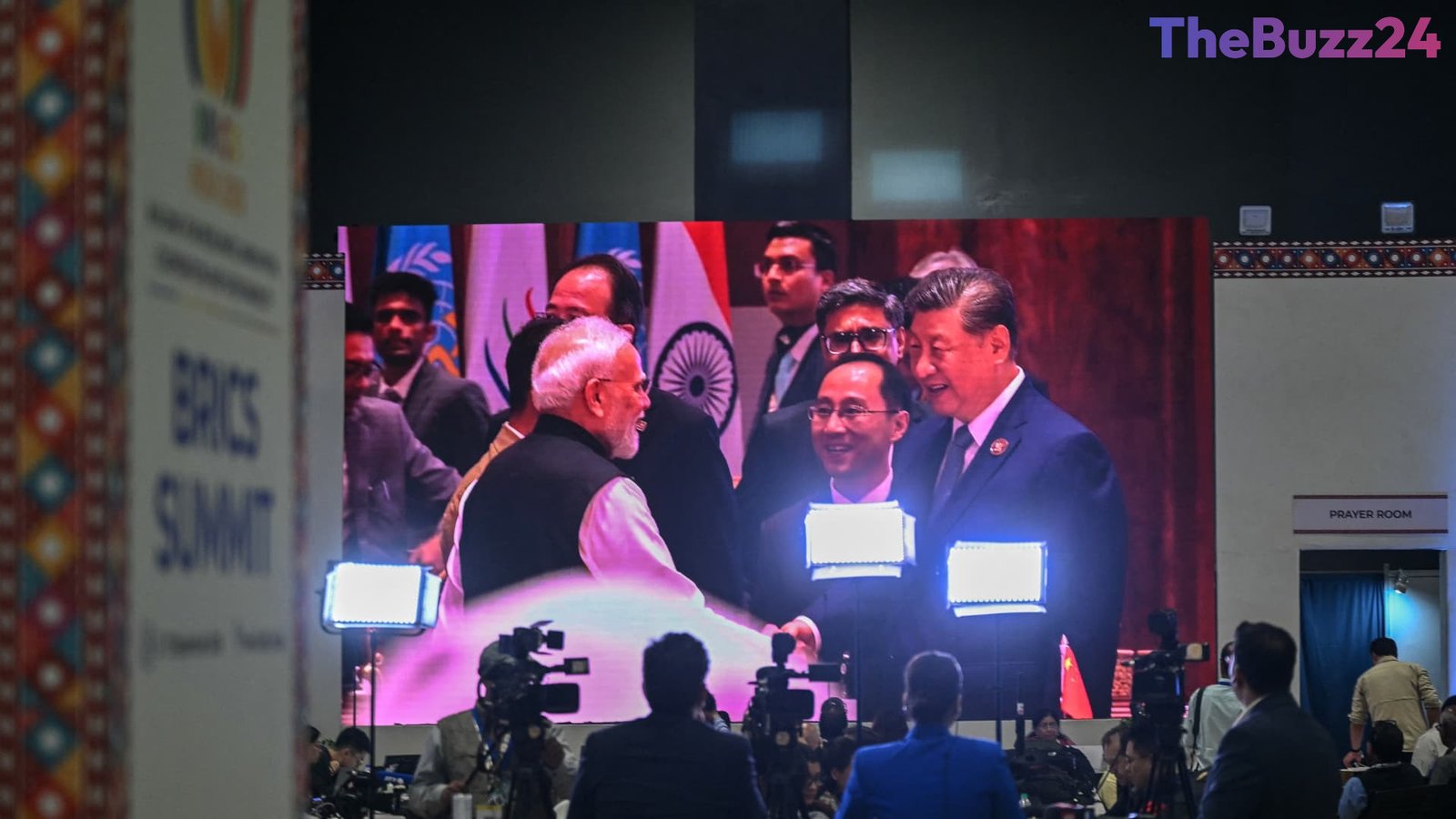
In a significant diplomatic milestone, Indian Prime Minister Narendra Modi and Chinese President Xi Jinping have reaffirmed their commitment to stabilizing bilateral relations, emphasizing that maintaining peace and tranquility along their shared border is fundamental to future cooperation. Meeting on the sidelines of the BRICS Summit, the two leaders engaged in high-level discussions aimed at resolving long-standing territorial disputes and addressing deep-seated economic imbalances. This meeting marks President Xi’s first visit to India in several years, signaling a notable thaw in relations that had severely deteriorated following a deadly military clash in 2020.
During their bilateral talks, both nations pledged to pursue a “fair, reasonable, and mutually acceptable” resolution to their border friction. Modi and Xi agreed that both New Delhi and Beijing must adopt a strategic, long-term perspective on their relationship, ensuring that geopolitical differences do not escalate into active disputes. This diplomatic push follows the 25th round of boundary talks held last month, which yielded an eight-point consensus aimed at defusing tensions along the Line of Actual Control, a boundary that has been a source of friction since the 1962 Sino-Indian War.
Beyond territorial security, economic ties took center stage during the discussions. China remains India’s largest trading partner, with bilateral trade reaching a record $151.1 billion. However, this relationship is heavily lopsided, with India’s trade deficit with China swelling to an unprecedented $112.16 billion. To address this structural imbalance, the two leaders agreed to work toward predictable market access, resolve supply chain bottlenecks, and mitigate the trade deficit.
The meeting builds on a year of gradual diplomatic re-engagement, which has already yielded tangible progress. Over the past several months, India and China have resumed direct commercial flights, reopened select historic Silk Road trade routes, and eased regulatory hurdles. Notably, New Delhi relaxed its stringent investment rules regarding Chinese capital earlier this year, paving the way for renewed economic collaboration and a more stable partnership between Asia’s two largest giants.
Key Takeaways
- Prime Minister Modi and President Xi Jinping emphasized that border peace is the foundational prerequisite for improving India-China bilateral relations.
- The two leaders committed to addressing India's massive $112.16 billion trade deficit with China by improving market access and resolving supply chain issues.
- Recent diplomatic progress includes the resumption of direct flights, reopening of historic trade routes, and relaxed investment regulations.
Editor’s Analysis & Impact
The diplomatic rapprochement between India and China carries profound implications for global supply chains and regional stability in Asia. As two of the world’s fastest-growing economies, a stabilized relationship could de-risk manufacturing sectors that rely heavily on Chinese raw materials and Indian processing capabilities. For India, reducing the massive trade deficit while securing predictable market access in China is a critical economic priority. However, businesses should remain cautiously optimistic. While the relaxation of investment rules and resumption of direct flights signal a positive trajectory, deep-seated geopolitical rivalries and historical mistrust mean that full economic integration will be a slow, highly scrutinized process. Investors should watch for concrete policy implementations following these high-level commitments.
Frequently Asked Questions
Q: Why did relations between India and China deteriorate in recent years?
A: Relations worsened significantly following a deadly military skirmish along their disputed Himalayan border in 2020, which led to casualties on both sides and a subsequent freeze in high-level diplomatic and economic engagements.
Q: What are the main economic challenges between India and China?
A: The primary economic challenge is a severe trade imbalance. While China is India's largest trading partner, India runs a massive trade deficit of over $112 billion, prompting calls for structural reforms, better market access, and more balanced supply chains.
Q: What recent steps have been taken to improve bilateral ties?
A: Recent steps include the resumption of direct commercial flights, the reopening of historic Silk Road trade routes, relaxed rules on Chinese investments in India, and successful bilateral talks that established an eight-point consensus on border issues.
AI Disclosure: This article is based on verified data and official reports. Our Team and AI have cross-referenced every financial detail with primary sources to ensure total accuracy.
More from this Category