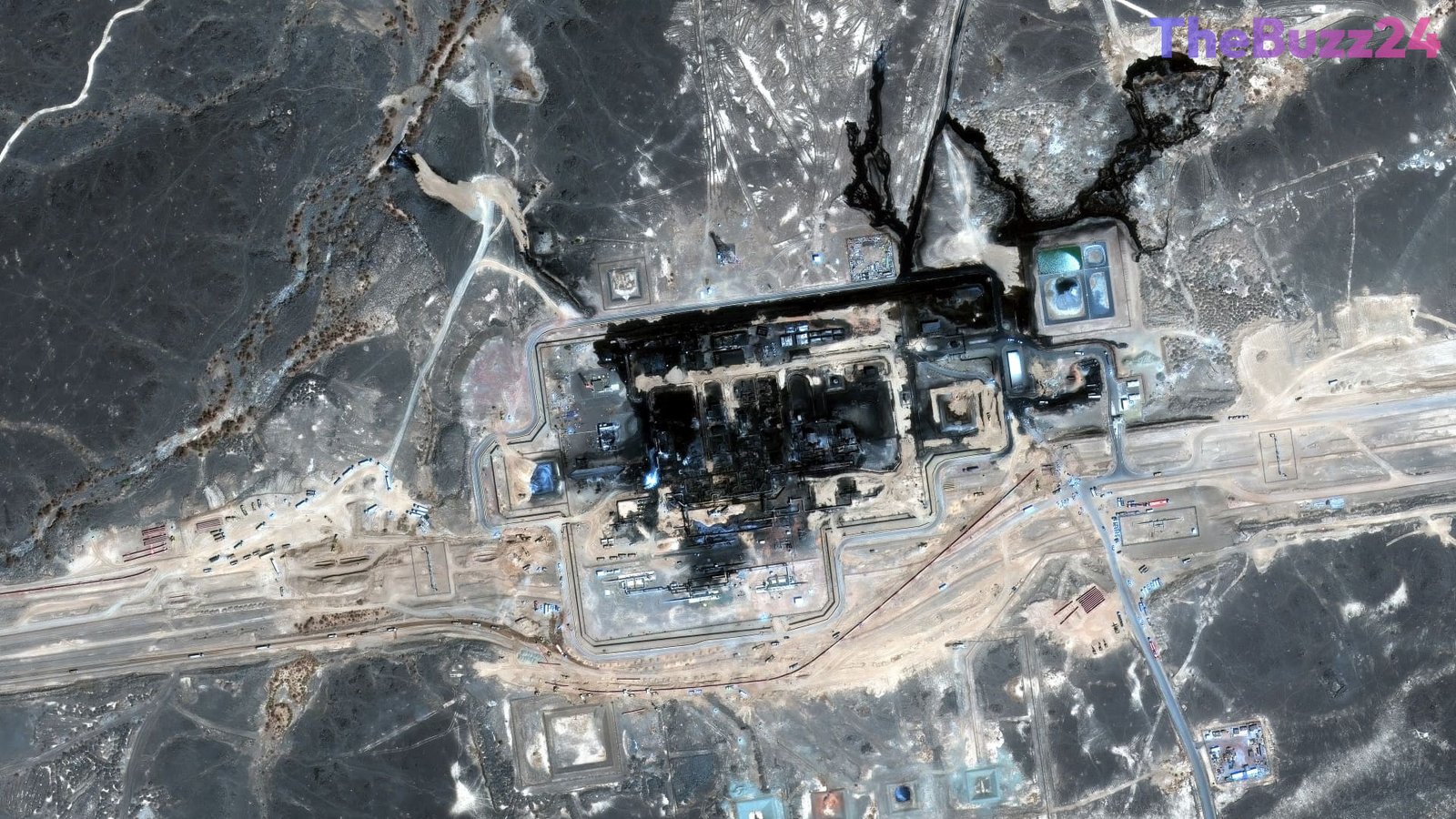
Global Oil Market’s Safety Net Frays as Strategic Saudi Pipeline Remains Offline
Saudi Arabia’s critical East-West pipeline has been shut down following a series of drone attacks, placing over 4 million barrels per day of crude export capacity at risk. This significant disruption is compelling a greater volume of oil exports to be routed through the Strait of Hormuz, a choke point already fraught with geopolitical tensions. The closure has immediately impacted global oil prices, which have seen a sharp upward trend, reflecting market anxieties over supply stability.
The East-West pipeline, a vital artery stretching from Abqaiq on Saudi Arabia’s eastern Gulf coast to the Red Sea port of Yanbu, serves as a crucial alternative to the Strait of Hormuz. Its strategic importance is amplified by ongoing hostilities in the Middle East, including renewed tensions between the U.S. and Iran, and recent Houthi offensives along the Red Sea coast. With global oil inventories already significantly depleted—estimated to have fallen by approximately 1 billion barrels—the market possesses a diminished buffer to absorb further supply shocks from the region. Analysts are warning that prices are unlikely to recede below $100 per barrel in the near term, as traders increasingly factor in a sustained loss of regional supply.
Initial assessments suggest the damage to the pipeline’s pumping stations is substantial, potentially requiring an extended period for repairs. While Saudi authorities have not yet provided a definitive timeline for restoration, some experts indicate that the repair process could span several months. This prolonged shutdown underscores a growing feedback loop from the regional conflict, where attacks on energy infrastructure not only constrain oil exports but also disrupt the import of essential parts needed for repairs, further complicating efforts to restore this vital bypass route.
The implications extend beyond the pipeline itself, raising concerns about the broader security of the Red Sea shipping lanes. There is increasing speculation that the entire Red Sea route could come under threat, potentially impacting all oil flows from the region. In response to these escalating challenges, there are indications that Gulf countries may be intensifying their coordination to address the regional instability and safeguard critical energy infrastructure.
Key Takeaways
- The closure of Saudi Arabia's East-West pipeline due to drone attacks jeopardizes 4 million barrels/day of crude export capacity.
- This disruption forces more oil through the Strait of Hormuz and, coupled with low global inventories, is driving significant oil price increases.
- The pipeline's strategic importance as an alternative route to Hormuz is highlighted by ongoing regional conflicts, with potential for prolonged shutdown and broader Red Sea route threats.
Editor’s Analysis & Impact
The shutdown of Saudi Arabia’s East-West pipeline represents a critical escalation in regional energy security risks. Its immediate impact is evident in the sharp rally of crude oil prices, signaling increased market volatility and a tightening global supply outlook. Should the disruption be prolonged, it could significantly exacerbate inflationary pressures worldwide and prompt a re-evaluation of energy supply chain resilience. The incident also highlights the vulnerability of critical infrastructure to geopolitical conflicts, pushing nations to diversify energy sources and routes. In the long term, this event could accelerate investments in alternative energy and reinforce the strategic importance of maritime security in key transit chokepoints, potentially leading to increased military presence and diplomatic efforts to de-escalate regional tensions.
Frequently Asked Questions
Q: What is the East-West pipeline and why is it important?
A: The East-West pipeline is a strategic Saudi Arabian crude oil pipeline that transports oil from the eastern Gulf coast to the Red Sea. It is crucial because it provides an alternative export route, allowing Saudi Arabia to bypass the Strait of Hormuz, a narrow waterway that is often a flashpoint for geopolitical tensions.
Q: What caused the pipeline's closure?
A: The pipeline was temporarily closed as a precautionary measure following multiple drone attacks launched from Iraq, which targeted key sections of the pipeline and injured several people.
Q: How does this closure impact global oil prices?
A: The closure puts over 4 million barrels per day of Saudi crude export capacity at risk, forcing more oil through the already sensitive Strait of Hormuz. Coupled with rapidly depleting global oil inventories, this disruption significantly tightens the global supply outlook, leading to sharp increases in international oil prices like Brent and WTI.
AI Disclosure: This article is based on verified data and official reports. Our Team and AI have cross-referenced every financial detail with primary sources to ensure total accuracy.
More from this Category