From Garage Hobbyists to Aerospace Pioneers: Inside NASA’s Flight Research Lab
At NASA’s Dale Reed Subscale Flight Research Laboratory, located within the Armstrong Flight Research Center in Edwards, California, a dedicated team of engineers and pilots is turning lifelong passions into cutting-edge space exploration breakthroughs. Long before designing spacecraft guidance systems or testing advanced autonomous drones, key team members spent their childhoods building radio-controlled aircraft and flying models in local fields. Today, that hands-on enthusiasm drives critical mission research, including evaluating cutting-edge navigation technology designed to ensure safe and precise lunar and Martian landings.
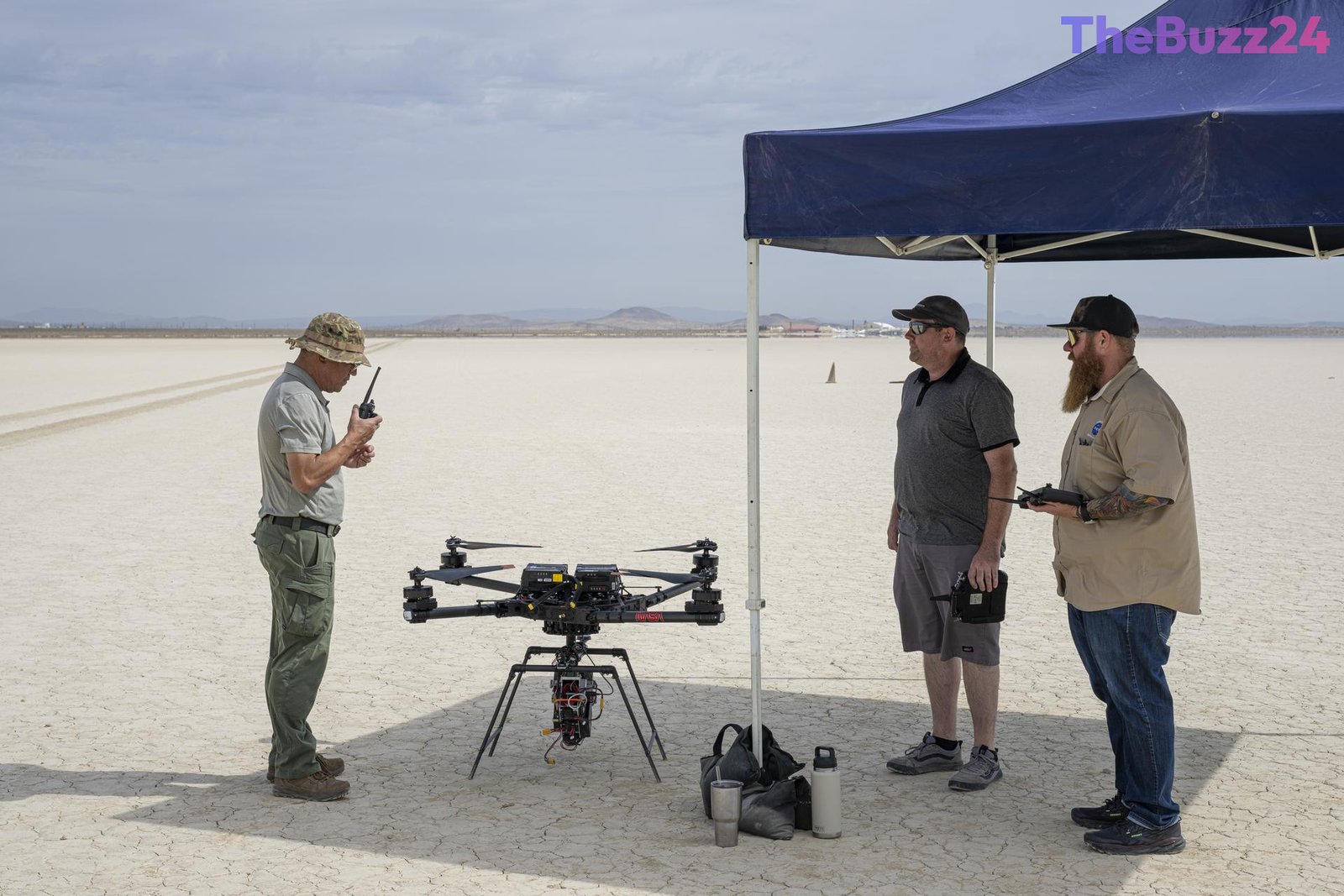
The laboratory specializes in utilizing small, remotely piloted, and autonomous aircraft to test emerging aeronautics concepts safely and cost-effectively. Testing experimental designs at full scale can often prove risky, expensive, or logistically challenging. By employing subscale models, the NASA team can rapidly evaluate new ideas, integrate complex flight experiments, and gather essential data. Projects currently supported by the lab include advanced navigation systems like the Safe and Precise Landing – Integrated Capabilities Evolution (SPLICE) experiment, which helps spacecraft detect surface hazards and land accurately on distant celestial bodies.
Driving these operations is a skilled team composed of chief engineer Derek Abramson, chief pilot Justin Hall, and drone pilot Justin Link. Abramson brings extensive technical oversight from his background in the U.S. Navy and the aerospace industry, while Hall applies creative problem-solving techniques to maintain rigorous flight safety standards. Link specializes in fabricating research vehicles and building custom composite materials from scratch. Together, their deep-rooted history with aviation allows them to rapidly design, build, and test innovative concepts that directly support NASA’s ongoing missions across aeronautics, science, and space exploration.
Key Takeaways
- NASA's Dale Reed Subscale Flight Research Laboratory uses remotely piloted aircraft to test risky or expensive concepts affordably.
- The lab is currently helping test advanced landing systems like the SPLICE experiment for future Moon and Mars missions.
- Key team members Abramson, Hall, and Link leveraged lifelong childhood hobbies in aviation to build professional careers in aerospace engineering and flight research.
Editor’s Analysis & Impact
The work conducted at NASA’s Dale Reed Subscale Flight Research Laboratory highlights the critical role that rapid prototyping and low-cost subscale testing play in modern aerospace development. By utilizing remotely piloted and autonomous aircraft, space agencies can drastically reduce both financial risk and technical uncertainty before committing to full-scale manufacturing. This methodology is becoming increasingly vital as space agencies and private aerospace firms accelerate timelines for crewed lunar bases and Martian exploration. Furthermore, the career paths of these engineers underscore the immense value of practical, hands-on maker experience—such as amateur model building and robotics—in cultivating the next generation of aerospace innovators and flight researchers.
Frequently Asked Questions
Q: What is the primary function of NASA’s Dale Reed Subscale Flight Research Laboratory?
A: The laboratory tests emerging aeronautics concepts, advanced navigation systems, and experimental aircraft designs using small, remotely piloted, and autonomous subscale vehicles.
Q: What is the SPLICE experiment?
A: SPLICE stands for Safe and Precise Landing – Integrated Capabilities Evolution, an advanced guidance and navigation system designed to help spacecraft land precisely and avoid surface hazards on the Moon and Mars.
Q: Who leads the operations at the subscale flight research lab?
A: The core team consists of Derek Abramson, chief engineer; Justin Hall, chief pilot; and Justin Link, drone pilot.
AI Disclosure: This article is based on verified data and official reports. Our Team and AI have cross-referenced every financial detail with primary sources to ensure total accuracy.
More from this Category