Astronomers Discover Record-Breaking ‘Baby’ Planet Still Forming
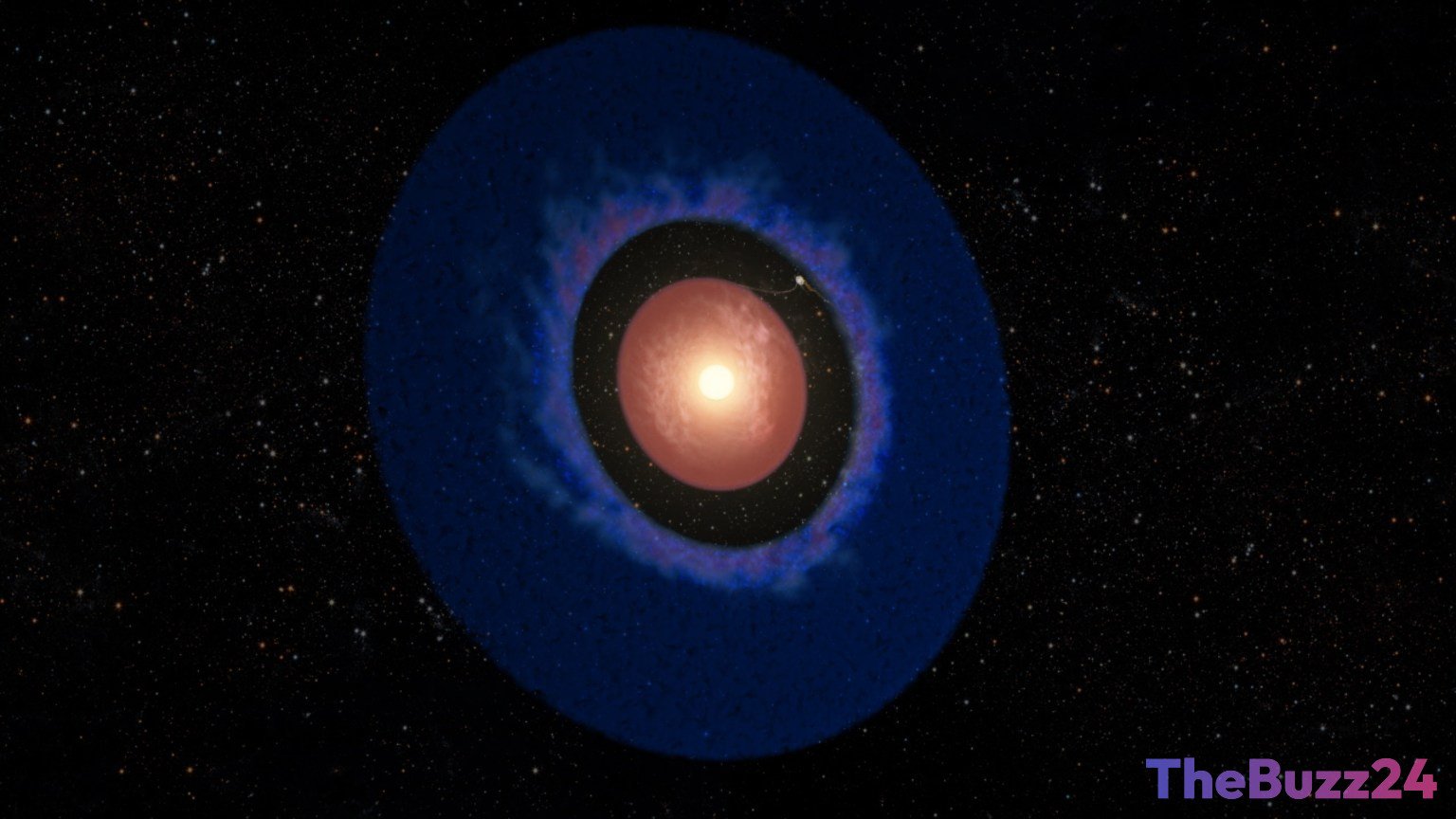
Astronomers have identified Elias 2-24 b, a celestial body less than a million years old, as the youngest planet ever discovered. This remarkable find is still embedded within its stellar nursery, a disk of gas and dust surrounding its parent star. The discovery challenges existing models of planet formation, suggesting that current theories may be incomplete.
Previously, the youngest known planets were over 5 million years old. “Elias 2-24 b shows us that even our best planet-formation models are still missing some important processes,” stated Lucas Cieza, a professor at the Instituto de Estudios Astrofísicos in Chile and a co-author of the study published in The Astrophysical Journal Letters. The research, led by doctoral candidate Andrea Bernardi, utilized archival data from the W. M. Keck Observatory in Hawaii, which is supported by NASA.
The planet, approximately the mass of Jupiter, orbits a star located about 450 light-years from Earth. Its existence was inferred from a gap observed in the star’s debris disk, a telltale sign of planetary formation. By using a coronagraph to block the star’s intense light, researchers were able to detect the faint glow of Elias 2-24 b within this gap, confirming its planetary nature and its ongoing accretion of material from its surrounding disk.
This discovery provides a unique window into the early stages of planetary development, offering insights into what our own solar system might have looked like billions of years ago. The ability to observe such a young planet is a testament to advancements in astronomical observation technology, with future instruments like NASA’s Nancy Grace Roman Space Telescope expected to make such discoveries more commonplace and detailed.
Key Takeaways
- Elias 2-24 b has been confirmed as the youngest planet ever discovered, at less than one million years old.
- The discovery challenges current planet formation models, indicating that some key processes are not yet fully understood.
- Advanced observational techniques, including the use of coronagraphs and archival data from multiple telescopes, were crucial in identifying the young exoplanet.
Editor’s Analysis & Impact
The confirmation of Elias 2-24 b as the youngest known planet marks a significant milestone in exoplanet research. It underscores the dynamic nature of star and planet formation, revealing that these processes can occur much earlier and potentially faster than previously modeled. This finding will likely spur further refinement of theoretical models, pushing astronomers to explore new mechanisms for rapid planetary growth. The success also highlights the power of combining data from various observatories and the potential of upcoming missions like the Nancy Grace Roman Space Telescope to revolutionize our understanding of planetary system evolution by enabling the detection of even younger and more distant worlds.
Frequently Asked Questions
Q: What makes Elias 2-24 b a record-breaking discovery?
A: Elias 2-24 b is the youngest planet ever confirmed, with an estimated age of less than one million years. This is significantly younger than previous record holders, which were over 5 million years old.
Q: How was Elias 2-24 b discovered?
A: Astronomers used archival data from the W. M. Keck Observatory, employing a coronagraph to block the light from the host star. This allowed them to detect the faint glow of the planet within a gap in the star's surrounding disk of gas and dust.
Q: Why is studying young planets like Elias 2-24 b important?
A: Studying young planets provides crucial insights into the early stages of planet formation. It helps astronomers test and refine their models of how planets are born and evolve, offering a glimpse into the potential conditions of our own solar system in its infancy.
AI Disclosure: This article is based on verified data and official reports. Our Team and AI have cross-referenced every financial detail with primary sources to ensure total accuracy.
More from this Category