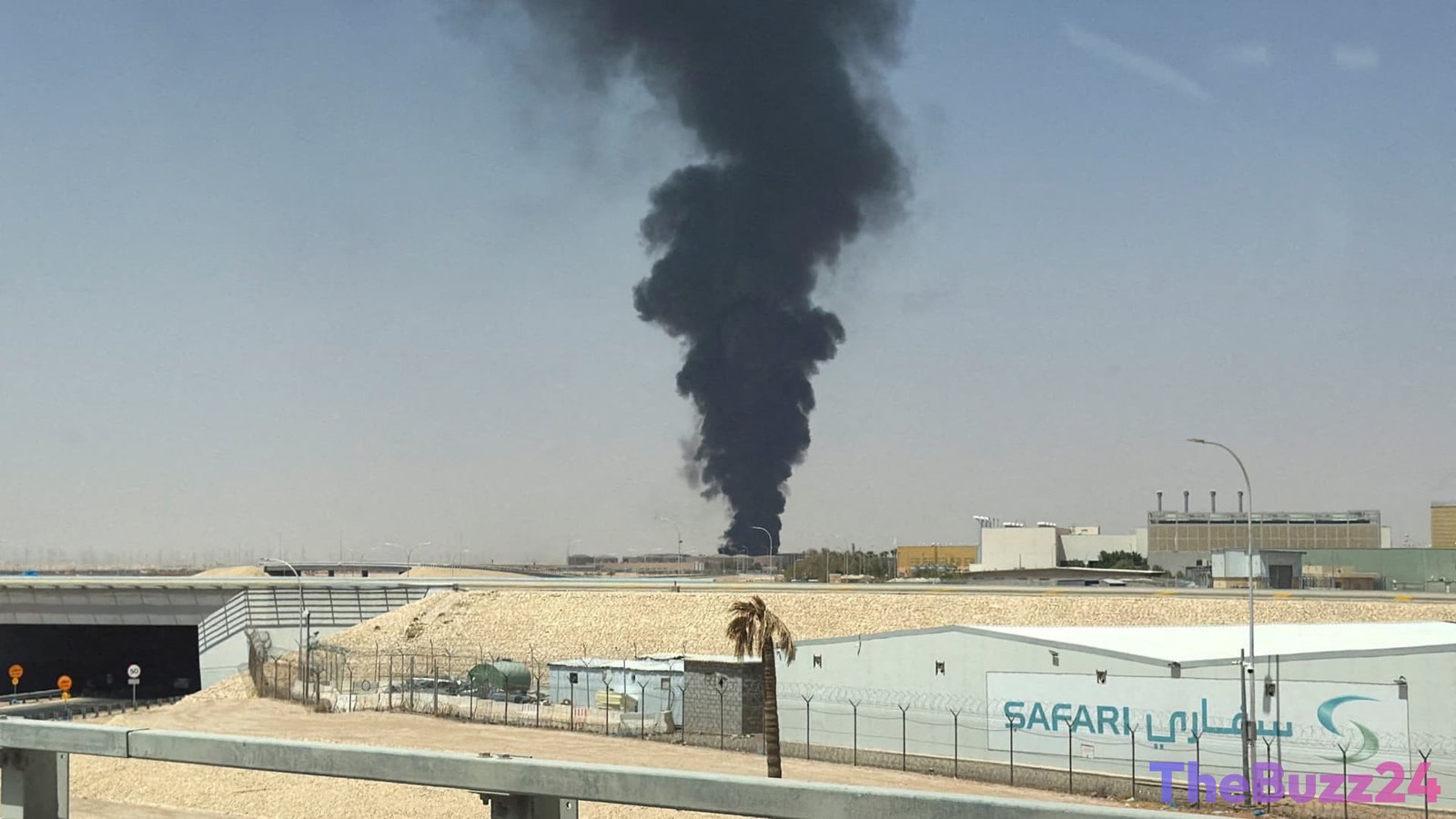
Houthi Missile and Drone Strikes Target Riyadh as Regional Tensions Escalate
Riyadh was plunged into high alert on Saturday following a series of coordinated missile and drone strikes launched by Yemen’s Houthi rebels. Plumes of thick black smoke and visible flames were observed near the capital’s primary airport, prompting immediate security warnings. While the Saudi-led military coalition asserted that its air defense systems successfully intercepted a missile bound for Riyadh, the incident triggered widespread concern, leading several U.S. embassies in the region—including those in Jerusalem, Oman, and Iraq—to issue urgent security advisories for American citizens.
Beyond the capital, the Houthis claimed responsibility for targeting an Aramco energy facility in the Red Sea port city of Yanbu, a critical hub for Saudi oil exports. The Saudi coalition reported thwarting additional attacks aimed at civilian areas in southwestern and western cities, including Bish, Farasan, and Taif. According to Houthi representatives, the offensive was a direct retaliation for recent military actions and alleged “criminal attempts” in the rebel-held Yemeni capital of Sanaa, which has faced intense airstrikes by the Saudi Air Force.
This escalation marks a significant intensification of the conflict that began in July when the Houthis declared a naval blockade against Saudi Arabia. The ongoing hostilities have severely disrupted Red Sea shipping routes and threatened global energy infrastructure. In response to the growing threat, Turkish Foreign Minister Hakan Fidan announced that Turkey stands ready to provide technical and military assistance to Saudi Arabia, leveraging a trilateral defense pact that also includes Pakistan. Meanwhile, the United Nations Security Council issued a strong condemnation of the Houthi attacks on civilian and energy infrastructure.
The conflict unfolds against the backdrop of a broader regional confrontation involving the United States, Israel, and Iran. Despite Saudi requests, U.S. President Donald Trump has resisted direct military intervention against the Houthis. Concurrently, Iranian officials have signaled a desire to de-escalate the conflict, indicating that Tehran is open to resuming stalled negotiations with the United States through Qatari and Pakistani mediators, provided there is a comprehensive cessation of hostilities across all regional fronts.
Key Takeaways
- Houthi rebels launched a major drone and missile offensive targeting Riyadh's airport area and an Aramco facility in Yanbu.
- The Saudi-led coalition reported intercepting multiple threats, while the U.S. issued regional security alerts for its citizens.
- Turkey offered military and technical support to Saudi Arabia under a trilateral defense pact with Pakistan.
Editor’s Analysis & Impact
The latest Houthi strikes on Riyadh and Yanbu underscore the extreme vulnerability of global energy supply chains. By targeting Aramco infrastructure and key Red Sea shipping corridors, the Houthis are successfully leveraging asymmetric warfare to exert pressure on global oil markets. The involvement of Turkey and Pakistan through a trilateral defense pact indicates a shifting security architecture in the Middle East, where regional powers are forced to form new alliances in the absence of direct U.S. military intervention. For energy markets, these persistent threats will likely sustain a geopolitical risk premium on crude oil prices. Ultimately, a lasting resolution depends on broader diplomatic breakthroughs between Washington and Tehran, as Iran continues to use its proxy network as leverage in wider geopolitical negotiations.
Frequently Asked Questions
Q: What facilities were targeted in the recent Houthi attacks?
A: The attacks targeted sensitive sites near Riyadh's main airport and an Aramco oil facility in the Red Sea port city of Yanbu, alongside other civilian areas in western and southwestern Saudi Arabia.
Q: How has the international community responded to the escalation?
A: The UN Security Council strongly condemned the attacks on civilian and energy infrastructure. Additionally, Turkey offered military support to Saudi Arabia, while the U.S. issued security alerts for its citizens in the region.
Q: What is the broader geopolitical context of this conflict?
A: The conflict is part of a wider regional proxy war involving Iran-aligned groups, Saudi Arabia, and the U.S. It has severely impacted Red Sea shipping routes and global energy security.
AI Disclosure: This article is based on verified data and official reports. Our Team and AI have cross-referenced every financial detail with primary sources to ensure total accuracy.
More from this Category