Arctic Sea Ice Melt Season Exhibits Unexpected Stabilization After Decades of Expansion
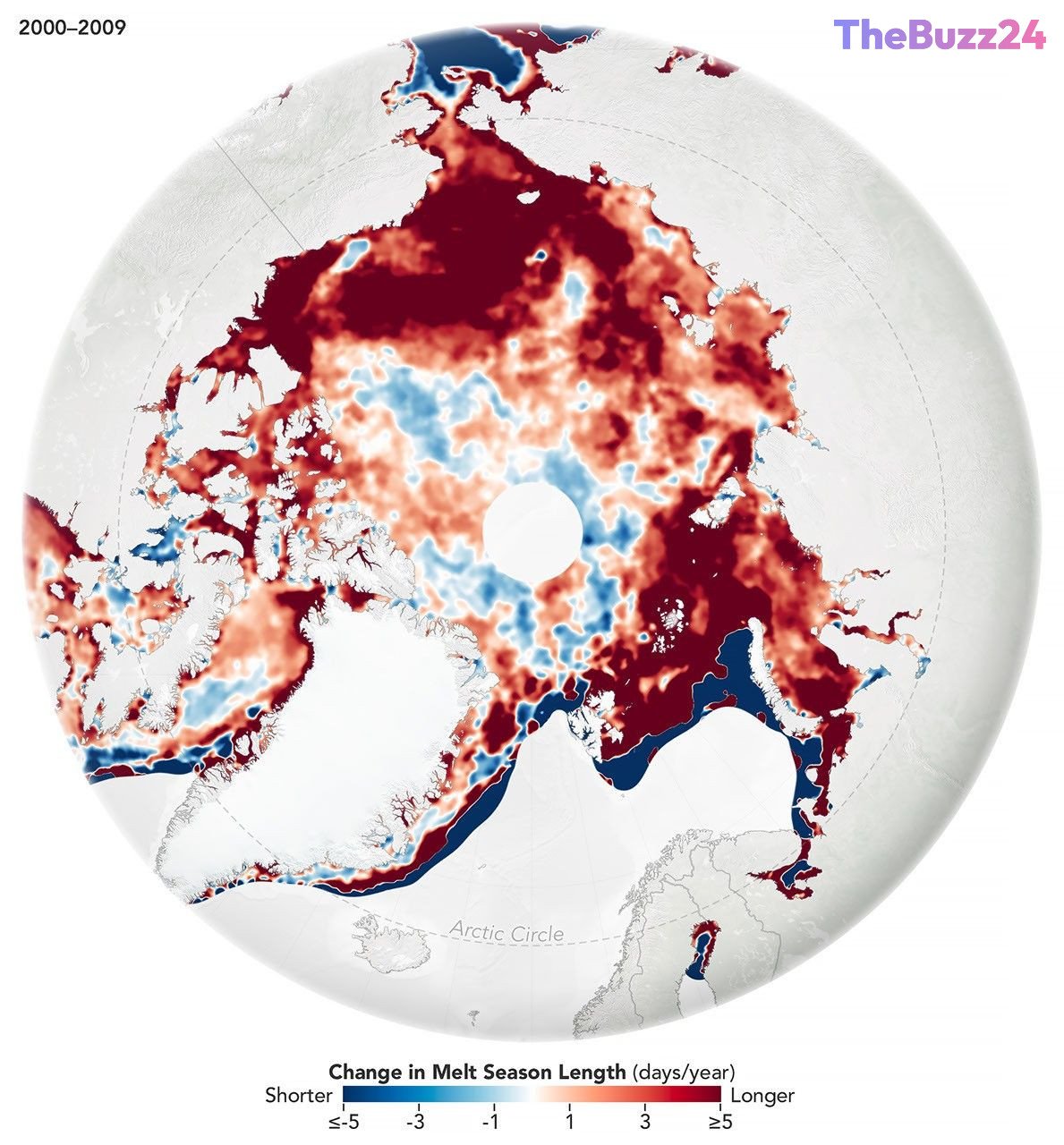
For generations, the Arctic has experienced a relentless expansion of its sea ice melt season, with spring arriving earlier and autumn freeze-ups delayed. However, an extensive analysis of satellite data spanning from 1979 to 2023 reveals a surprising shift: the rapid lengthening of the melt season essentially leveled off around 2010.
Historically, the duration of the Arctic melt season grew by roughly 40 days compared to baseline measurements from the late 1970s, with the vast majority of that increase accumulating during the 2000s. Researchers tracking these changes discovered that the primary driver behind the expanded melt window was not an earlier spring thaw, but rather a significantly later autumn freeze. As older, multi-year ice vanished, the remaining ice became thinner and more susceptible to seasonal variations.
Investigators attribute the post-2010 stabilization largely to shifting atmospheric dynamics and changing cloud patterns. While the rapid ice loss of the previous decade exposed dark ocean waters that absorbed massive amounts of solar radiation, more recent cloud formations have moderated the amount of sunlight reaching parts of the Arctic Ocean. Consequently, while annual fluctuations remain pronounced, the overarching trend in melt duration has held relatively steady over the last decade and a half.
Despite this stabilization, scientists emphasize that the broader implications of climate change in the polar region are far from over. The Arctic continues to warm at a rate nearly four times faster than the rest of the planet, and remaining ice reserves remain historically thin. Experts warn that if the remaining thick ice north of Greenland and the Canadian archipelago continues to thin, the region could easily pivot back into a phase of accelerated ice loss and an expanding melt cycle.
Key Takeaways
- The Arctic sea ice melt season has lengthened by about 40 days since 1979, but growth largely stabilized around 2010.
- The historical expansion was driven primarily by later autumn freeze-ups rather than earlier spring thaws.
- Recent atmospheric shifts, including changing cloud patterns, have helped moderate solar heat absorption and stabilize melt durations.
Editor’s Analysis & Impact
The unexpected stabilization of the Arctic melt season since 2010 highlights the complex interplay between atmospheric variables and polar ice dynamics. While this plateau offers a temporary reprieve from the runaway ice loss observed in the 2000s, it does not signal a reversal of broader climatic warming trends. The Arctic remains fundamentally altered, characterized by thinner, younger ice that is acutely sensitive to short-term weather fluctuations. For industries ranging from global shipping and commercial fishing to climatology and insurance, understanding these shifting regional regimes is critical. Future resilience depends on whether remaining multi-year ice formations can withstand ongoing thermal pressures or if the region is merely experiencing a brief pause before another accelerated phase of decline.
Frequently Asked Questions
Q: When did the Arctic sea ice melt season stop lengthening?
A: Data shows that the rapid lengthening of the Arctic melt season leveled off and stabilized around 2010, following decades of significant increases.
Q: What caused the melt season to grow longer initially?
A: The initial expansion was driven mostly by sea ice freezing later in the autumn, alongside the loss of thick multi-year ice which exposed darker ocean waters that absorbed more solar heat.
Q: Does this stabilization mean global warming in the Arctic has stopped?
A: No. The Arctic continues to warm nearly four times faster than the global average, and the remaining ice is significantly thinner and more vulnerable to weather patterns.
AI Disclosure: This article is based on verified data and official reports. Our Team and AI have cross-referenced every financial detail with primary sources to ensure total accuracy.
More from this Category