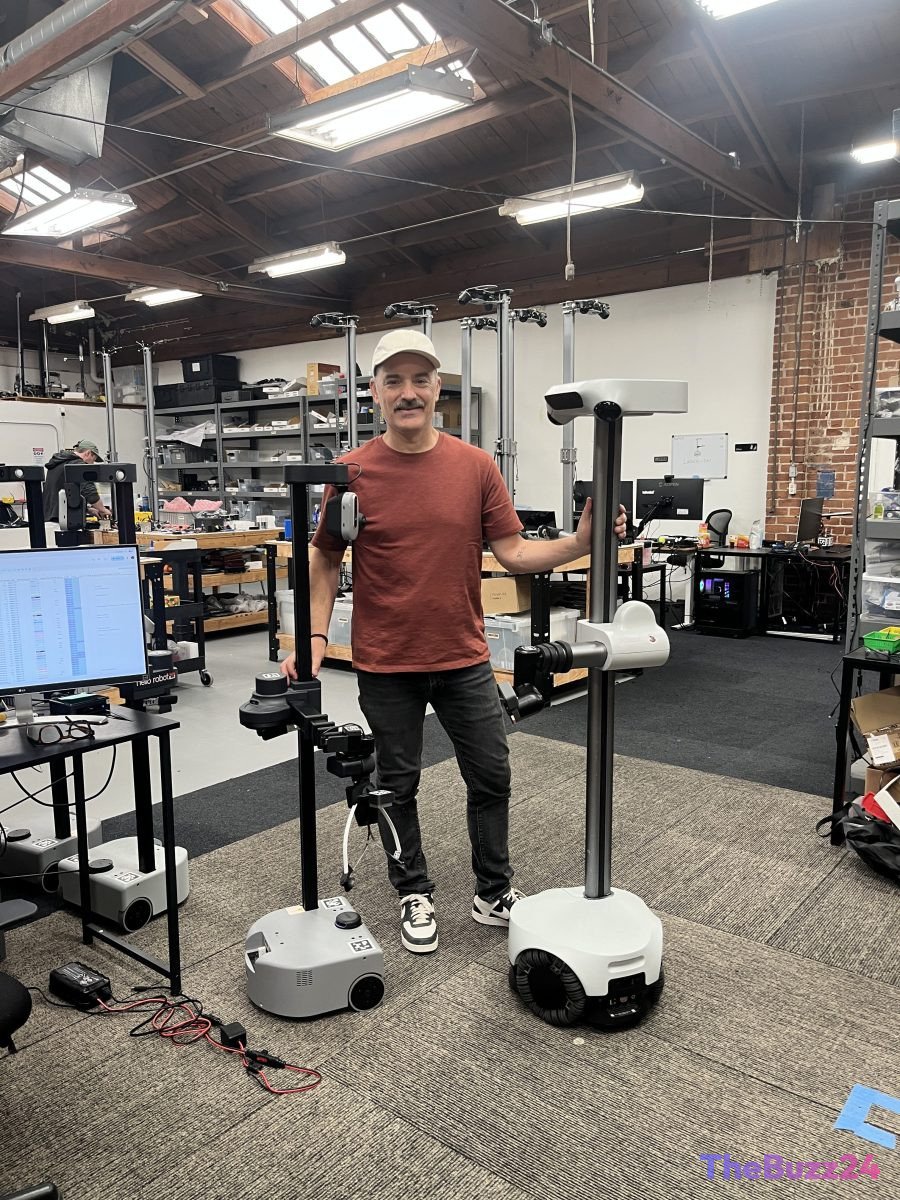
Hello Robot’s Stretch 4: Practical AI for Everyday Independence
In a significant demonstration of practical artificial intelligence, Hello Robot is showcasing its Stretch 4 robot, a device engineered not for flashy acrobatics but for tangible assistance in daily life. CEO and co-founder Aaron Edsinger is set to present the Stretch 4 at the Real World AI Stage, highlighting its capabilities in performing everyday tasks that can significantly enhance independence for individuals with severe mobility impairments.
The Stretch 4 represents a departure from the trend of humanoid robots, opting instead for a compact, wheeled design featuring a telescoping arm. This configuration allows the robot to navigate human-centric environments effectively and interact with objects safely. Its development is rooted in the principle of usefulness, safety, and accessibility, aiming to bridge the gap between laboratory demonstrations and real-world application. The robot’s recent launch saw its initial production run quickly sell out, underscoring a strong market demand for such assistive technology.
Unlike robots designed for complex physical feats, the Stretch 4 is built to perform tasks such as closing blinds, assisting with eating, or even scratching an itch. Real-world users, including individuals with quadriplegia, have leveraged the Stretch technology to achieve greater autonomy in personal care routines, like drinking, handling personal items, and hygiene. This focus on functional assistance marks a different, yet potentially more impactful, measure of progress in the field of robotics and AI.
Edsinger, a seasoned roboticist with a background from Meka Robotics and Redwood Robotics, brings extensive experience in human-robot interaction and product design to Hello Robot. The Stretch 4, informed by six years of customer feedback, is also supported by an open-source software platform, encouraging further research and development in embodied AI. This approach aims to move beyond headline-grabbing robots and deliver technology that genuinely improves lives.
Key Takeaways
- Hello Robot's Stretch 4 is designed for practical, everyday tasks to aid individuals with mobility impairments.
- The robot features a unique compact design with a telescoping arm, differentiating it from humanoid robots.
- The company emphasizes usefulness, safety, and accessibility, with early demand indicating a strong market for assistive robotics.
Editor’s Analysis & Impact
The introduction and rapid sell-out of Hello Robot’s Stretch 4 signal a significant market shift towards practical, assistive robotics. While the industry often focuses on advanced humanoid forms, Hello Robot’s success with a functional, task-oriented design highlights a substantial unmet need. This approach not only addresses critical challenges for individuals with disabilities but also opens avenues for broader applications in home assistance and elder care. The emphasis on an open-source platform further suggests a strategy to foster community development and accelerate innovation in embodied AI, potentially positioning Hello Robot as a key player in the growing field of accessible technology.
Frequently Asked Questions
Q: What makes the Stretch 4 robot different from other robots?
A: The Stretch 4 is designed for practical, everyday tasks to assist people, particularly those with mobility impairments. Unlike robots focused on complex physical feats or humanoid appearances, it has a compact, wheeled design with a telescoping arm optimized for navigating human spaces and performing useful functions safely and accessibly.
Q: Who benefits from the Stretch 4 robot?
A: The primary beneficiaries are individuals with severe mobility impairments who can use the robot to gain greater independence in performing daily tasks such as feeding themselves, closing blinds, and personal care activities. The robot's design is centered around enhancing their quality of life.
Q: What is Hello Robot's approach to robotics development?
A: Hello Robot prioritizes usefulness, safety, and accessibility in robot design. They focus on creating robots that can operate effectively in real-world environments alongside people, rather than just in controlled demo settings. The company also supports its technology with an open-source software platform to encourage research and development.
AI Disclosure: This article is based on verified data and official reports. Our Team and AI have cross-referenced every financial detail with primary sources to ensure total accuracy.
More from this Category