How Startup Nexterity is Revolutionizing Pipefitting with Remote-Controlled Robotics
Infrastructure maintenance is undergoing a potential transformation thanks to innovative hardware designed to tackle some of the most grueling labor in industrial settings. Former ExxonMobil engineer and planner Lindsey Elliott has spent years analyzing the critical infrastructure that transports oil, gas, and petrochemicals, ultimately focusing her efforts on a notoriously demanding component: bolted flange joints. These heavy-duty connections require intense physical exertion to loosen and tighten, contributing significantly to trade injuries and chronic fatigue among workers facing grueling 12-hour shifts.
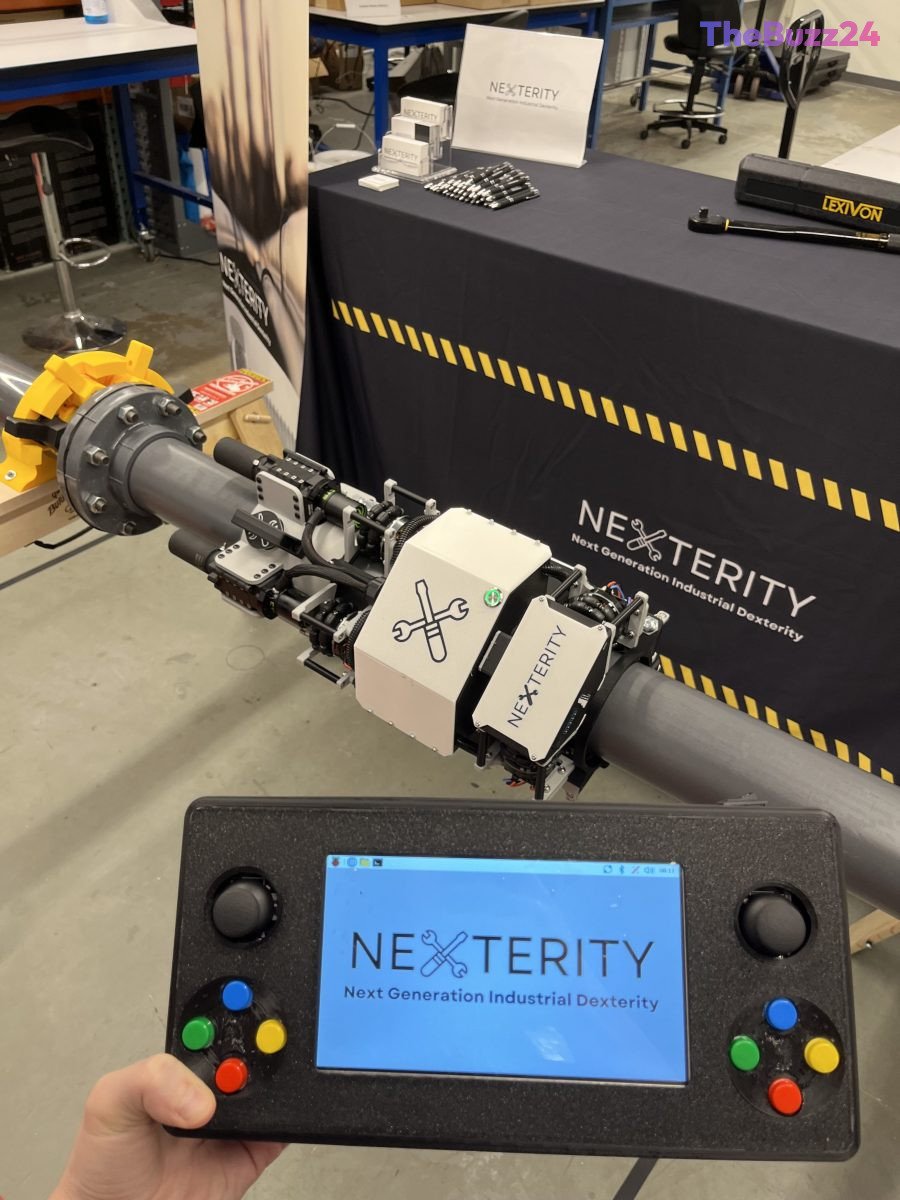
To address declining productivity and severe labor shortages across North America, Elliott founded Nexterity, a startup developing specialized automation technology. The company’s flagship solution is a remote-controlled, battery-powered robot engineered specifically to manage pipe bolts. The device is split into two primary segments that clamp around a pipe, allowing it to autonomously glide across the surface and efficiently loosen or tighten four bolts simultaneously. Despite its industrial capability, the entire system is compact enough to fit inside a standard Pelican case, enabling a single technician to transport and deploy it easily across remote job sites.
This portability supports a flexible rental business model similar to traditional construction equipment. Industry research reveals that roughly 80 percent of industrial piping measures between two and eight inches in diameter, creating an ideal environment for standardized automation. Beyond the oil and gas sector, this technology holds vast potential for water treatment facilities, food and beverage manufacturing, mining operations, nuclear plants, and emerging green energy production. By removing workers from direct physical strain during high-risk tasks, Nexterity aims to redefine blue-collar safety and productivity on a global scale.
Key Takeaways
- Nexterity has developed a portable, remote-controlled robot designed to automate the loosening and tightening of pipe bolts.
- The technology targets bolted flange joints, which are a major source of physical injury and fatigue for pipefitters.
- The compact robot fits in a standard Pelican case, making it easy to deploy under a flexible rental model for various industries.
Editor’s Analysis & Impact
The introduction of robotics into traditional blue-collar trades like pipefitting highlights a massive, often overlooked market segment ripe for technological disruption. As industries worldwide grapple with persistent labor shortages and stringent safety regulations, hardware startups focusing on ergonomic automation are well-positioned for rapid growth. Nexterity’s strategic focus on the two-to-eight-inch pipe demographic captures the vast majority of existing industrial infrastructure, spanning from traditional oil and gas to water treatment and green manufacturing. If the company successfully scales its rental model, it could establish a new benchmark for operational efficiency and worker safety in heavy industry, paving the way for broader adoption of robotics in traditionally manual trades.
Frequently Asked Questions
Q: What does Nexterity's robot do?
A: The battery-powered, remote-controlled robot clamps around industrial pipes to quickly loosen and tighten four bolts at a time, automating a traditionally manual and strenuous part of pipefitting.
Q: How portable is the Nexterity robot?
A: The robot is small enough to fit inside a standard Pelican case and can be easily carried and deployed to job sites by a single worker.
Q: What industries can use this pipefitting technology?
A: While initially inspired by oil, gas, and petrochemical infrastructure, the technology applies to any facility utilizing standard piping, including water treatment, food and beverage manufacturing, mining, nuclear, and green manufacturing plants.
AI Disclosure: This article is based on verified data and official reports. Our Team and AI have cross-referenced every financial detail with primary sources to ensure total accuracy.
More from this Category