Crusoe Terminates $1.25B Superpower Turbine Agreement With Boom Supersonic
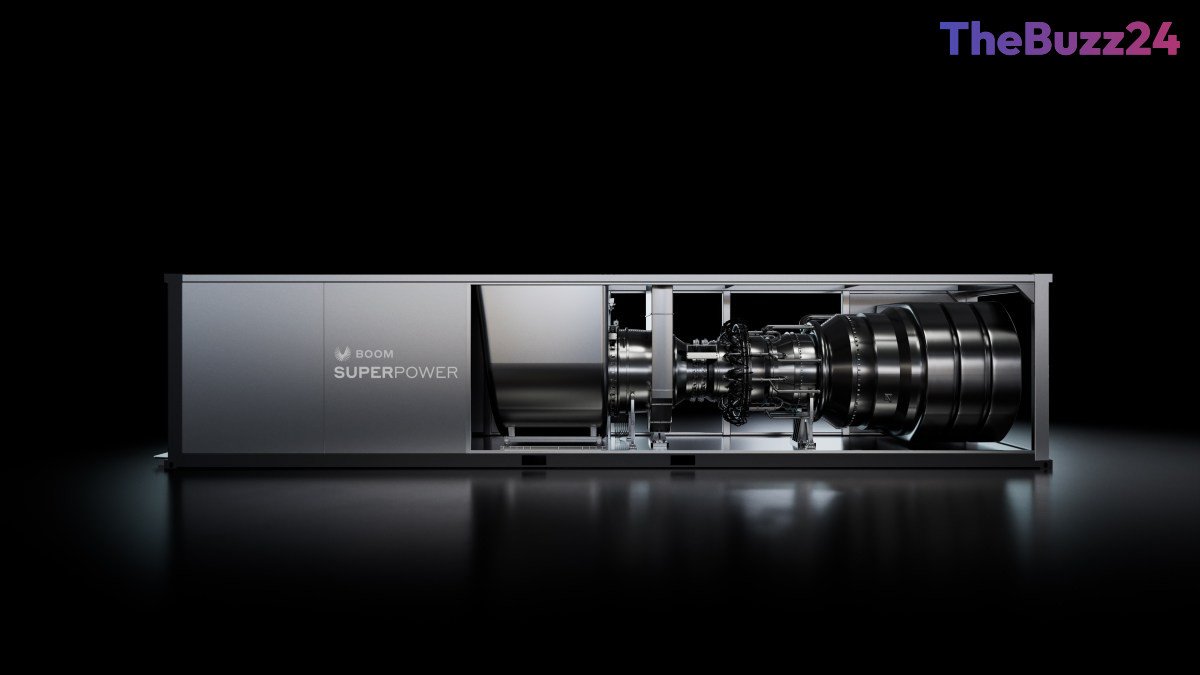
Crusoe, a rapidly expanding data center infrastructure developer, has officially canceled its $1.25 billion agreement to deploy stationary power turbines from Boom Supersonic. The arrangement originally positioned Crusoe as the premier launch customer for Boom’s novel energy division, securing 29 of the company’s 42-megawatt Superpower turbines to electrify artificial intelligence infrastructure projects.
Boom Supersonic, widely recognized for developing the Overture supersonic airliner, unveiled its stationary power generation business last year to monetize adaptations of its Symphony flight engine. The ground-based Superpower units share roughly 80 percent of their architecture with the airborne jet engine and were engineered to generate electricity via natural gas. Deliveries under the agreement were slated to commence in 2027, with the generated revenue intended to help subsidize the development of Boom’s flagship passenger jet.
Leadership from both Denver-based enterprises confirmed that the partnership has dissolved due to shifting power procurement strategies. Crusoe, which initially emerged as an energy-efficient cryptocurrency mining operation before pivoting toward mega-scale AI campuses for partners like OpenAI and Oracle, revealed that gas turbines no longer align with its immediate operational blueprint. The infrastructure provider plans to leverage a broader mix of energy assets across its sites, encompassing conventional grid connections, wind, solar, and battery storage.
Despite the cancellation, Boom Supersonic maintains an optimistic outlook for its power division, stating that it plans to supply approximately 250 megawatts of capacity to other clients next year and aims to achieve 1 gigawatt of total deployment by 2028. Meanwhile, Crusoe continues to build massive computing campuses, including gigawatt-scale sites in Texas, while continuously reassessing generation assets to meet the explosive, real-time power demands of artificial intelligence workloads.
Key Takeaways
- Crusoe has pulled out of a $1.25 billion deal to purchase 29 stationary natural gas turbines from Boom Supersonic.
- Boom designed its Superpower turbines using 80% of the parts from its supersonic aircraft engines to generate cash flow for jet development.
- Crusoe cited shifting energy mix requirements as the reason for ending the deal, opting instead for a diverse combination of grid power, renewables, and battery storage.
Editor’s Analysis & Impact
The dissolution of the Crusoe-Boom agreement underscores the rapid, volatile shifts currently defining AI infrastructure development. Hyperscalers and facility developers face massive pressure to secure immediate, dependable power, yet the race to scale computing capacity often clashes with the longer commercialization timelines of experimental hardware. For Boom Supersonic, losing its launch customer represents a notable speed bump, as stationary power generation was viewed as a lower-risk revenue stream to bankroll the capital-intensive Overture aircraft. For the broader AI sector, this move illustrates that data center developers will continually abandon rigid, unproven long-term hardware commitments in favor of flexible, hybrid energy mixes to minimize operational risk.
Frequently Asked Questions
Q: Why did Crusoe cancel the deal with Boom Supersonic?
A: Crusoe adjusted its near-term power procurement strategy, opting for a diverse mix of grid power, solar, wind, and batteries rather than relying heavily on the unreleased stationary turbines.
Q: What is Boom Supersonic's Superpower turbine?
A: It is a stationary natural gas-fired power generator that shares around 80% of its components with the Symphony engine originally developed for Boom's Overture supersonic passenger jet.
Q: What are Boom Supersonic's future plans for its power division?
A: Boom intends to deploy approximately 250 megawatts of capacity to other clients in the coming year, with a longer-term objective of reaching 1 gigawatt by 2028.
AI Disclosure: This article is based on verified data and official reports. Our Team and AI have cross-referenced every financial detail with primary sources to ensure total accuracy.
More from this Category