French Schools Face Mass Closures as Student Protests Escalate Nationwide
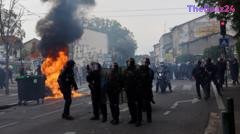
France is grappling with widespread disruption to its education system, as up to 500 schools across the nation were slated for partial or total closure on Monday. This significant measure follows days of escalating student protests marked by clashes with riot police and concerns over security conditions. Édouard Geffray, the French education minister, confirmed the suspensions, citing that safety requirements could not be met in approximately 400 to 500 high schools. The unrest has also resulted in considerable damage, with 24 schools reportedly burned or ransacked since the demonstrations began.
The protests, which originated in Paris last week and have since spread to major cities like Montpellier, Nantes, and Marseille, are driven by deep-seated grievances among high school students. Their complaints include a critical shortage of teachers, severely overcrowded classrooms, and deteriorating school infrastructure. French Justice Minister Gérald Darmanin previously indicated that 735 of the country’s 3,700 schools had been impacted by the violent demonstrations. The intensity of the clashes has led to an unprecedented number of arrests, with French Interior Minister Laurent Nuñez reporting 1,747 arrests on Friday alone, contributing to a total of over 5,000 arrests since the movement’s inception, with approximately 85% involving minors. Furthermore, 78 education staff members have sustained injuries, a situation described by Minister Geffray as “something we have never seen before.”
In response to the escalating crisis, Minister Geffray has attributed much of the violence to “activists – particularly from the far-left – who have infiltrated the high school student movement, hijacked it from the students themselves, and engaged in extreme violence.” Despite the ongoing unrest, the education minister has pledged a “partial, progressive return to lessons.” French Prime Minister Sébastien Lecornu has also addressed the situation, outlining government steps to tackle the difficulties faced by students and staff. These measures include ensuring class continuity, improving facilities, optimizing school day organization, and enhancing the transparency of the French university admissions platform. Additionally, the government is fast-tracking a “vandal-pays” bill, aiming to hold those responsible for property damage financially accountable for their actions. Organizers of the protests, however, have called for continued demonstrations, accusing the government of failing to provide “concrete measures.”
Key Takeaways
- Hundreds of French schools faced partial or total closure due to widespread student protests and security concerns.
- The demonstrations, fueled by grievances over education standards, have led to significant violence, property damage, and thousands of arrests, predominantly involving minors.
- The French government attributes much of the violence to external agitators, while also promising a gradual return to lessons and proposing measures to address student concerns and hold vandals accountable.
Editor’s Analysis & Impact
The widespread school closures and escalating student protests in France highlight significant challenges within the nation’s public education system and broader societal tensions. The disruption impacts not only students and staff but also the economy, as parents may face childcare issues. The government’s response, balancing law enforcement with policy reforms, will be crucial in de-escalating the situation. If grievances over teacher shortages, overcrowding, and facilities are not adequately addressed, the unrest could persist, potentially leading to further political instability. The situation also underscores the global trend of youth activism and the complexities governments face in managing large-scale demonstrations while maintaining public order and addressing legitimate demands. The outcome in France could set a precedent for how similar educational and social protests are handled in other European nations.
Frequently Asked Questions
Q: Why are students protesting in France?
A: Students are protesting against perceived declining education standards, including a critical lack of teachers, severely overcrowded classrooms, and dilapidated school buildings.
Q: How many schools have been affected by the protests?
A: Up to 500 schools were expected to be partially or totally closed on Monday due to security concerns. Previously, 735 of France's 3,700 schools had been affected "one way or another" by violent protests.
Q: What is the French government's response to the protests?
A: The government has blamed far-left activists for infiltrating the movement, made thousands of arrests, and promised a partial return to lessons. They are also implementing measures to improve education facilities, optimize school days, and enhance university admissions transparency, while accelerating a "vandal-pays" bill to hold those responsible for damage financially accountable.
AI Disclosure: This article is based on verified data and official reports. Our Team and AI have cross-referenced every financial detail with primary sources to ensure total accuracy.
More from this Category