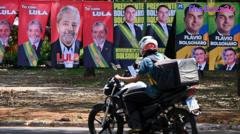
Brazil’s Presidential Race Heads to High-Stakes Run-Off
Brazil is bracing for a decisive political showdown as the nation’s presidential election moves toward a mandatory run-off scheduled for October 25. The upcoming vote will determine the country’s leadership trajectory, pitting incumbent President Luiz Inácio Lula da Silva against political newcomer Flávio Bolsonaro.
Luiz Inácio Lula da Silva, currently 80 years old, is seeking a fourth non-consecutive term, aiming to solidify his long-standing influence over Brazilian governance. His challenger, 45-year-old Flávio Bolsonaro, represents a new generation of right-wing leadership. Flávio is the son of former President Jair Bolsonaro, who held the nation’s highest office from 2019 to 2022, and his candidacy marks his first attempt at securing the presidency.
The transition to a run-off follows a closely watched initial round of voting that highlighted deep ideological divisions within the electorate. As the campaign enters its final phase, both candidates are intensifying their efforts to capture the support of undecided voters and those who backed eliminated candidates in the first round. The outcome of this election is expected to have significant implications for Brazil’s domestic policies and its standing on the international stage.
Key Takeaways
- Brazil's presidential election has officially moved to a run-off vote scheduled for October 25.
- Incumbent President Luiz Inácio Lula da Silva is campaigning for his fourth non-consecutive term.
- Challenger Flávio Bolsonaro, son of former President Jair Bolsonaro, is making his first bid for the presidency.
Editor’s Analysis & Impact
The upcoming Brazilian run-off represents a critical juncture for Latin America’s largest economy. The contest between Lula da Silva and Flávio Bolsonaro underscores a persistent polarization within the Brazilian electorate, reflecting broader global trends of ideological fragmentation. For investors and international partners, the election outcome will signal the future direction of Brazil’s fiscal policy, environmental regulations, and trade relations. A victory for Lula would likely signal a continuation of established social programs and a focus on regional integration, whereas a win for the Bolsonaro camp would suggest a pivot back toward the nationalist, market-oriented policies seen during the previous administration. The market will likely remain volatile as the October 25 date approaches, with institutional stability being the primary concern for global stakeholders monitoring the transition of power.
Frequently Asked Questions
Q: When is the Brazilian presidential run-off election?
A: The run-off election is scheduled to take place on October 25.
Q: Who are the two candidates competing in the run-off?
A: The candidates are incumbent President Luiz Inácio Lula da Silva and challenger Flávio Bolsonaro.
AI Disclosure: This article is based on verified data and official reports. Our Team and AI have cross-referenced every financial detail with primary sources to ensure total accuracy.
More from this Category