India Denounces JD Vance’s ‘Offensive’ Immigrant Comments as US Tightens H-1B Visa Rules
India has strongly criticized recent statements made by U.S. Vice President JD Vance regarding immigrant workers, labeling his choice of words as “deeply offensive” and carrying “painful historical and colonial legacy connotations.” The diplomatic rebuke comes amidst heightened scrutiny of the H-1B visa program, a system heavily utilized by skilled professionals, particularly those from India, who constitute approximately 70% of its beneficiaries in 2025.
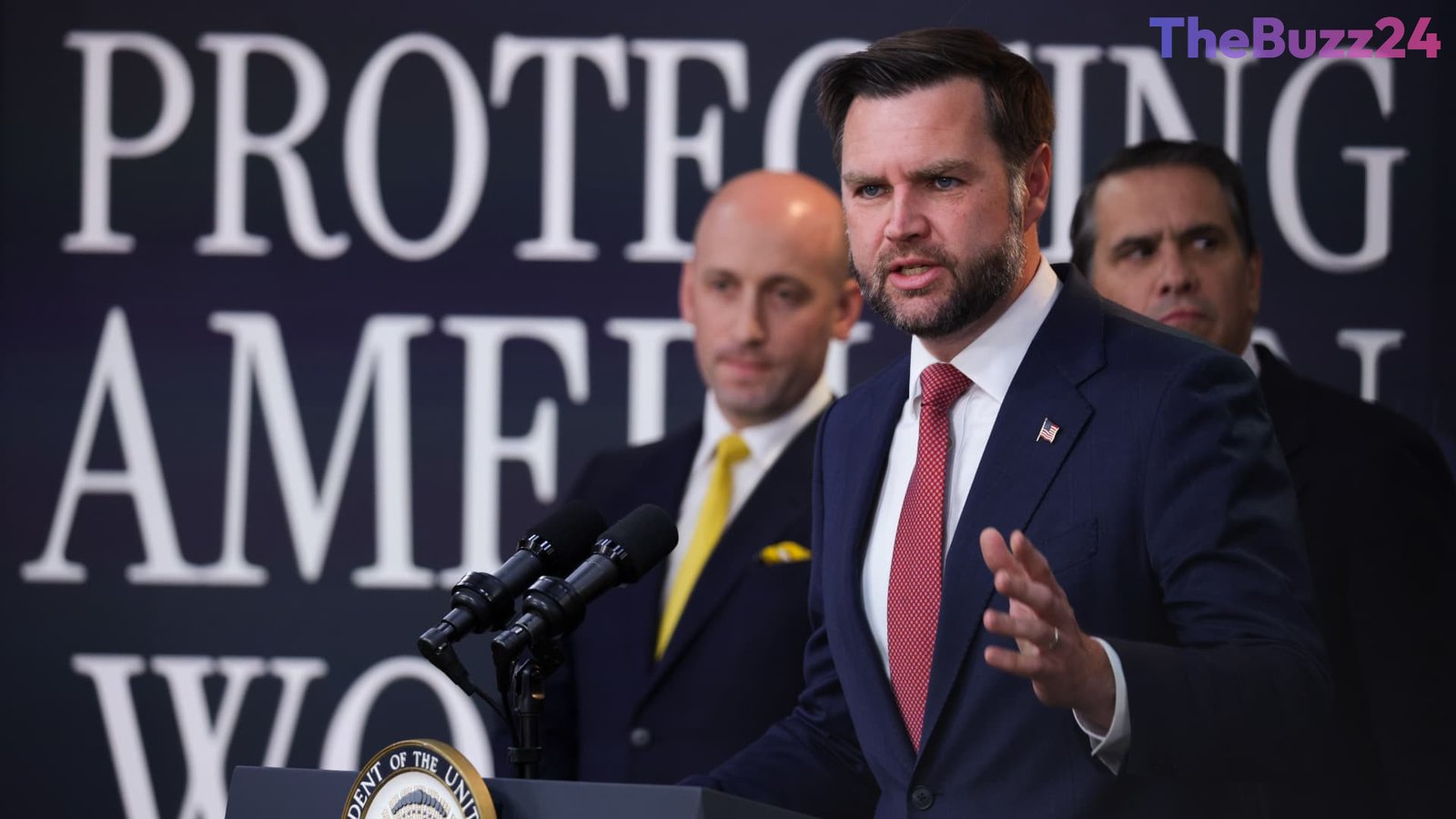
Vance’s controversial remarks, delivered on Thursday, warned companies against “lay[ing] off American workers and then replac[ing] them with foreign indentured servants.” These comments coincided with a significant move by the U.S. Department of Labor to suspend several major technology firms, including Microsoft, Adobe, and prominent Indian IT companies, from its Permanent Labor Certification program. This suspension prevents these companies from applying for permanent residency for their H-1B visa employees. Vance specifically accused Microsoft of replacing 6,000 laid-off workers with H-1B visa holders.
In an official statement released Friday, India’s Ministry of External Affairs asserted that such descriptions are “unwarranted” and fail to acknowledge the substantial contributions of highly educated and skilled Indian professionals to the U.S. economy and innovation ecosystem. The ministry also reassured Indian citizens that the announced U.S. measures would not impact the validity of existing H-1B visas or the status of current visa holders and their dependents, emphasizing that “talent mobility adds value to both economies” and that the suspensions “do not advance the shared ambitions of both countries.”
The Indian companies impacted by the Department of Labor’s decision include industry giants such as Cognizant, Infosys, Capgemini, Tata Consultancy Services, Wipro, and HCL. NASSCOM, India’s IT industry body, responded by highlighting that Indian technology firms have significantly reduced their reliance on H-1B visas in recent years, instead focusing on expanding domestic hiring within their U.S. operations. For instance, Tata Consultancy Services, the largest Indian IT company, reported “single-digit” H-1B applications over the past two years and announced plans to hire an additional 15,000 people in the U.S. over the next five years. This development follows a federal judge’s decision in June to block a $100,000 H-1B visa fee imposed by former U.S. President Donald Trump last year.
Key Takeaways
- India has strongly condemned U.S. Vice President JD Vance's comments on immigrant workers, calling them "deeply offensive" and historically insensitive.
- The U.S. Department of Labor has suspended several major tech companies, including Indian IT firms, from a program allowing H-1B visa holders to apply for permanent residency.
- Indian IT companies are adapting by reducing H-1B reliance and increasing domestic hiring in the U.S., with assurances from India's foreign ministry regarding existing visa validity.
Editor’s Analysis & Impact
This diplomatic spat highlights growing tensions around immigration and labor policies between the U.S. and India, two significant economic partners. The U.S. administration’s move to tighten H-1B visa regulations, coupled with inflammatory rhetoric, could strain bilateral relations and impact the global technology sector. For Indian IT companies, this reinforces a trend towards greater localization of their U.S. workforces, potentially leading to increased investment in American talent and infrastructure. While this might appease some domestic labor concerns in the U.S., it could also increase operational costs for companies reliant on skilled foreign labor. The broader implication is a potential shift in global talent mobility strategies, with companies re-evaluating their reliance on visa programs and exploring alternative models for accessing specialized skills. This situation underscores the complex interplay between nationalistic policies, economic realities, and international diplomacy.
Frequently Asked Questions
Q: What are the H-1B visa and its significance?
A: The H-1B visa is a non-immigrant visa that allows U.S. employers to temporarily employ foreign workers in specialty occupations. These occupations generally require a bachelor's degree or higher in a specific field. It is highly significant for the U.S. technology sector and for skilled professionals, particularly from India, seeking employment opportunities in the U.S.
Q: Why did India find JD Vance's comments offensive?
A: India's Ministry of External Affairs found JD Vance's use of terms like "foreign indentured servants" deeply offensive because it carries "painful historical and colonial legacy connotations." They argue that such language disregards the fact that Indian professionals in the U.S. are highly educated, skilled, and significant contributors to the American economy and innovation.
Q: Which companies are affected by the U.S. Department of Labor's suspension?
A: The U.S. Department of Labor suspended Microsoft, Adobe, and several major Indian information technology companies from its Permanent Labor Certification program. The Indian companies specifically named include Cognizant, Infosys, Capgemini, Tata Consultancy Services, Wipro, and HCL. This suspension affects their ability to apply for permanent residency for their H-1B visa employees.
AI Disclosure: This article is based on verified data and official reports. Our Team and AI have cross-referenced every financial detail with primary sources to ensure total accuracy.
More from this Category