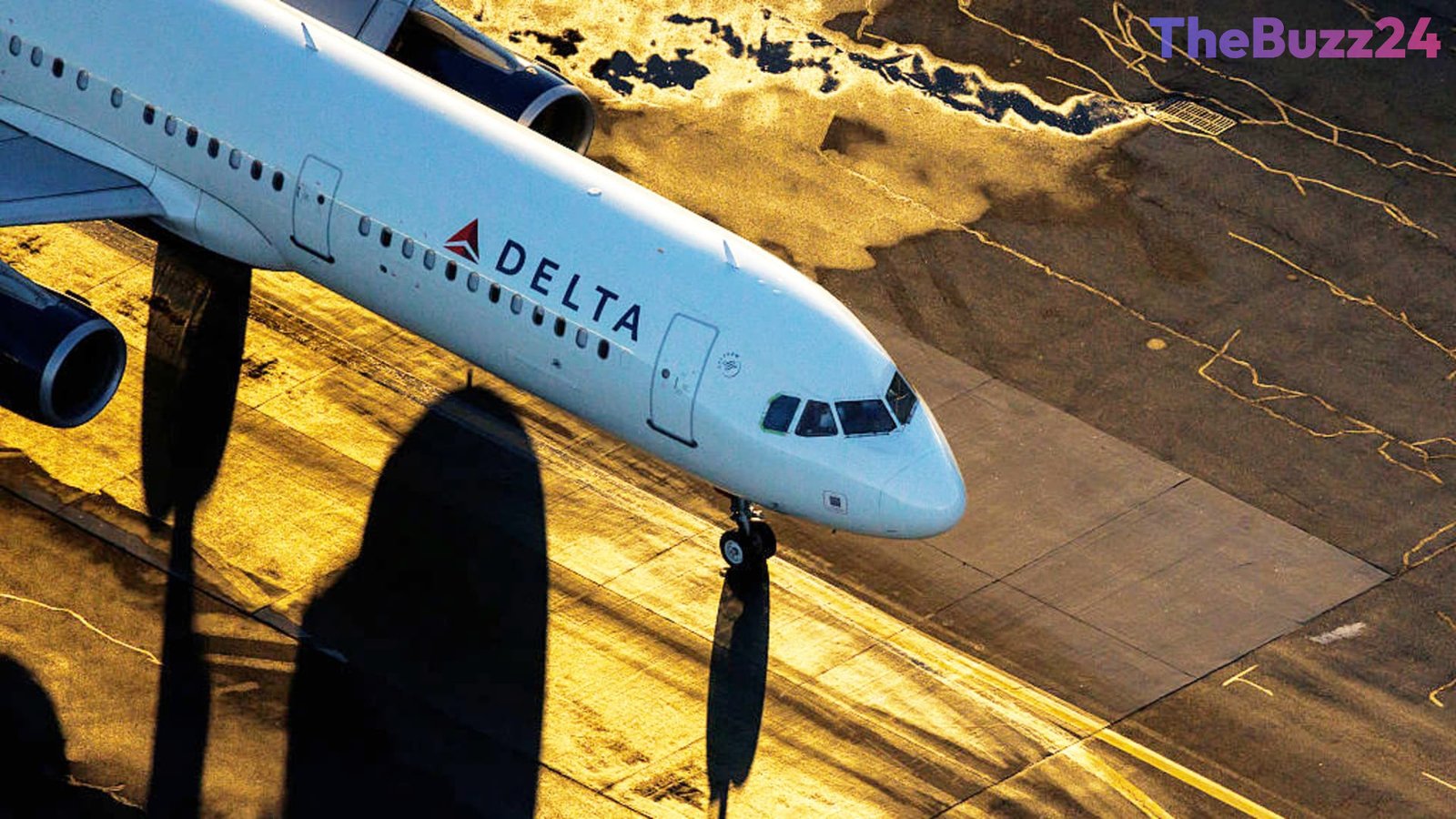
Fuel Cost Surge Drags Down Delta’s Profit Outlook Despite Resilient Travel Demand
Delta Air Lines has adjusted its long-term financial expectations downward, marking its first quarterly earnings miss in two years. The Atlanta-based carrier slashed its 2026 profit forecast and lowered its free cash flow projections, pointing directly to a massive surge in jet fuel prices. Despite these headwinds, leadership remains highly optimistic about consumer demand, noting that travelers continue to book flights even as ticket prices climb to offset rising operational expenses.
The airline revised its full-year adjusted earnings per share guidance to a range of $5.10 to $5.60, a significant drop from the $6.50 to $7.50 range projected earlier this summer. Additionally, Delta’s free cash flow outlook for the year was scaled back to $2.5 billion, down from a previous estimate of up to $4 billion. The primary culprit is a $6 billion spike in fuel costs, driven by geopolitical tensions in the Middle East that have disrupted global energy markets since early this year.
Despite the financial squeeze, Delta CEO Ed Bastian emphasized that consumer appetite for air travel shows no signs of cooling. Ticket prices have risen significantly—with broader industry airfares jumping over 23% year-over-year—yet bookings remain robust across all cabins, geographies, and travel sectors. Notably, Delta’s premium services continue to outpace standard seating, with premium revenue growing 18% to $6.82 billion, officially overtaking main cabin sales.
For the third quarter, Delta reported an adjusted revenue of $17.59 billion, slightly below market expectations of $17.67 billion. Net income fell 47% to $756 million compared to the same period last year. However, the airline expects a strong finish to the year, forecasting a 20% revenue increase for the fourth quarter. Delta also continues to leverage its unique ownership of a refinery in Trainer, Pennsylvania, which helps mitigate some of the volatility in the jet fuel market.
Key Takeaways
- Delta Air Lines missed quarterly earnings expectations for the first time in two years and lowered its 2026 profit forecast due to a $6 billion surge in fuel costs.
- Despite higher ticket prices, consumer demand remains exceptionally strong across both premium and main cabin services.
- Premium travel has become a major growth driver for Delta, with premium revenue officially surpassing main cabin sales in the third quarter.
Editor’s Analysis & Impact
Delta’s latest financial results highlight a critical tension currently facing the aviation industry: the battle between robust consumer demand and soaring operational costs. While geopolitical conflicts have driven jet fuel prices to painful highs, airlines have successfully leveraged their pricing power to pass these costs onto consumers without triggering a demand cliff. Delta’s shift toward premium services is a particularly savvy strategic move, as high-income travelers appear insulated from broader inflationary pressures. However, the downward revision of Delta’s 2026 profit and cash flow forecasts suggests that even the most resilient carriers cannot entirely outrun persistent macroeconomic headwinds. Moving forward, the industry’s profitability will heavily depend on whether fuel prices stabilize and if consumers will continue to tolerate elevated airfares as household budgets tighten.
Frequently Asked Questions
Q: Why did Delta Air Lines lower its profit forecast?
A: Delta lowered its forecast primarily due to a $6 billion surge in jet fuel prices driven by geopolitical tensions, which represents the airline's second-largest operating expense after labor.
Q: Are high ticket prices reducing the demand for flights?
A: No, Delta's leadership reported that consumer demand remains highly resilient across all regions, cabins, and customer segments, despite airfares rising significantly.
Q: How is Delta mitigating rising fuel costs?
A: In addition to raising ticket prices, Delta utilizes its own oil refinery in Trainer, Pennsylvania, to refine crude oil into jet fuel, providing a unique cost advantage over competitors.
AI Disclosure: This article is based on verified data and official reports. Our Team and AI have cross-referenced every financial detail with primary sources to ensure total accuracy.
More from this Category