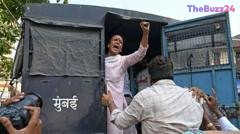
Delhi on High Alert as Court Releases Youth-Led ‘Cockroach’ Movement Leaders Amid Mass Protests
Heavy security measures and widespread transit disruptions gripped New Delhi as a local magistrate ordered the conditional release of key figures from the Gen Z-led Cockroach Janta Party (CJP). Movement founder Abhijeet Dipke, alongside fellow organizers Saurav Das and Ashutosh Ranka, had been intercepted and detained directly from their incoming flight by law enforcement to prevent them from leading an unsanctioned demonstration at the historic Jantar Mantar site.
The court granted the leaders freedom under the stipulation that they maintain public order and refrain from breaching the peace for one year. The CJP, an unregistered civil movement with substantial traction among younger citizens, organized the gathering to demand systemic electoral reforms and the resignation of Chief Election Commissioner Gyanesh Kumar. The coalition alleges irregularities surrounding an extensive nationwide voter roll revision that removed roughly 130 million names from registration books. Both the Election Commission and the ruling Bharatiya Janata Party (BJP) have dismissed allegations of partisan manipulation, defending the audit as standard procedure to eliminate duplicate and deceased records.
Anticipating large turnouts, authorities enacted sweeping restrictions across the capital over the weekend, shuttering over 40 metro stations, cancelling scheduled rail services, and erecting extensive roadblocks. Thousands of prospective marchers, civic advocates, and students were briefly detained throughout Delhi as security personnel cordoned off assembly points. Protesters who managed to navigate the security perimeter voiced frustration over the administrative clampdown, emphasizing that the right to peaceful assembly remains a foundational pillar of democratic participation.
The movement initially coalesced earlier this year after remarks by the country’s Chief Justice comparing unemployed youth to cockroaches sparked outrage online. Dipke, a foreign-educated activist, leveraged the controversy into a viral campaign that channelled widespread frustration over economic stagnation, paper leaks, and systemic governance issues. Having previously sustained multi-week demonstrations that led to high-profile political resignations in the education sector, the CJP’s pivot toward election oversight signals an intensifying clash between youth-led civic groups and institutional authorities ahead of crucial state ballots.
Key Takeaways
- A Delhi court granted conditional release to Cockroach Janta Party leaders Abhijeet Dipke, Saurav Das, and Ashutosh Ranka after police attempted to detain them ahead of scheduled rallies.
- The youth-led movement is demanding significant electoral reforms and the resignation of Chief Election Commissioner Gyanesh Kumar over the controversial removal of 130 million voter names.
- Extensive security protocols, including the closure of dozens of metro stations and mass preventive detentions, brought portions of New Delhi to a standstill.
Editor’s Analysis & Impact
The mobilization spearheaded by the Cockroach Janta Party underscores an evolving dynamic in Indian civil society, where Gen Z activists bypass conventional party structures through viral, internet-native campaigns. By shifting its focus from youth employment and education scandals to the integrity of electoral rolls, the CJP is confronting core institutional mechanisms directly ahead of pivotal state elections. The state’s reliance on sweeping transit closures and preventive arrests highlights institutional anxiety regarding spontaneous, digitally organized demonstrations. However, severe crackdowns risk alienating an increasingly vocal youth demographic, potentially elevating street-level friction into a broader crisis of institutional trust that could reverberate through the upcoming electoral cycle.
Frequently Asked Questions
Q: What is the Cockroach Janta Party?
A: The Cockroach Janta Party (CJP) is an unregistered youth and student-driven protest movement in India, founded by activist Abhijeet Dipke, focused on issues such as unemployment, systemic governance, and electoral integrity.
Q: Why are the protesters calling for the Chief Election Commissioner's resignation?
A: Demonstrators allege that a recent nationwide update to the voter rolls resulted in the wrongful disenfranchisement of over 130 million voters, claiming the audit was executed with political bias—an allegation strongly denied by the Election Commission.
Q: What conditions were attached to the CJP leaders' release?
A: The court set the detained organizers free under the legal undertaking that they will not engage in any breach of public peace for a period of one year.
AI Disclosure: This article is based on verified data and official reports. Our Team and AI have cross-referenced every financial detail with primary sources to ensure total accuracy.
More from this Category