Former Ukrainian Commander Claims Russian Offensive Capabilities Have Stalled
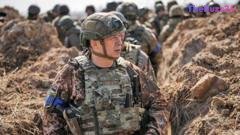
General Oleksandr Syrskyi, the former commander-in-chief of Ukraine’s armed forces, has asserted that the Ukrainian military has successfully stabilized the front line and effectively neutralized Russia’s ability to maintain offensive momentum. In a recent interview, Syrskyi attributed this shift to the high attrition rate inflicted upon Russian forces, claiming that Moscow’s casualty figures significantly outpace those of Ukraine. While official death tolls remain classified, Syrskyi estimated that Russian losses are substantially higher, a trend he believes has contributed to the current stalemate.
Syrskyi addressed the controversies surrounding his tenure, including his dismissal by President Volodymyr Zelensky earlier this summer. The former commander pushed back against criticisms that he was resistant to modern, technologically advanced warfare. He highlighted his role in establishing the Unmanned Systems Forces and noted that drones now account for a significant portion of Russian losses. He also defended his strategic decisions, including the 2024 Kursk incursion, which he described as a necessary maneuver to divert Russian resources and provide relief to overstretched Ukrainian brigades.
Regarding the internal friction within the Ukrainian government, Syrskyi pointed to disagreements with former defense minister Mykhailo Fedorov over procurement priorities. He argued that an over-reliance on drones at the expense of essential ground equipment, such as armored vehicles and transport, created logistical imbalances. Despite these challenges, Syrskyi emphasized that the future of the conflict lies in the integration of artificial intelligence and automated systems. He warned European allies that the threat posed by Russia is not limited to Ukraine and urged them to prepare for a prolonged, technologically driven conflict.
Looking ahead, Syrskyi maintained that while robotics and AI will play an increasingly critical role in modern warfare, the human element remains the decisive factor. As both nations race to develop advanced defensive systems for their hardware, the battlefield continues to evolve into a high-tech arena where the ability to adapt and maintain supply chains will likely determine the long-term outcome of the war.
Key Takeaways
- General Syrskyi claims the Ukrainian front line has stabilized, effectively halting Russia's ability to advance.
- The former commander defends his record on technological integration, citing the creation of the Unmanned Systems Forces.
- Syrskyi warns that the conflict is becoming increasingly reliant on AI and robotics, urging European nations to prepare for broader security threats.
Editor’s Analysis & Impact
The assessment provided by General Syrskyi highlights a pivotal shift in the Ukraine-Russia conflict from a war of attrition to a high-tech industrial race. The emphasis on AI, robotics, and automated control systems suggests that the future of modern warfare will be defined by the speed of technological iteration rather than sheer manpower. However, the internal political friction described—specifically the tension between procurement of drones versus traditional heavy armor—reveals the logistical complexities of sustaining a modern military. The broader implication is that both nations are locked in a cycle of rapid innovation where the ‘active defense’ of assets is becoming as important as offensive capability. For global markets and defense industries, this signals a sustained, long-term demand for autonomous systems and AI-integrated weaponry, likely influencing defense budgets and strategic planning across Europe and beyond for the coming decade.
Frequently Asked Questions
Q: What is the current status of the front line in Ukraine according to General Syrskyi?
A: General Syrskyi states that the front line has been stabilized and that Russia's ability to advance has been significantly broken due to high attrition rates.
Q: Why was General Syrskyi dismissed from his position?
A: Syrskyi was fired by President Zelensky following internal disagreements with former defense minister Mykhailo Fedorov regarding military procurement priorities and the adaptation of the army to modern technological needs.
AI Disclosure: This article is based on verified data and official reports. Our Team and AI have cross-referenced every financial detail with primary sources to ensure total accuracy.
More from this Category