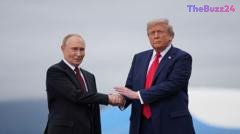
Global Energy Crisis Deepens as Trump’s Diplomatic Moves Spark Backlash
Weeks before crucial elections that will determine control of Congress, President Donald Trump has intensified his focus on global affairs, particularly engaging with Russia, in an effort to address escalating fuel prices. High energy costs, especially for diesel fuel vital to agricultural states, have become a significant concern for American voters, with polls indicating a strong link between these prices and public frustration over international conflicts.
Trump recently announced a new agreement with Russian President Vladimir Putin, aiming to supply the U.S. with hundreds of millions of tons of Russian diesel fuel. This move was accompanied by an order to the Treasury Department to lift U.S. restrictions on Russian diesel sales globally. Shortly after, Trump also claimed an “energy ceasefire” agreement between Russia and Ukraine. However, Ukrainian President Volodymyr Zelensky stated he had no prior notice of such an agreement, and Russia remained silent, subsequently launching new attacks on Ukrainian power plants. Zelensky wryly noted that “Putin does not read Truth Social,” and warned of a response if Russia does not agree to a genuine energy ceasefire this winter.
Adding to the complexity, Trump has increasingly criticized Zelensky, blaming Ukraine’s strikes on Russian oil infrastructure for contributing to worldwide energy shortages. Reports indicate that the U.S. has threatened to cut off arms sales and intelligence sharing with Ukraine if these attacks do not cease. The President’s actions have drawn significant criticism, both domestically and internationally. Canadian Prime Minister Mark Carney condemned the diesel deal, arguing it undermines European stability and finances Russia’s conflict in Ukraine. In the U.S., a bipartisan group of senators expressed concern, stating the decision to import Russian diesel directly contradicts a 2022 law banning such imports.
Compounding these challenges, new violence in the Middle East, including Houthi attacks on Saudi Arabian infrastructure, threatens to further destabilize global energy markets. This escalation of a long-simmering conflict, particularly amidst the ongoing U.S.-Iran standoff, could send oil prices soaring once more. Despite Trump’s attempts to redirect public anger towards the conflict in Ukraine as the primary source of energy woes, the immediate political fallout from these global developments is likely to be felt by the current administration as voters head to the polls.
Key Takeaways
- President Trump pursued deals with Russia, including a diesel fuel agreement and a claimed 'energy ceasefire' with Ukraine, to address high U.S. fuel prices ahead of crucial elections.
- The 'energy ceasefire' claim was immediately disputed by Ukrainian President Zelensky, and Russia continued attacks on Ukrainian infrastructure, leading to international skepticism and criticism.
- Trump's actions, including lifting Russian diesel sanctions and criticizing Ukraine, have sparked significant backlash from international allies and bipartisan U.S. lawmakers, while escalating Middle East conflicts further threaten global energy stability.
Editor’s Analysis & Impact
President Trump’s recent diplomatic maneuvers, particularly concerning Russian energy and the Ukraine conflict, introduce significant volatility into global energy markets. The decision to lift restrictions on Russian diesel imports, despite existing sanctions, could create a precedent that complicates future geopolitical leverage and potentially undermines efforts to isolate Russia. While intended to alleviate domestic fuel prices, the immediate backlash and the lack of a genuine ‘energy ceasefire’ suggest these actions may not yield the desired political or economic stability. The broader implications include increased uncertainty for oil and gas prices, potential shifts in international alliances, and heightened geopolitical tensions, especially as Middle Eastern conflicts continue to simmer. The market will closely watch for the actual impact on supply chains and the political ramifications for the upcoming U.S. elections.
Frequently Asked Questions
Q: What was President Trump's 'energy ceasefire' claim regarding Russia and Ukraine?
A: President Trump announced an 'energy ceasefire' agreement between Russia and Ukraine on social media. However, Ukrainian President Volodymyr Zelensky stated he had no prior knowledge of such a deal, and Russia remained silent, subsequently launching new attacks on Ukrainian power plants, casting doubt on the claim's validity.
Q: Why is President Trump facing criticism for the Russian diesel deal?
A: Trump is facing criticism for his deal to import Russian diesel and lift U.S. restrictions on its global sale because it contradicts a 2022 law banning Russian energy imports. Critics, including international leaders and bipartisan U.S. senators, argue that the move undermines European stability and could inadvertently help finance Russia's ongoing conflict in Ukraine.
Q: How do Middle East conflicts relate to global energy prices in this context?
A: New violence in the Middle East, such as Houthi attacks on Saudi Arabian energy infrastructure, threatens to further destabilize global energy markets. This escalation, particularly amidst the U.S.-Iran standoff, could lead to increased regional conflict and send oil prices soaring, regardless of developments concerning Russian oil or the Ukraine conflict.
AI Disclosure: This article is based on verified data and official reports. Our Team and AI have cross-referenced every financial detail with primary sources to ensure total accuracy.
More from this Category