Colossal Biosciences Unveils Breakthrough AI Platform to Fast-Track De-Extinction Initiatives
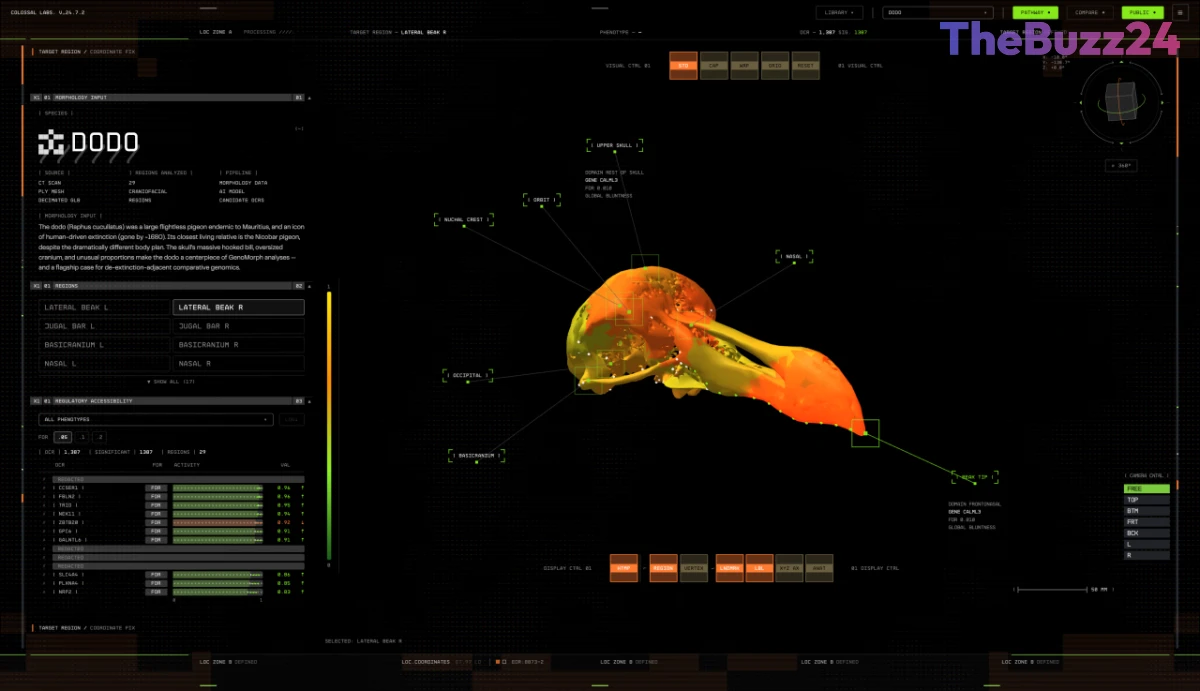
Colossal Biosciences has officially launched a revolutionary artificial intelligence platform titled GenoMorph, specifically engineered to expedite the complex process of reviving extinct species. Utilizing advanced 3D morphology, comparative genomics, and developmental biology, the innovative system identifies critical genetic targets for editing, even when researchers are dealing with severely restricted historical DNA samples. This technological breakthrough is currently playing a pivotal role in the ongoing initiative to bring back the dodo bird, an ambitious project constrained by having access to only a single dodo genome, in sharp contrast to the abundant genetic material available for woolly mammoth endeavors.
Traditional genetic analysis relies heavily on comparing numerous genomes to pinpoint the specific variations responsible for distinctive physical traits. However, because ancient DNA from tropical climates degrades rapidly, scientists frequently face severe data limitations. To overcome this hurdle, GenoMorph was developed by synthesizing extensive developmental data from modern avian species—including chickens, quail, ducks, and pigeons—alongside 3D skull measurements and genetic data from over 70 bird species. The AI functions as a specialized genomic map, successfully bypassing the exhaustive trial-and-error phase by highlighting approximately 2,300 promising DNA editing targets related to avian craniofacial morphology.
In addition to the software platform, the organization has advanced its practical lab procedures by deploying novel lipid nanoparticles designed to deliver gene-editing tools directly into developing bird embryos. This technique allows researchers to evaluate the physical impact of specific genetic modifications rapidly, bypassing the lengthy wait times associated with traditional breeding cycles. Parallel to these lab developments, the breeding colony for the Nicobar pigeon—the dodo’s closest living relative—has expanded to 36 birds, with researchers successfully generating essential primordial germ cells that develop into eggs and sperm.
The convergence of these proprietary biological tools and cutting-edge artificial intelligence marks a significant milestone for the broader field of programmable biology. The precision offered by GenoMorph ensures that genetic engineering remains highly controlled, intentional, and rigorously testable prior to any practical application. This momentum has already attracted strong financial backing from industry leaders, evidenced by the launch of a dedicated venture capital firm aimed at supporting scalable biological innovations across conservation, agriculture, and human health sectors.
Key Takeaways
- Colossal Biosciences introduced GenoMorph, an AI platform designed to accelerate de-extinction projects dealing with limited ancient DNA.
- The AI successfully identified roughly 2,300 promising DNA editing targets for the dodo bird using comparative data from over 70 bird species.
- The company also advanced its lab capabilities by using lipid nanoparticles for direct gene delivery and growing its Nicobar pigeon colony to 36 birds.
Editor’s Analysis & Impact
The unveiling of GenoMorph represents a watershed moment at the intersection of artificial intelligence and synthetic biology. By addressing the fundamental bottleneck of limited ancient DNA, Colossal Biosciences is transforming de-extinction from a theoretical conservation concept into a systematic, technologically repeatable science. The ability to predict vital genetic switches using cross-species developmental data bypasses centuries of evolutionary guesswork, significantly lowering both the cost and timeline for complex genetic restorations. Beyond reviving extinct animals, the broader implications of this technology stretch deep into modern biotechnology. The underlying algorithmic models and precise delivery mechanisms can easily translate into advancements in human therapeutics, agricultural resilience, and biodiversity preservation. As venture capital increasingly flows into programmable biology platforms, breakthroughs of this magnitude signal a paradigm shift in how humanity manages ecological restoration and genetic engineering in the twenty-first century.
Frequently Asked Questions
Q: What is GenoMorph?
A: GenoMorph is a new AI platform developed by Colossal Biosciences that uses 3D morphology, comparative genomics, and developmental data to identify specific genes for editing in de-extinction projects with limited DNA samples.
Q: Why is the dodo bird project particularly challenging?
A: The dodo bird project is challenging because researchers only have access to a single dodo genome, as tropical climates do not preserve ancient DNA as effectively as colder regions.
Q: What role does the Nicobar pigeon play in the dodo de-extinction effort?
A: The Nicobar pigeon is the dodo's closest living relative. Colossal Biosciences has successfully grown its colony of these pigeons and created essential cells that develop into eggs and sperm to help carry dodo traits.
AI Disclosure: This article is based on verified data and official reports. Our Team and AI have cross-referenced every financial detail with primary sources to ensure total accuracy.
More from this Category