Tensions Escalate in Tirana as Student-Led Protests Challenge Albania’s Leadership
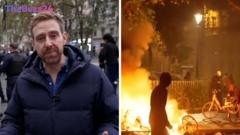
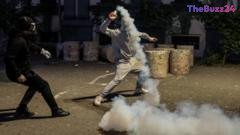
Violent clashes have continued to rock the Albanian capital of Tirana for a seventh consecutive day, as large crowds of high school and university students demand the resignation of Prime Minister Edi Rama. The demonstrations, fueled by widespread frustration over government corruption, poor university conditions, and economic stagnation, have seen protesters target official buildings and local police stations. Hundreds of individuals have sustained injuries amid the ongoing civil unrest, with a significant portion of the casualties belonging to law enforcement personnel.
Prime Minister Rama has strongly condemned the escalation in violence, asserting that the state will not negotiate with agitators and claiming the demonstrations are part of a coordinated external attack. Meanwhile, security forces have responded aggressively, deploying water cannons, tear gas, and pepper spray to disperse the crowds through public spaces like Rinia Park. Human rights advocates have raised concerns regarding the chaotic nature of police responses, noting that numerous indiscriminate arrests have been made and that legal safeguards are increasingly being tested amidst the growing mayhem.
Despite the risks, student activists and organizers remain steadfast in their demands for sweeping political reform, including the establishment of a technocratic government to oversee fair democratic elections. Many participants express deep-seated disillusionment with the country’s political trajectory over the past decade, pointing to mass emigration and a lack of economic opportunity as driving forces behind their movement. As the standoff persists, the clashes highlight a deepening generational divide and a profound crisis of confidence in Albania’s political establishment.
Key Takeaways
- Student-led protests in Tirana have turned violent for seven consecutive days, demanding the resignation of Prime Minister Edi Rama.
- Hundreds of injuries have been reported, including nearly 200 police officers, amidst the deployment of tear gas, water cannons, and cobblestones.
- Activists are calling for a technocratic government and democratic reforms, citing corruption and widespread economic migration.
Editor’s Analysis & Impact
The prolonged civil unrest in Albania poses a critical test for the country’s political stability and its long-term aspirations for European Union integration. Prime Minister Rama, who has maintained a dominant grip on power for over a decade, faces unprecedented pressure from a radicalized younger demographic inspired by global youth movements. The economic and social grievances driving these protests—namely corruption, brain drain, and systemic inequality—cannot be resolved through policing alone. If the government fails to address the underlying structural complaints, the political instability could severely jeopardize Albania’s timeline for EU membership and deter foreign investment, making genuine institutional reform an absolute necessity for future stability.
Frequently Asked Questions
Q: What are the main demands of the protesters in Tirana?
A: The protesters are primarily demanding the resignation of Prime Minister Edi Rama, improved university conditions, an end to government corruption, and the establishment of a technocratic government to prepare for fair democratic elections.
Q: How has the government responded to the demonstrations?
A: Prime Minister Rama has taken a hardline stance against the violence, while riot police have utilized tear gas, water cannons, and pepper spray to disperse crowds, resulting in numerous clashes and arrests.
Q: How long has Prime Minister Edi Rama been in power?
A: Edi Rama has been in power for 13 years and has remained a dominant figure in Albanian politics since the turn of the century.
AI Disclosure: This article is based on verified data and official reports. Our Team and AI have cross-referenced every financial detail with primary sources to ensure total accuracy.
More from this Category