Beyond the Spectrum: Astronomers Identify Unusual Colors in White Dwarf Stars
For generations, stargazers have been taught that stars generally appear in shades of white, red, or blue, with their color serving as a direct indicator of their surface temperature. However, recent scientific observations have challenged this conventional wisdom, particularly regarding the nature of white dwarf stars. These dense, faint remnants of stars similar to our Sun are now being recognized for their potential to exhibit a much wider array of colors than previously thought.
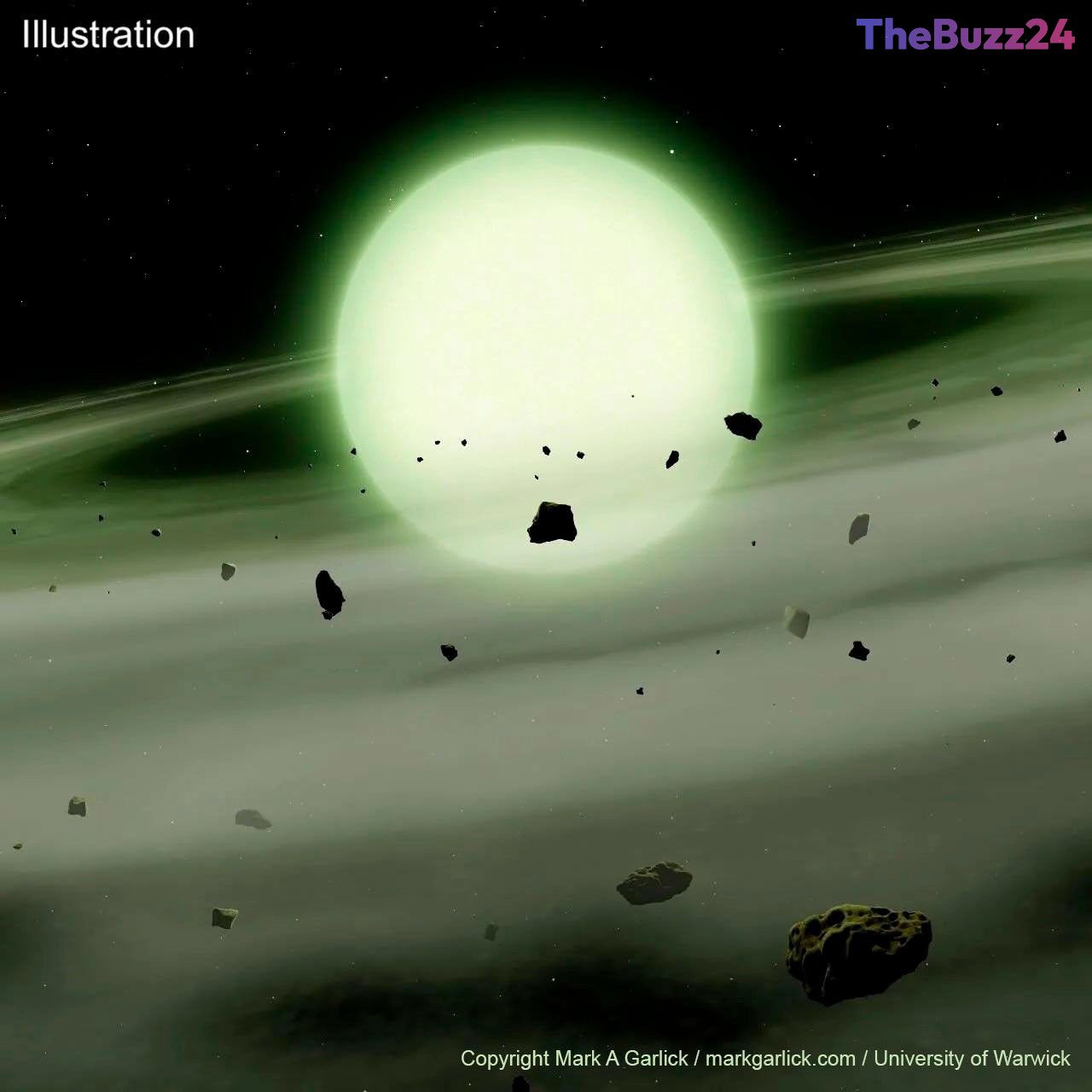
At the center of this discovery is WD J1330+6435, a white dwarf currently surrounded by an accretion disk composed of gas and rocky debris. While white dwarfs are traditionally characterized by their namesake color, researchers have found that the presence of trace elements can fundamentally alter their appearance. As these materials are pulled into the star’s atmosphere, they interact with the stellar environment, shifting the emitted light into unexpected hues including yellow, green, cyan, pink, and purple.
Despite these fascinating findings, these celestial objects remain largely elusive to the naked eye. Because white dwarfs are inherently faint and distant, their unique color profiles cannot be observed through standard amateur telescopes. While the discovery of these ‘green’ and multi-colored stars provides significant insight into the chemical composition of stellar atmospheres, they remain hidden from casual observation, existing as a testament to the complex chemical processes occurring in the final stages of a star’s life.
Key Takeaways
- White dwarf stars, which are remnants of Sun-like stars, can exhibit colors beyond the traditional white, red, and blue spectrum.
- The shift in color is caused by trace elements from accretion disks interacting with the star's atmosphere.
- These stars are too faint to be seen by the naked eye, requiring advanced scientific observation to detect their unique color signatures.
Editor’s Analysis & Impact
The identification of color-shifting white dwarfs like WD J1330+6435 represents a significant advancement in stellar spectroscopy and atmospheric analysis. By studying how accreted material alters the light output of these dense stellar remnants, astronomers can gain a clearer understanding of the composition of planetary systems that once orbited these stars. This research has broader implications for how we categorize stellar evolution and the chemical enrichment of the interstellar medium. As our detection technology improves, the ability to analyze these ‘polluted’ white dwarfs will likely become a primary method for identifying the remnants of exoplanetary systems, providing a window into the history of solar systems that have long since reached their end-of-life phase.
Frequently Asked Questions
Q: Why do stars usually appear white, red, or blue?
A: A star's color is primarily determined by its surface temperature. Blue stars are significantly hotter, while red stars are cooler, with white falling in the middle of the spectrum.
Q: Can I see a green star with a backyard telescope?
A: No. White dwarf stars are extremely faint and distant. Even with professional equipment, their unique colors are often only detectable through detailed spectral analysis rather than direct visual observation.
AI Disclosure: This article is based on verified data and official reports. Our Team and AI have cross-referenced every financial detail with primary sources to ensure total accuracy.
More from this Category