Severe El Niño-Driven Wildfires Scorch New Guinea, Shrouding Island in Smoke
New Guinea, the world’s second-largest island and a biodiversity hotspot, is facing an unprecedented wave of wildfires driven by severe drought and strong El Niño conditions. Throughout September and October 2026, massive blazes scorched vast areas of savannas, rainforests, and swamp ecosystems, generating thick plumes of smoke that disrupted daily life, grounded flights, and triggered severe air quality alerts across the region.
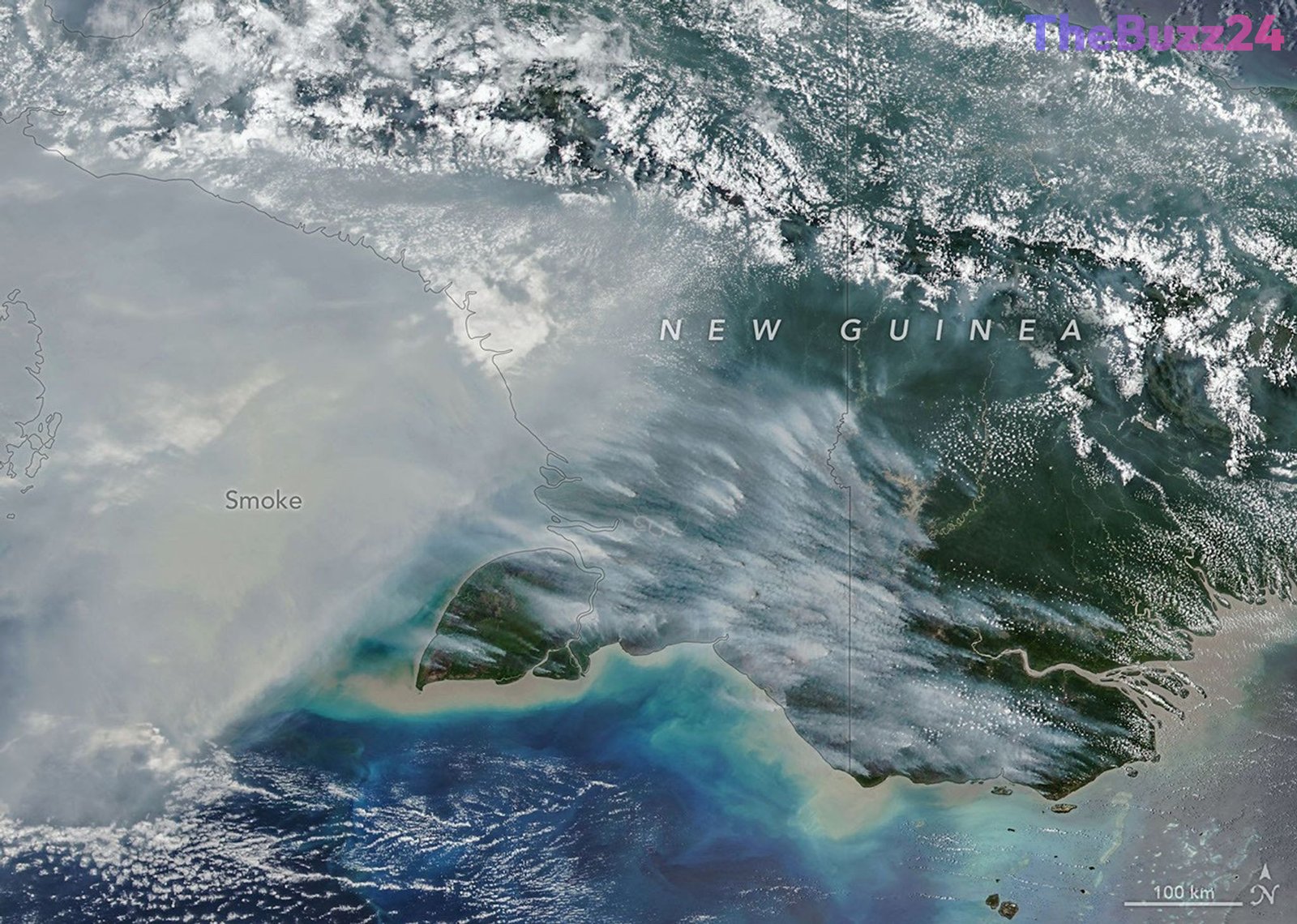
Satellite imagery captured dense smoke streaming from the southern portions of the island, where communities grappled with hazardous pollution levels. Local authorities responded by closing schools and advising vulnerable populations, including children and the elderly, to wear protective face coverings. The combination of prolonged dry spells—with some regions experiencing over 90 consecutive days without rain—and human-driven activities such as land clearing, agriculture, and hunting created a volatile environment prone to rapid fire spread.
Data from emissions monitoring systems indicate that carbon output from fires in Papua New Guinea has already surpassed all previous annual records, eclipsing prior severe El Niño years like 1997 and 2015. On the western, Indonesian side of the island, emissions also climbed dramatically as the region increasingly serves as a primary frontier for industrial deforestation, palm oil plantations, and infrastructure expansion.
Experts and researchers emphasize that while natural climate cycles prime the landscape to burn, human intervention remains the primary catalyst for igniting these destructive fires. With unmanaged primary forest edges and remote areas facing the heaviest blazes, relief efforts are heavily constrained. Scientists project that the environmental crisis will likely persist until seasonal heavy rains finally arrive to douse the flames.
Key Takeaways
- Severe El Niño conditions and prolonged drought have triggered record-breaking wildfires across New Guinea.
- Carbon emissions from fires in Papua New Guinea have surpassed all historical annual records.
- Human activities, including land clearing and agriculture, combined with dry weather, have accelerated the spread of uncontrolled blazes.
Editor’s Analysis & Impact
The unprecedented severity of the 2026 wildfires in New Guinea highlights the growing vulnerability of tropical ecosystems to extreme weather events amplified by climate anomalies like El Niño. As the region transforms into a new frontier for industrial agriculture and deforestation, the convergence of commercial land-clearing practices and prolonged droughts creates a catastrophic loop of environmental degradation and massive carbon releases. This crisis underscores an urgent need for enhanced regional fire management, stricter deforestation controls, and proactive climate adaptation strategies. Moving forward, policymakers and environmental scientists must address the dual pressures of economic development and ecological preservation to prevent these severe biomass burning events from becoming the new normal in equatorial Asia.
Frequently Asked Questions
Q: What caused the massive wildfires in New Guinea in 2026?
A: The fires were primarily driven by an intense El Niño cycle that brought severe, prolonged drought to the region, combined with human activities such as agricultural burning, land clearing, and deforestation.
Q: How do these fires impact local communities?
A: The fires generate thick smoke and hazardous air pollution, leading to school closures, flight cancellations, water shortages, crop failures, and severe health risks for residents.
Q: When are the fires expected to stop?
A: Researchers and meteorologists expect the fires to continue until the arrival of seasonal heavy rains, which typically begin in the southern part of New Guinea in early November.
AI Disclosure: This article is based on verified data and official reports. Our Team and AI have cross-referenced every financial detail with primary sources to ensure total accuracy.
More from this Category