Spotify Bets on AI Agents to Revolutionize Music Discovery and Personalization
Spotify is strategically positioning itself to capitalize on the burgeoning era of AI agents, aiming to become the go-to music service for these intelligent assistants. The music streaming giant, which recently reported a strong third quarter with 788 million monthly active users and nearly €5 billion in revenue, sees AI agents as a significant opportunity rather than a threat.
Co-CEO Gustav Söderström articulated Spotify’s unique advantage, stating that the company is well-suited to thrive as AI agents become more prevalent. Unlike tasks that people prefer to delegate, such as chores, entertainment is an area where human engagement is desired. Söderström believes users won’t ask an AI agent to ‘summarize a song,’ but rather to curate music for specific activities or moods. This could involve requesting music for a workout, a podcast related to an AI-driven conversation, or an audiobook segment.
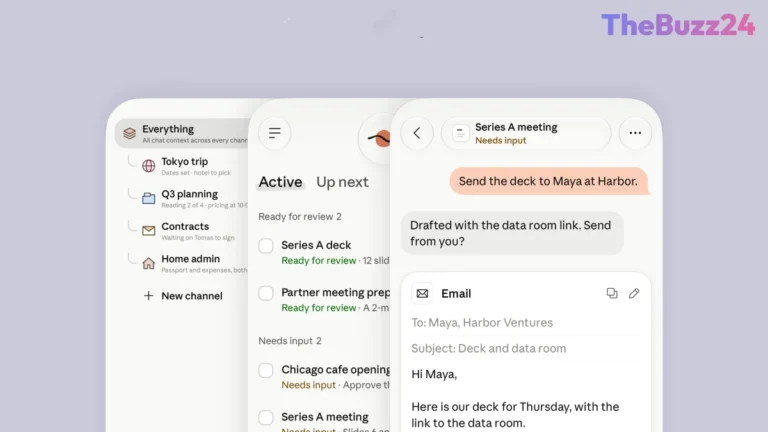
Spotify’s ambition is to be the media service that these agents interact with, facilitating music discovery and engagement through conversational interfaces rather than solely through its native application. The company has already integrated with prominent AI assistants like Meta’s Muse, ChatGPT, and Claude, signaling its proactive approach. “Our goal is to be the media service that you use from any agent, really turning the growth of agents into a tailwind rather than a headwind,” Söderström explained, highlighting Spotify’s active participation in this evolving landscape.
The company emphasizes that AI integration will enhance personalization. Spotify’s extensive listening history data—including favorite artists, skipped tracks, and discovered music—allows it to create highly tailored recommendations. Söderström illustrated this by describing how Spotify could analyze a user’s listening history back to 2008, identify true favorites, adjust playback speed, and compile a personalized running playlist matching a specific cadence. Crucially, Spotify maintains control over its user data, with agents requesting information that Spotify’s internal systems then process to fulfill the request, ensuring privacy and data security.
Key Takeaways
- Spotify aims to be the primary music service for AI agents, leveraging conversational interfaces for music discovery.
- The company believes AI agents will enhance, not replace, human engagement with music and entertainment.
- Spotify plans to use its vast user listening data to offer highly personalized music experiences through AI integrations.
Editor’s Analysis & Impact
Spotify’s strategic pivot towards AI agents represents a forward-thinking approach in the rapidly evolving digital media landscape. By positioning itself as the preferred platform for AI assistants, Spotify aims to secure its relevance and tap into new avenues for user engagement and revenue. This strategy leverages the company’s extensive data assets to offer unparalleled personalization, a key differentiator in a market increasingly saturated with generic content. However, the success of this strategy will depend on navigating potential friction points with other tech giants regarding data access and platform control, as well as ensuring a seamless and intuitive user experience through AI interactions. The company’s proactive integration with leading AI models suggests a strong commitment to staying ahead of the curve.
Frequently Asked Questions
Q: How does Spotify plan to use AI agents?
A: Spotify intends for AI agents to act as intermediaries, allowing users to request music, podcasts, or audiobooks through conversational commands rather than directly using the Spotify app. The goal is for these agents to access Spotify's vast library and personalization capabilities to fulfill user requests.
Q: Will Spotify share user listening data with AI partners?
A: No, Spotify has stated that it does not send listener data directly to third-party AI partners. Instead, when an agent makes a request, Spotify uses its own internal systems to process that request and determine what content to play, thereby maintaining user privacy and data control.
Q: What makes Spotify believe it can succeed with AI agents?
A: Spotify believes its success stems from the nature of entertainment, which is an area people actively engage with rather than delegate entirely. Its extensive history of user listening data also allows for a level of personalization that generic AI assistants may struggle to replicate.
AI Disclosure: This article is based on verified data and official reports. Our Team and AI have cross-referenced every financial detail with primary sources to ensure total accuracy.
More from this Category